1547
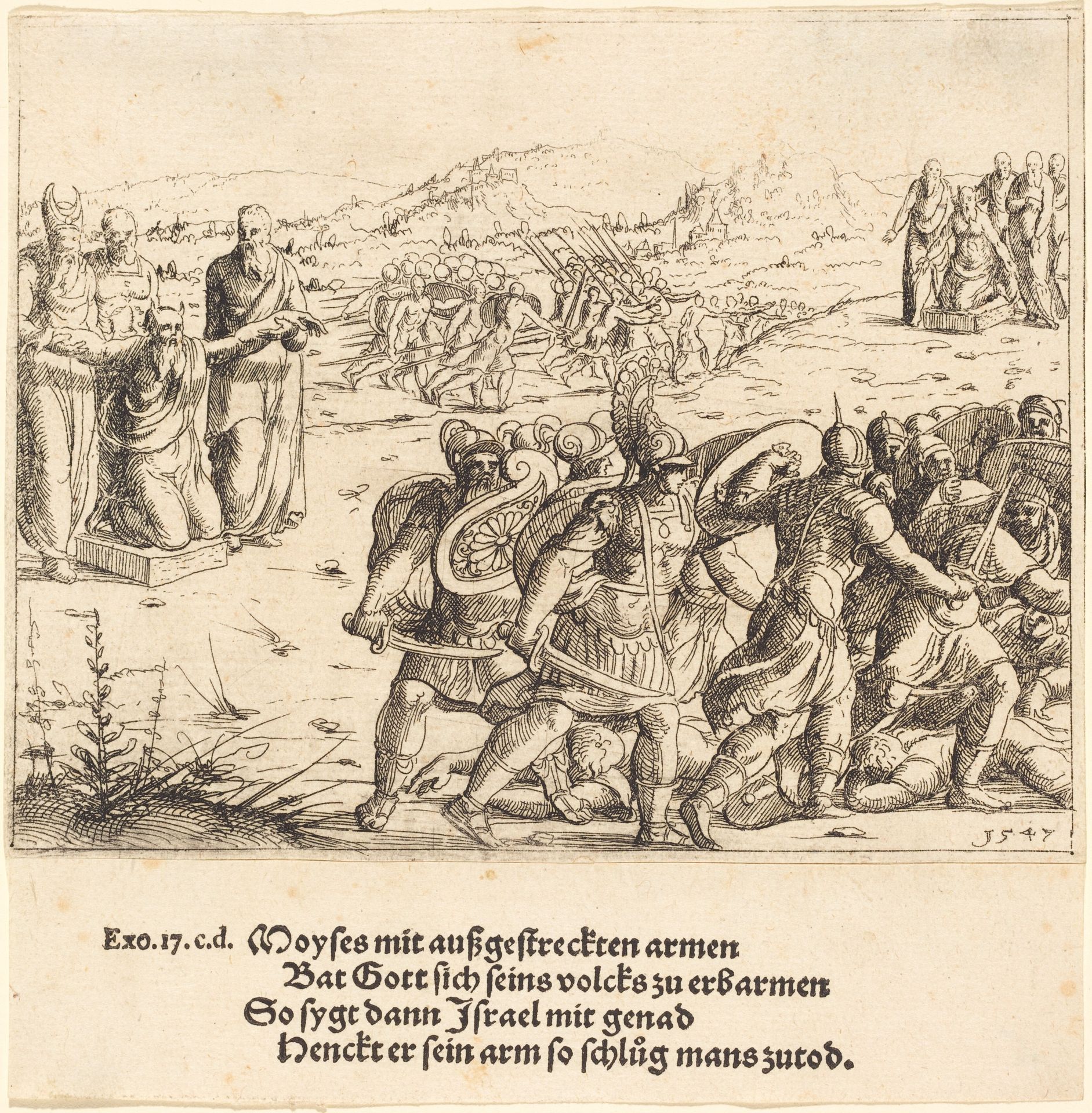
Moses with Outstretched Arms


Listen to curator's interpretation
Curatorial notes
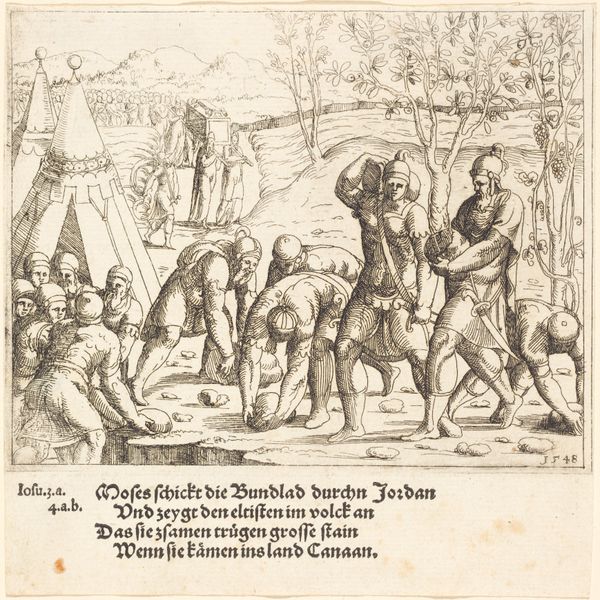
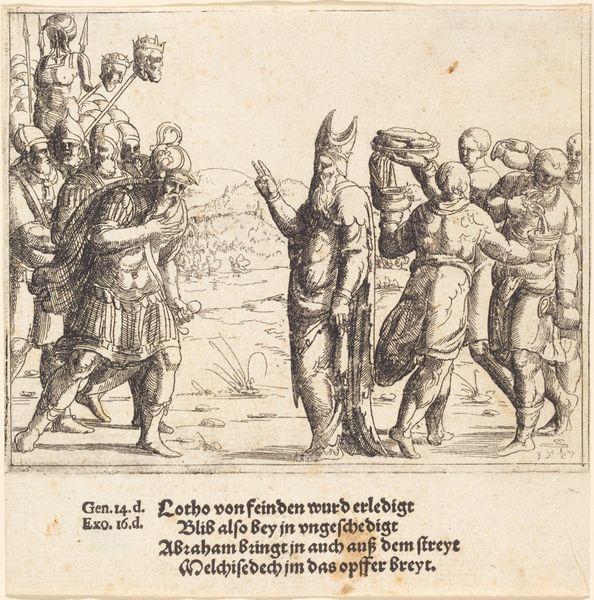
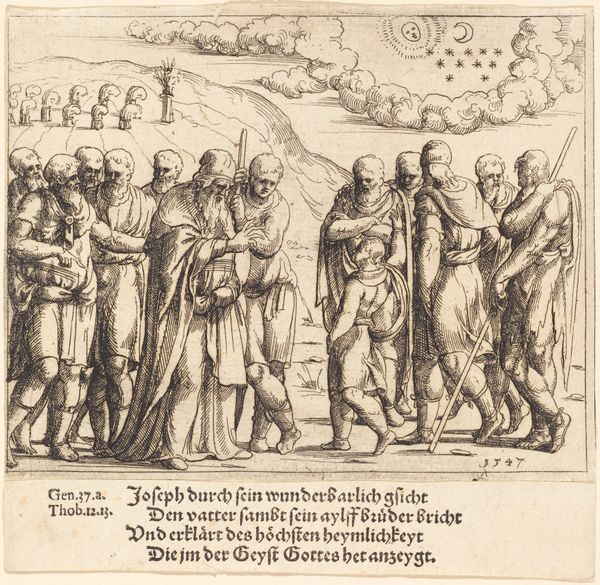
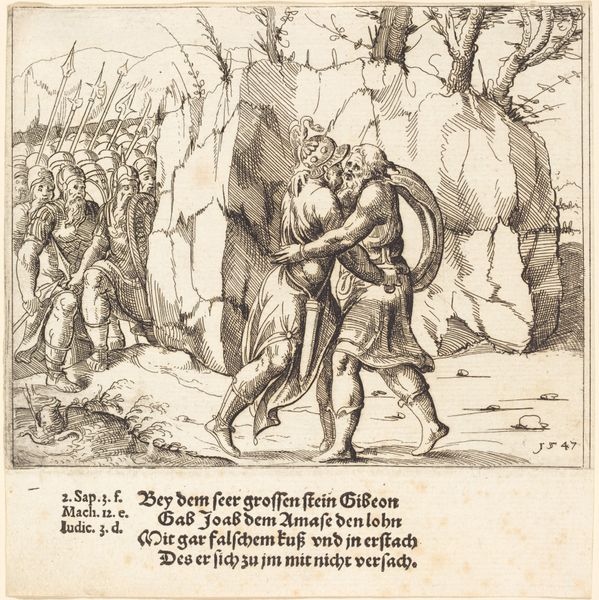
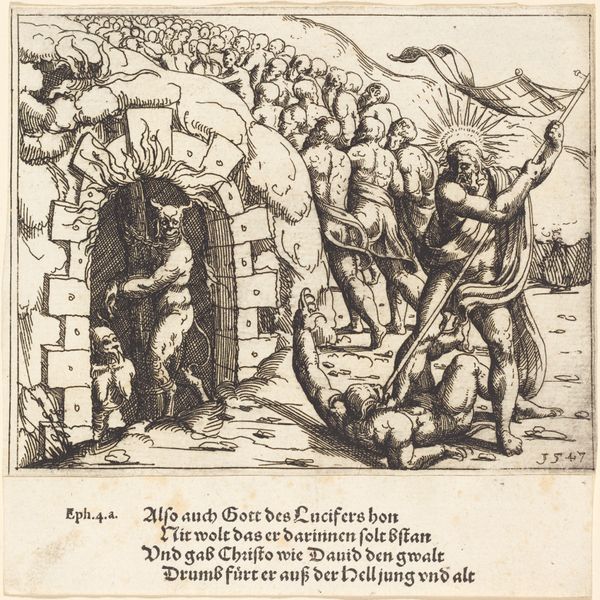
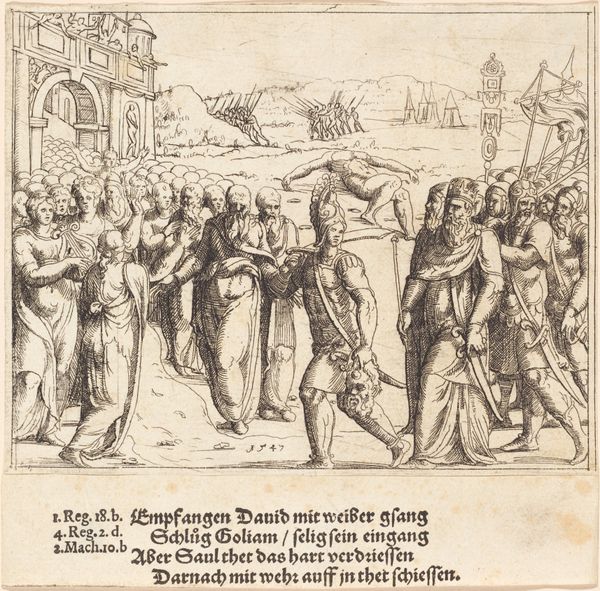
Editor: Here we have "Moses with Outstretched Arms" by Augustin Hirschvogel, created in 1547. It's an engraving, so a print. My first thought is how active and full of conflict the scene feels. So, given this detailed depiction of warfare and religion, what aspects really stand out to you? Curator: What I find striking is the very means of production—an engraving designed for dissemination. Hirschvogel’s choice of printmaking democratizes access to a biblical narrative traditionally confined to wealthier patrons or church settings. Editor: So you’re saying the *how* it’s made changes things? Curator: Precisely! Consider the labor involved: the skilled artisan meticulously carving into a metal plate. That process itself becomes part of the artwork’s meaning. How does the shift to printed images affect our view of the events depicted? Editor: That makes me wonder about the intended audience and how this image was distributed. I imagine it could be shared fairly easily. Curator: Indeed. And with that, new interpretations, no longer beholden only to powerful authorities, begin to appear in society through more easily accessed images. Did that have a ripple effect? Absolutely. Editor: This perspective really shifted how I'm thinking about it; seeing it less as an illustration of a story, and more as an act of production meant for widespread dissemination, which transforms it entirely. Curator: And hopefully emphasizes art’s dynamic relationship to the society from which it emerges, an economic force changing how society perceives its very stories.