1617
Allegory on the Brevity of Life


Listen to curator's interpretation
Curatorial notes
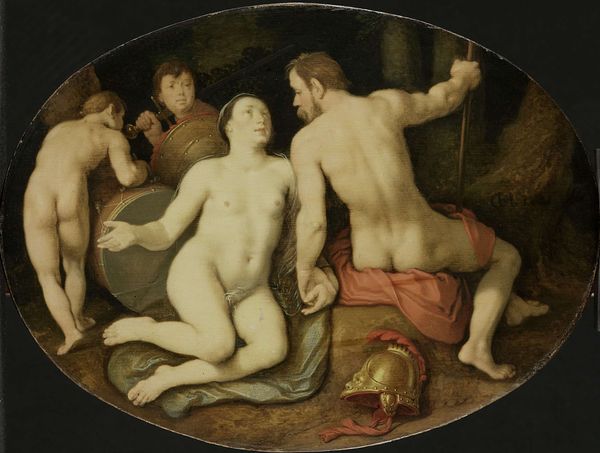
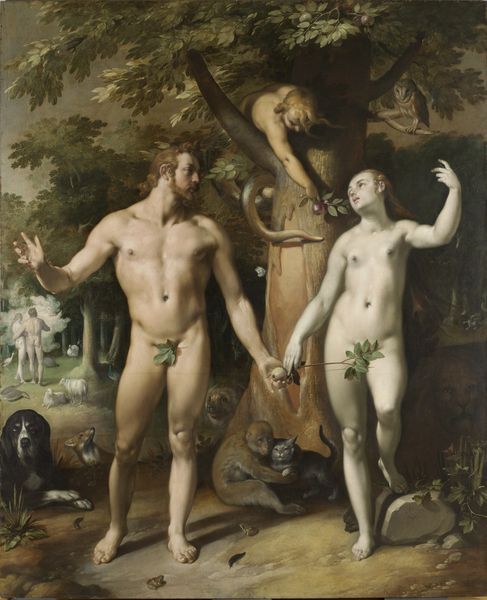
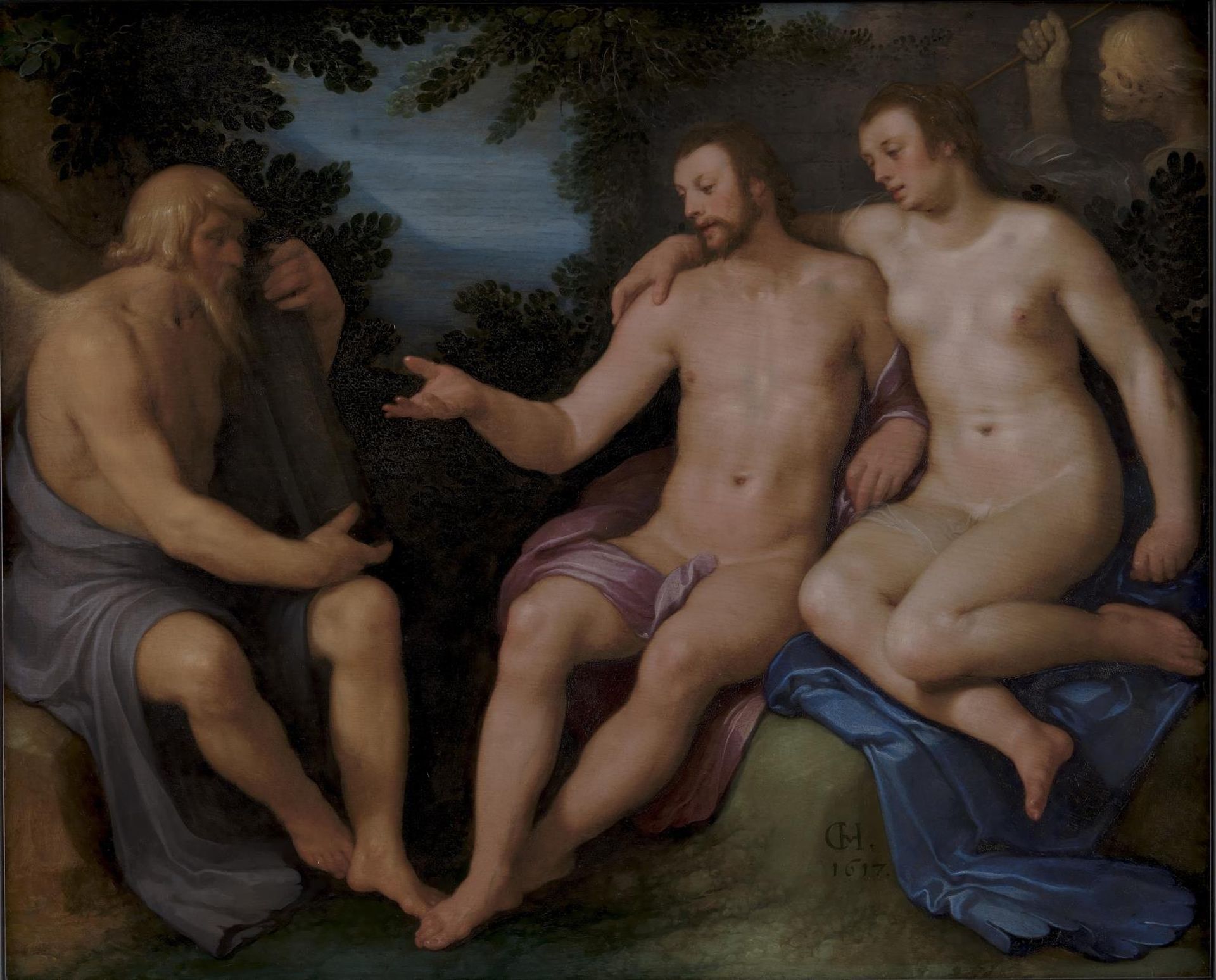
Cornelis Cornelisz. van Haarlem created this oil on canvas painting, "Allegory on the Brevity of Life," reflecting the anxieties of his time. Haarlem was working in the Dutch Golden Age, a period marked by both immense wealth and devastating outbreaks of plague. The painting’s symbolism evokes the ephemerality of human existence. We see a youthful couple confronted by the figure of old Father Time who is carrying a scythe. Cupid lurks behind the couple, ready to strike with his arrow. While the male figure gestures openly to the viewer, the woman is shown clinging to him. Seventeenth-century Dutch culture was steeped in moralizing symbolism, yet here, Cornelisz. complicates a straightforward reading. The sensuality of the figures and the lushness of the landscape suggest a tension between earthly pleasures and the inevitability of death. This piece invites us to meditate on how we negotiate the fleeting nature of beauty and desire. It challenges us to consider our own relationship with time, mortality, and the choices we make in the face of life's brevity.