1545 - 1548
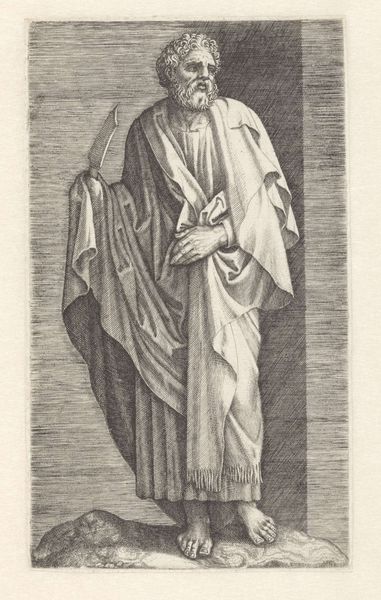
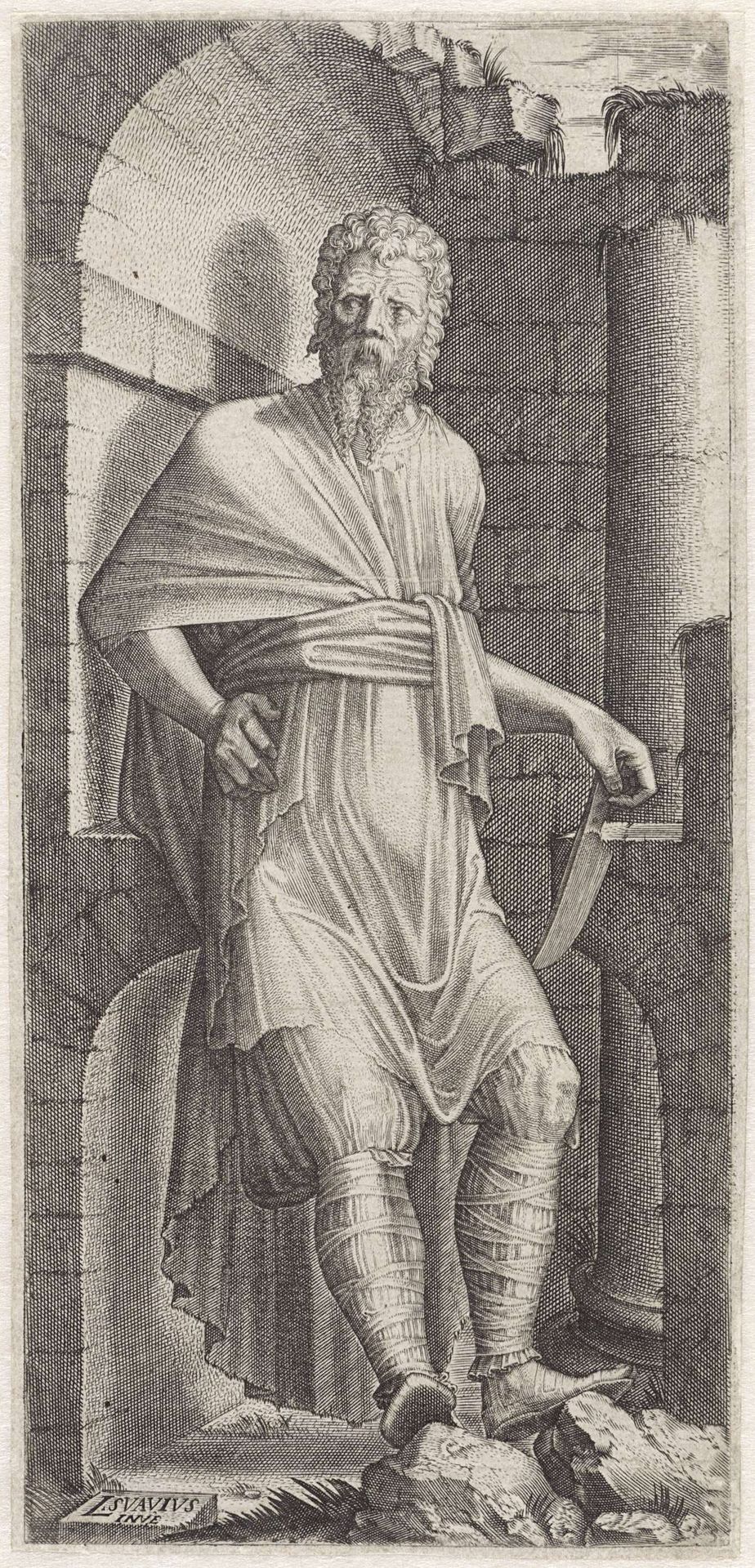
Apostel Bartolomeüs

Listen to curator's interpretation
Curatorial notes
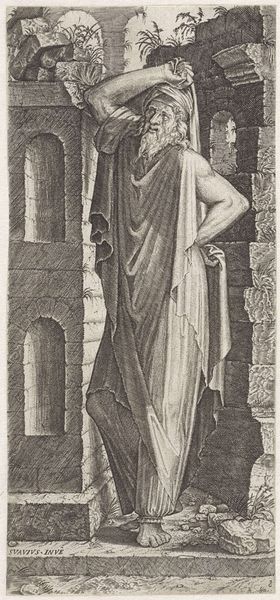
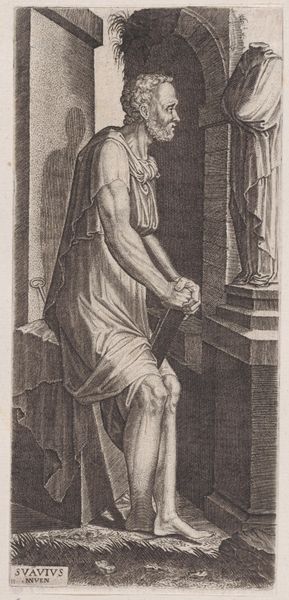
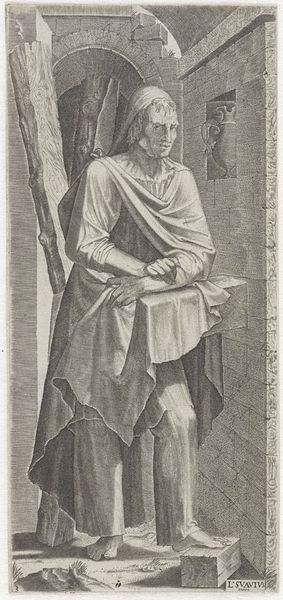
Editor: So, here we have Lambertus Suavius' engraving, "Apostel Bartolomeüs", created sometime between 1545 and 1548. The figure fills the frame, and he holds this… intense-looking knife. I’m really curious about what’s going on in the background, with all those crumbling ruins. What do you see in this piece? Curator: Ruins, eh? I like that. Makes me think of time’s relentless tick-tock. See, Bartholomew wasn't just any apostle; legend says he was flayed alive. That knife he's holding? Could be *the* knife. Suavius wasn't just making a pretty picture; he was digging into something raw, something visceral. Now, look at his eyes—the weary strength in them. This isn’t just a saint; this is a survivor. Does the setting speak to you in that light now, do you suppose? A past, yes, but maybe a broken foundation upon which to rebuild. Editor: Absolutely. It adds another layer, knowing about his story. It isn't just a picture; it becomes a meditation on suffering and survival. It is thought-provoking. Curator: Exactly! Art history shouldn’t be stale, don't you think? It’s a gateway to understanding how humans grapple with the big stuff - life, death, faith... Sometimes I wonder if Suavius ever imagined we’d be yacking about his Bartolomeüs centuries later. Do you? Editor: That's an interesting question. Now I see more layers and meanings than before. This knife isn't just a tool for torture, it represents enduring faith and bearing witness even in the face of suffering. Curator: Good stuff! Maybe that is what endures from this after all this time: not just pain but that capacity to bear witness. I wonder what meaning it may hold for someone who happens by this engraving 500 years from now.