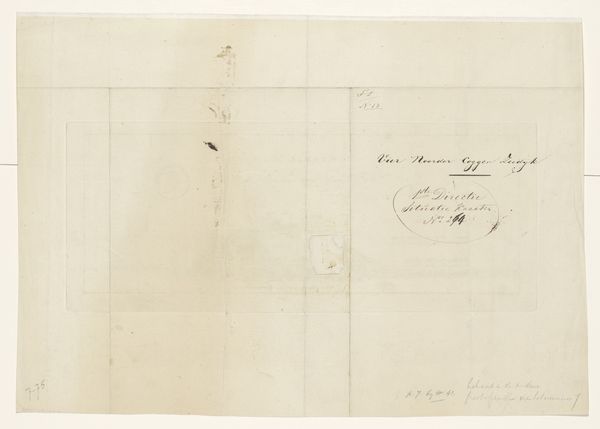
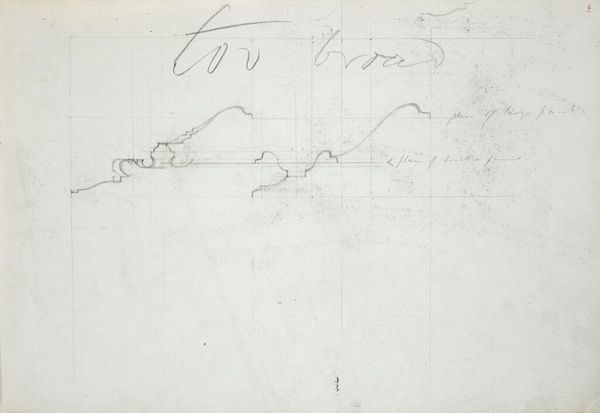
Plattegrond met plaatsing van de twee zuilen van de Zeus Olympus tempel 1778
0:00
0:00

louismayer
Rijksmuseum
drawing, etching, graphite, architecture
#
drawing
#
neoclacissism
#
etching
#
landscape
#
etching
#
geometric
#
geometric-abstraction
#
graphite
#
architecture
Dimensions: height 186 mm, width 357 mm
Copyright: Rijks Museum: Open Domain
This is Louis Mayer's meticulous plan, rendered with ink on paper, detailing the placement of two columns from the Temple of Zeus in Olympia. The circle and square motif, representing the capital of a column, speaks volumes. The circle, a symbol of the heavens, and the square, representing earthly foundations, together reflect the harmony between the divine and mortal realms. You see, this motif resonates across civilizations. The Egyptians, with their pyramids, sought to mirror the cosmos, while the Romans, in their forums, aimed to establish order through structured space. The Greeks also grappled with this interplay, expressing it through architecture that sought a balanced, proportional, and harmonious relationship between earthly structure and divine aspiration. The circle and square continue to resurface throughout art history, taking on new meanings, but always reminding us of the eternal human quest for balance.
Comments
No comments
Be the first to comment and join the conversation on the ultimate creative platform.
 Collect
 React
React Comment
More like this