drawing, paper, pencil
#
drawing
#
paper
#
geometric
#
pencil
#
academic-art
Dimensions: height 109 mm, width 96 mm
Copyright: Rijks Museum: Open Domain
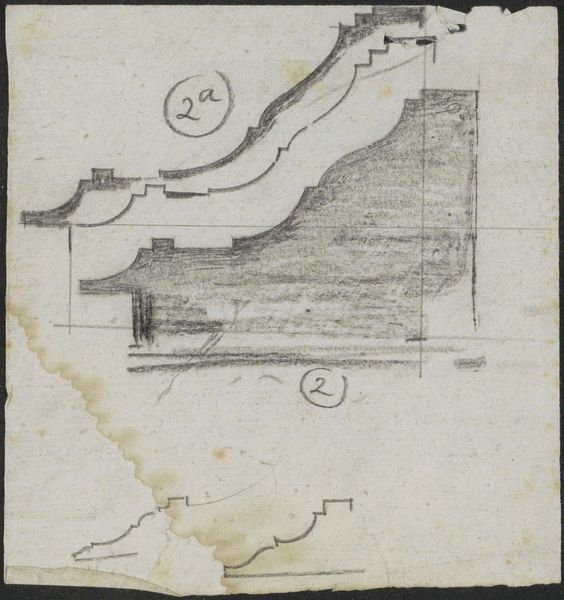
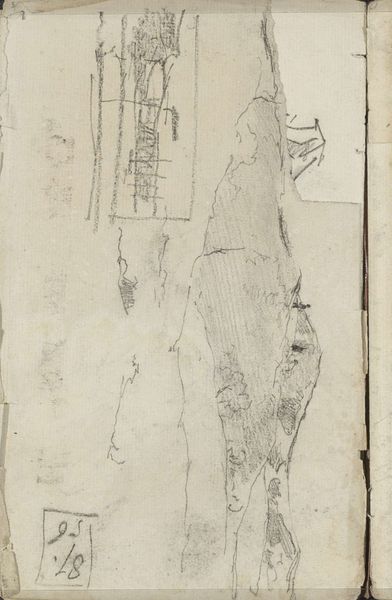
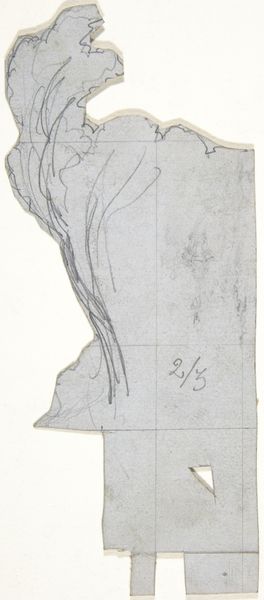
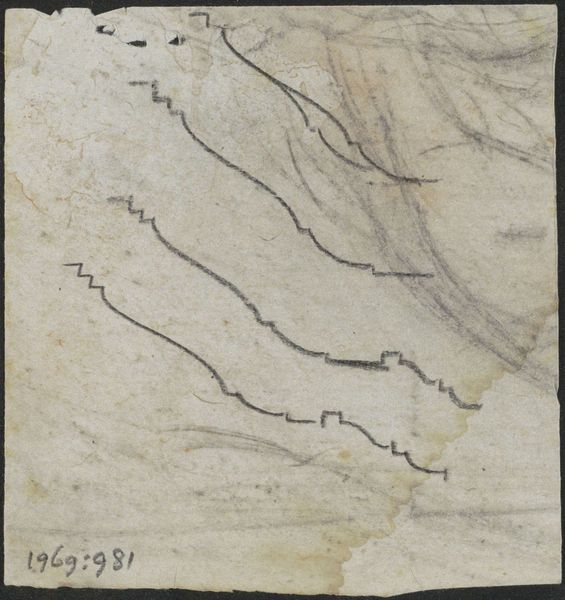
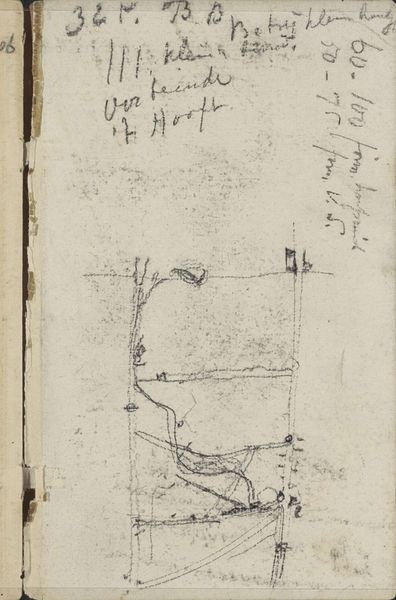
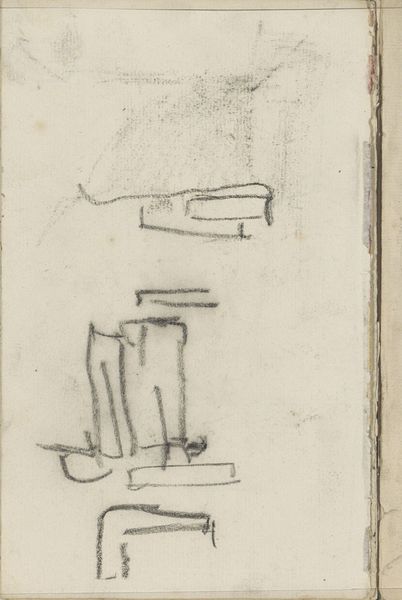
Curator: This pencil drawing on paper, dating from between 1876 and 1924, is titled "Doorsneden van een schilderijlijst," which translates to "Cross-sections of a picture frame." It's currently held in the Rijksmuseum. Editor: My immediate impression is of fragmented architectural studies, something almost Piranesian in its stark geometry. Curator: The artist, Gerrit Willem Dijsselhof, was working in a time when art and craft were seen as inherently linked. What seems like a simple design sketch could hold much deeper social implications when viewed within that historical context. Editor: True, but consider how Dijsselhof articulates the profiles. See the meticulous detail, the modulation of light through simple pencil strokes that lends such an ethereal weight to each form. The geometric quality becomes paramount; each segment speaks to an underlying order. Curator: It seems he's referencing established traditions, whilst, potentially, laying the foundation for something radically new. The idea of dismantling, quite literally 'sectioning' the very thing which houses art opens the door for challenging assumptions about the cultural significance of artistic creation itself. Editor: Precisely. There is something incomplete in its form—almost architectural—but not fully resolved. Perhaps an interrogation of the structural, as if only through understanding of components does the function, both material and artistic, reveal itself. Curator: Do you think there's something to be said about the labor it symbolizes as well? In meticulously recording and sectioning each piece, he acknowledges not only the end product, but all contributing artisans from whom an individual artist's freedom is built. Editor: Undoubtedly. To deconstruct it as Dijsselhof did also serves to elevate an overlooked construction aspect; by showcasing structural elegance, attention is drawn away entirely towards artistry found instead with these overlooked utilitarian objects—an intellectual reframing of values regarding creativity or the decorative arts? Curator: He asks us what makes "high art", even now when our entire social infrastructure determines privilege so much Editor: Fascinating! By visually dissecting each component element its fundamental visual expression transcends beyond an initial use thus questioning inherent perception values placed by viewer regardless status regarding utility opposed purely as works whose aim remains simply aesthetic quality/decoration either way revealing something new from this exploration Curator: The act transcends merely recording or crafting, its transformative Editor: I agree - the act in deconstructing something becomes an exploration both within and as themselves beyond practical scope
Comments
No comments
Be the first to comment and join the conversation on the ultimate creative platform.
 Collect
 React
React Comment
More like this