1900 - 1925
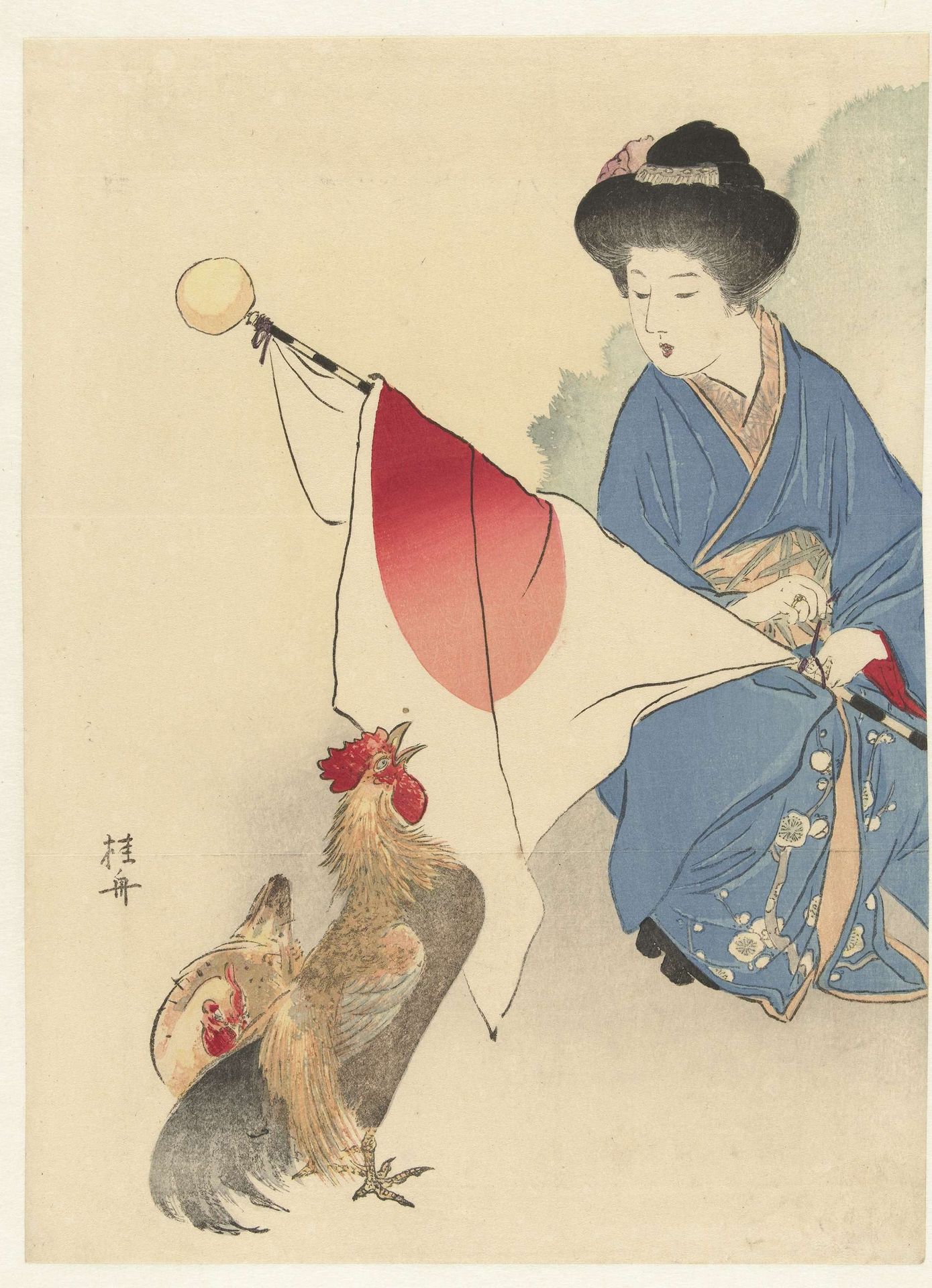
Vrouw met Japanse vlag en een haan

Listen to curator's interpretation
Curatorial notes
Editor: This watercolor illustration, “Vrouw met Japanse vlag en een haan” by Takeuchi Keishu, from between 1900 and 1925, has a quiet yet striking quality. The inclusion of the Japanese flag alongside the figure of the woman and the rooster gives it a curious sense of nationalism mixed with the everyday. How do you interpret this juxtaposition within its historical context? Curator: It’s a really insightful starting point. What strikes me is how it seems to domesticate national identity. The woman, dressed in what appears to be traditional garb, and the rooster—symbols of the local, the familiar—are placed right alongside the rising sun of Japan. How do you see that relationship functioning, considering this was a period of significant modernization and nationalism in Japan? Editor: That’s interesting. It feels like it's making a statement about the role of women in promoting nationalist sentiment or representing national identity. Were women used as symbols of the nation during this period? Curator: Absolutely. This imagery frequently invoked feminine virtue, linking women's domestic role with national ideals. Notice the ukiyo-e influence as well, this popular form was being reimagined to engage with modern political discourse. Do you see how this familiar style might help convey more complicated ideas to the wider public? Editor: I hadn’t considered the ukiyo-e connection, but that makes sense. By using a well-known style, the artist may have been able to reach a broader audience and instill the intended feelings of pride and belonging to the Nation. Curator: Precisely. And the rooster, traditionally seen as announcing the dawn, could symbolize Japan's rising status. By using such culturally loaded images, this simple image becomes a potent declaration. Understanding these artistic choices offers so much insight into how art and national identity were so powerfully intertwined. Editor: It really puts a new perspective on what I thought was a straightforward watercolor. It’s fascinating to consider how everyday images could carry such significant social and political meaning!