About this artwork
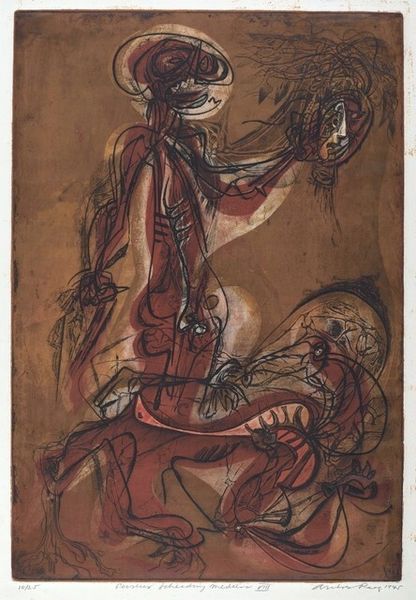
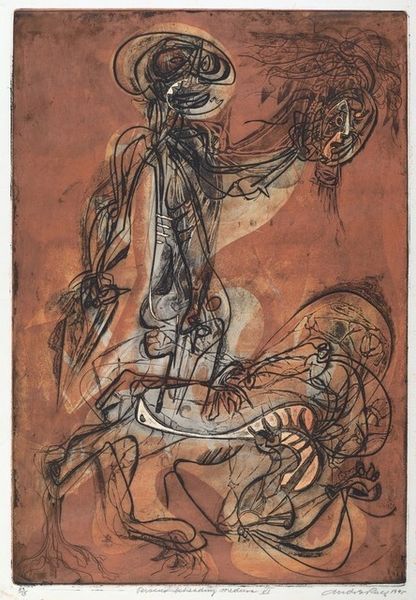
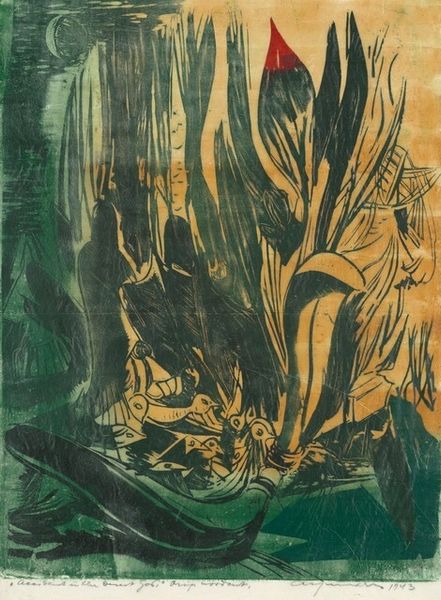
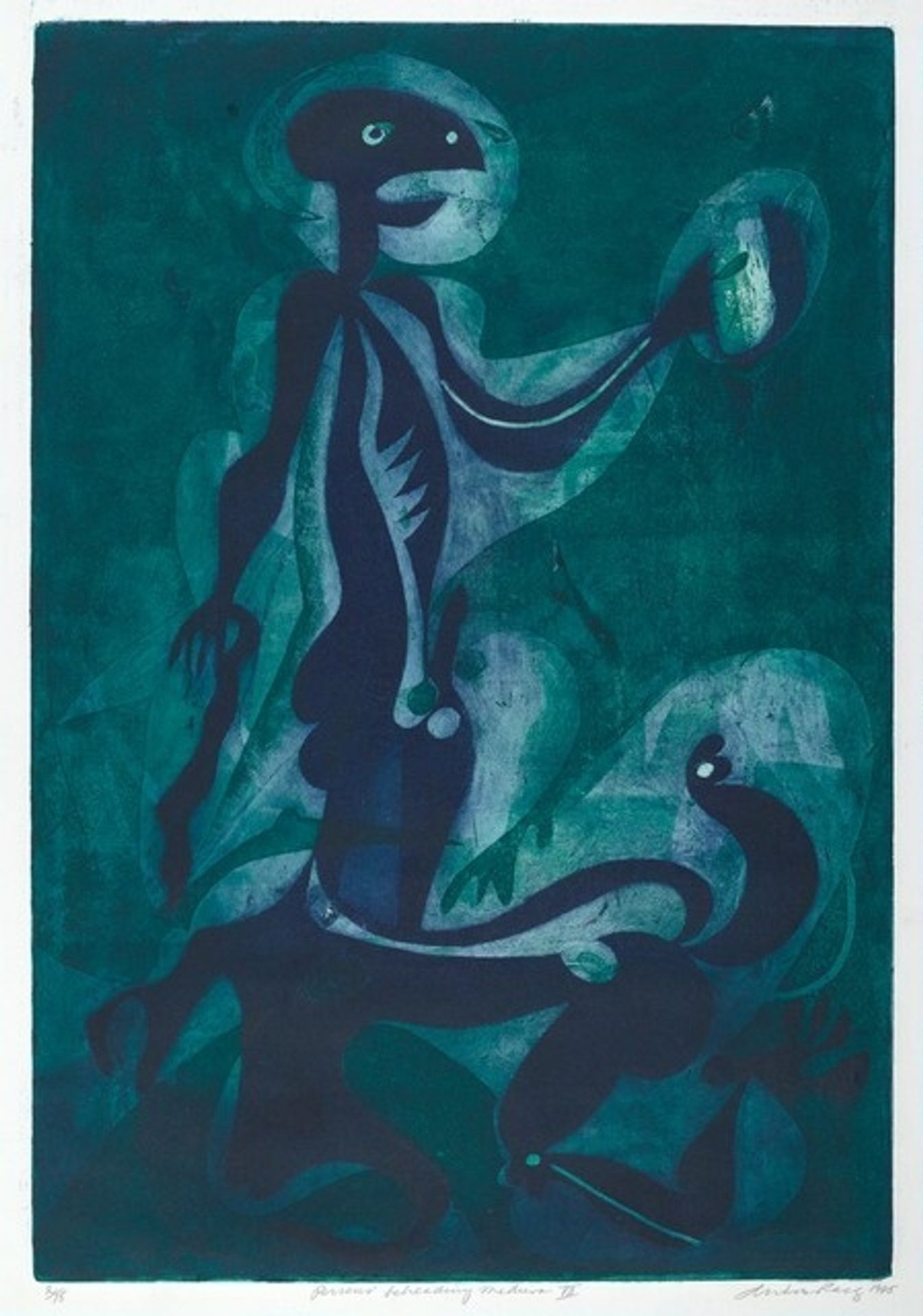
André Racz's 'Perseus Beheading Medusa, VII' feels like it was coaxed into being through layers of watery ink. The palette swims in shades of teal, each mark a step in a dance between control and chance. It's process-oriented, where the making is laid bare. Look at Medusa’s writhing form at the bottom; see how she’s rendered in such dark, solid shapes. Her body twists in ways that both repel and attract. In contrast, Perseus is all airy lightness, like a ghost in the act. The layers interact, creating a depth that pulls you in. It's not just about the myth, but about the act of layering memory and emotion. The loose, almost ethereal quality reminds me a bit of Odilon Redon’s dreamscapes, but with a sharper edge. Racz invites us to linger in the ambiguity, to find our own monsters and heroes in the murky depths.
Perseus Beheading Medusa, VII
1945


Artwork details
- Medium
- print, etching
- Copyright
- National Gallery of Art: CC0 1.0
Tags
Comments
Share your thoughts
About this artwork
André Racz's 'Perseus Beheading Medusa, VII' feels like it was coaxed into being through layers of watery ink. The palette swims in shades of teal, each mark a step in a dance between control and chance. It's process-oriented, where the making is laid bare. Look at Medusa’s writhing form at the bottom; see how she’s rendered in such dark, solid shapes. Her body twists in ways that both repel and attract. In contrast, Perseus is all airy lightness, like a ghost in the act. The layers interact, creating a depth that pulls you in. It's not just about the myth, but about the act of layering memory and emotion. The loose, almost ethereal quality reminds me a bit of Odilon Redon’s dreamscapes, but with a sharper edge. Racz invites us to linger in the ambiguity, to find our own monsters and heroes in the murky depths.
Comments
Share your thoughts