About this artwork
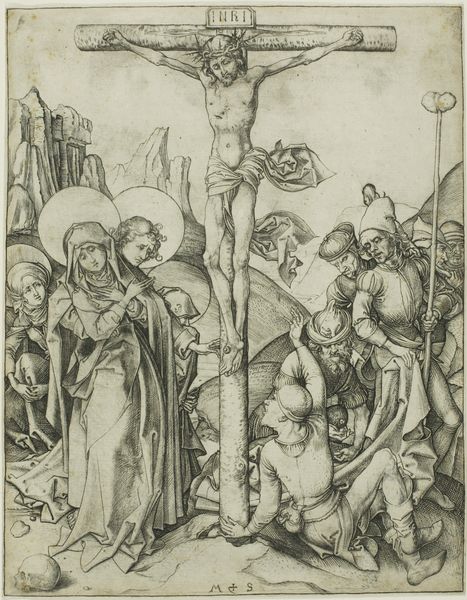
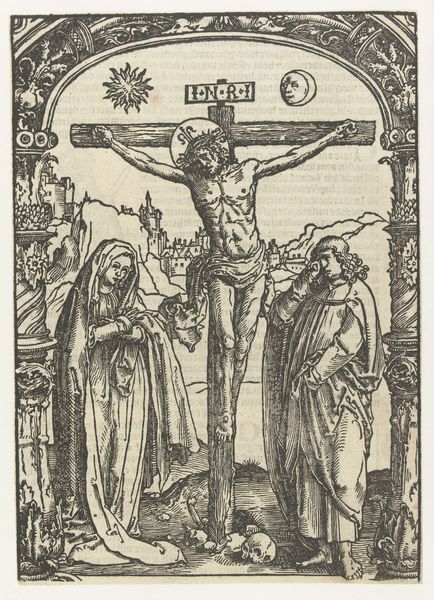
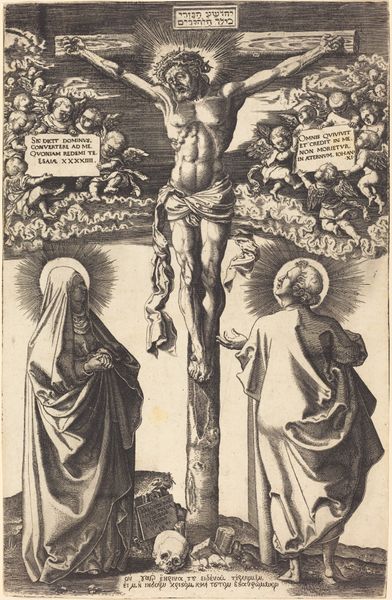
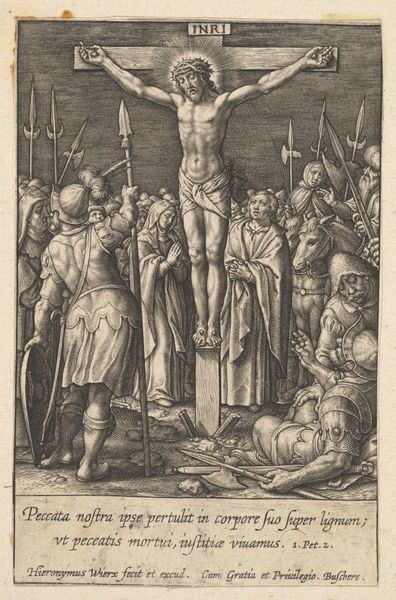
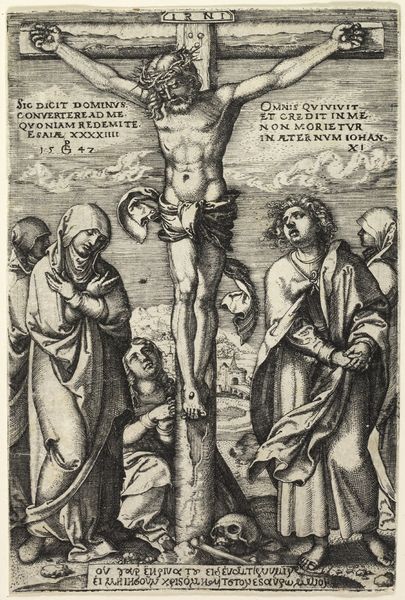
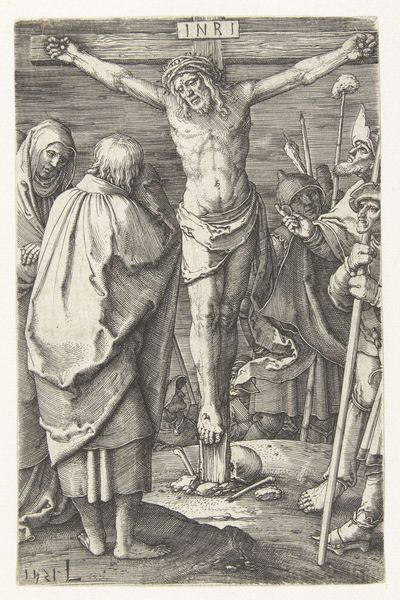
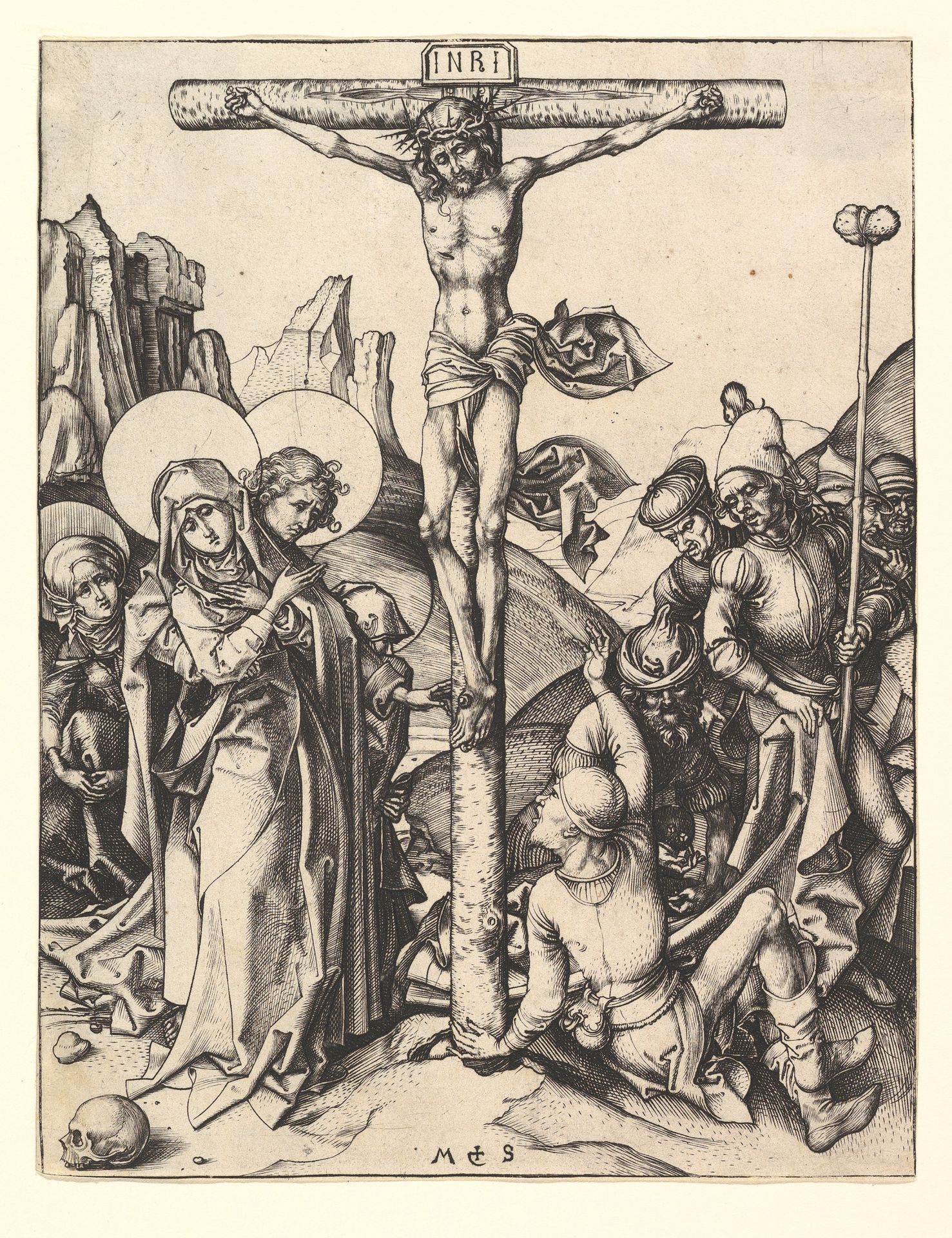
Martin Schongauer created this print, *Crucifixion*, using the engraving technique. This was a relatively new medium at the time, requiring skilled metalworkers to carve lines into a copper plate. Ink was then applied, and the image transferred to paper through a printing press. Schongauer's skill is evident in the intricate detail and the range of tonal values he achieved. Look closely, and you’ll see the marks left by the burin, the tool used to cut the lines. The density and direction of these lines create shadows and volume, bringing depth to the scene. The crispness of the lines also allowed for the mass production of images, catering to a growing market for religious art. Beyond its aesthetic qualities, the print reflects the economic and social context of its creation. The printing press facilitated wider access to religious imagery, reflecting shifts in religious practice and individual devotion. It’s a reminder that art and craft are always embedded in their historical moment, shaped by the available technologies and the demands of the market.
Crucifixion
1470 - 1490


Artwork details
- Medium
- drawing, print, intaglio, engraving
- Dimensions
- 7 3/4 x 5 15/16 in. (19.7 x 15.1 cm)
- Location
- Metropolitan Museum of Art, New York, NY
- Copyright
- Public Domain
Tags
Comments
Share your thoughts
About this artwork
Martin Schongauer created this print, *Crucifixion*, using the engraving technique. This was a relatively new medium at the time, requiring skilled metalworkers to carve lines into a copper plate. Ink was then applied, and the image transferred to paper through a printing press. Schongauer's skill is evident in the intricate detail and the range of tonal values he achieved. Look closely, and you’ll see the marks left by the burin, the tool used to cut the lines. The density and direction of these lines create shadows and volume, bringing depth to the scene. The crispness of the lines also allowed for the mass production of images, catering to a growing market for religious art. Beyond its aesthetic qualities, the print reflects the economic and social context of its creation. The printing press facilitated wider access to religious imagery, reflecting shifts in religious practice and individual devotion. It’s a reminder that art and craft are always embedded in their historical moment, shaped by the available technologies and the demands of the market.
Comments
Share your thoughts