1850s
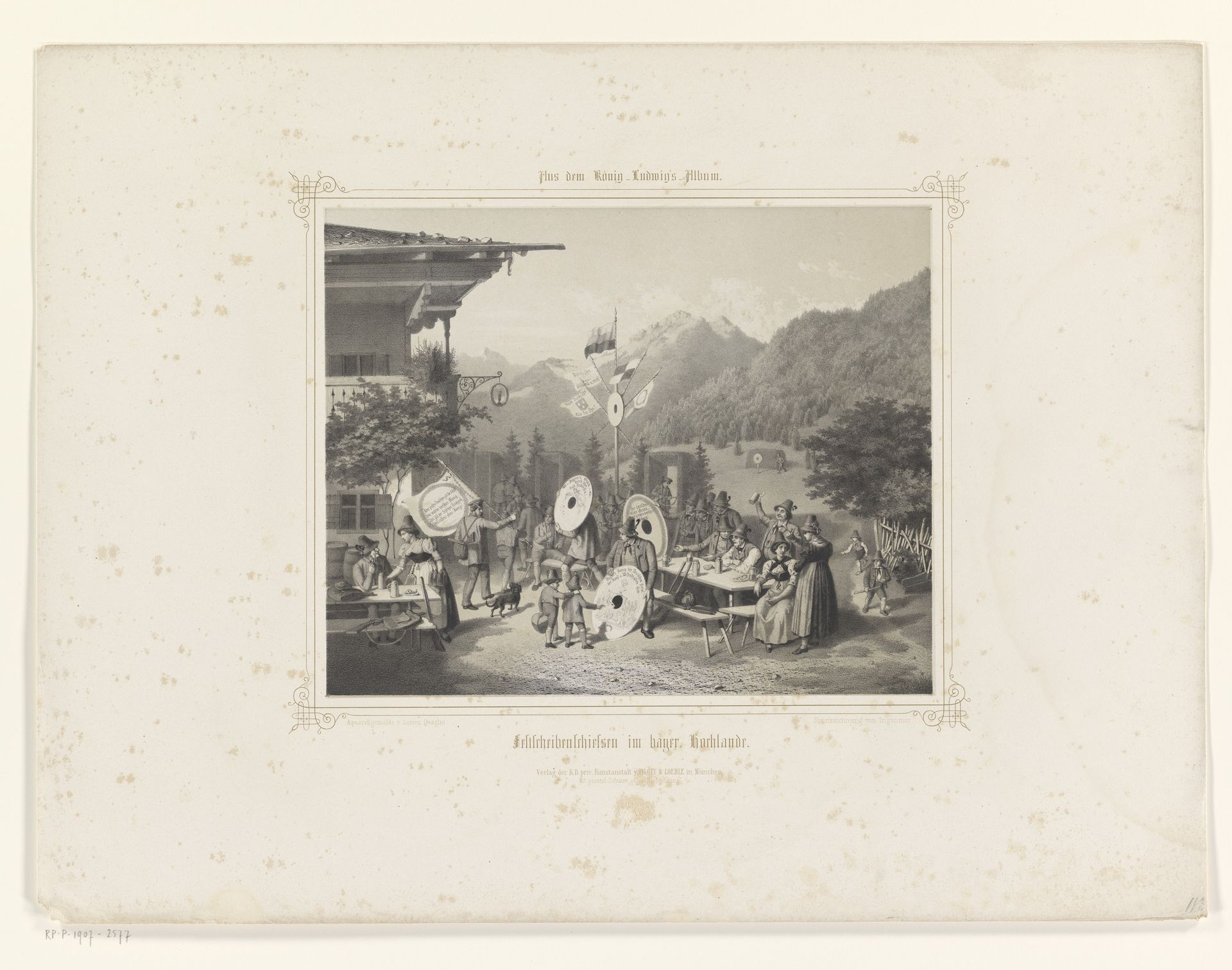
Gezelschap bij een boogschietwedstrijd

Listen to curator's interpretation
Curatorial notes
Editor: Here we have Franz Maria Ingenmey's "Gezelschap bij een boogschietwedstrijd", which translates to "Company at an Archery Competition," from the 1850s, executed as a print or drawing on paper, I think. The image feels staged, almost like a tableau vivant, a re-creation of a genre scene... what strikes you most about it? Curator: Considering the mid-19th century context, and its display format as an engraving, it's easy to imagine that prints like this offered a curated and romanticized glimpse into Bavarian life. Look how the setting is framed: the mountains in the back, figures formally posed in the foreground. It caters to a very specific audience and their idealized vision. Does it make you think about its intended viewers and their social values? Editor: It does. It seems to romanticize leisure and tradition. Were these kinds of images common at the time? Curator: Absolutely. Prints circulated widely and played a key role in shaping public perceptions of places and cultures. Artists often produced works fitting prevailing tastes, or commissioned pieces catered to the elite, offering a glimpse into a seemingly simpler life while reinforcing established hierarchies. Consider how genre painting becomes commercialized and disseminated, essentially creating a visual brand. What could Ingenmey's intention be for marketing this idealized scenery? Editor: So, it’s less a candid snapshot and more a constructed reality sold to a specific audience? I guess I didn't initially consider how performative it could be, creating a marketable image of Bavarian tradition. Curator: Precisely! By understanding its historical moment and mode of dissemination, we can analyze the art not just for aesthetic value but also for its social and political implications. This wasn't about reality, but crafting and commercializing it. Editor: I see it so differently now! This piece gave me the impression of a simple snapshot into Bavarian tradition. I understand better the need to view art in its social context.