1831 - 1906
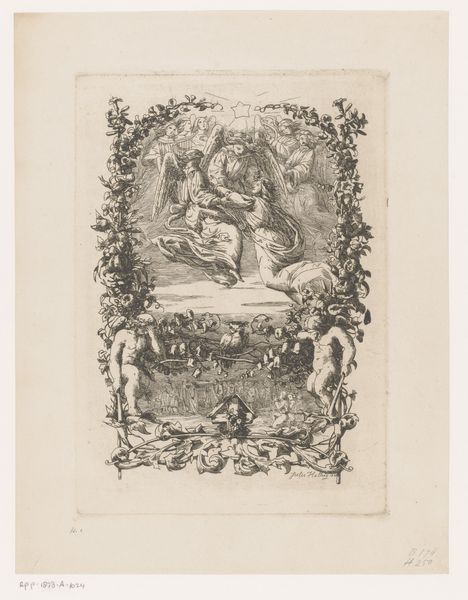
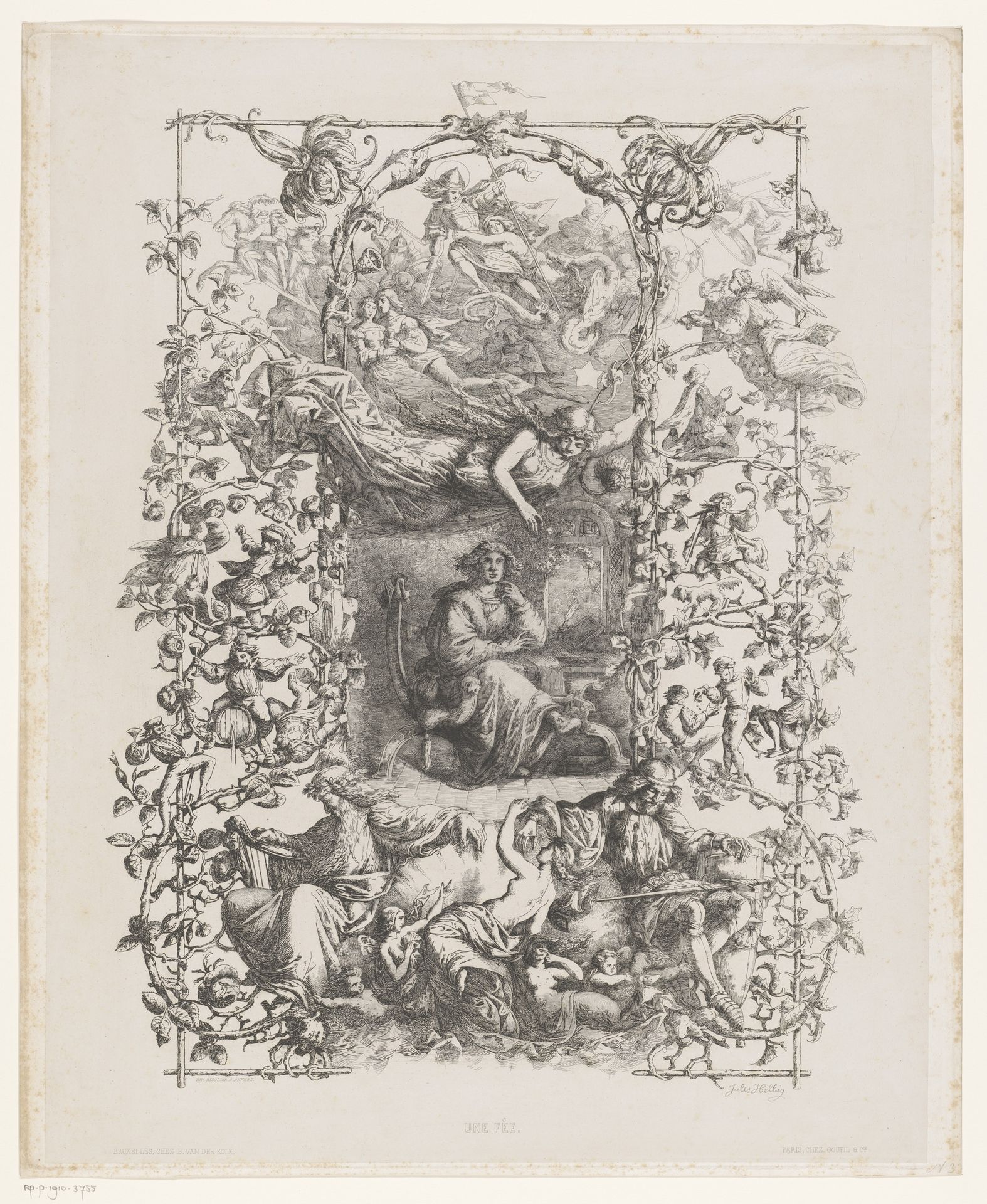
Man in een studeerkamer

Listen to curator's interpretation
Curatorial notes
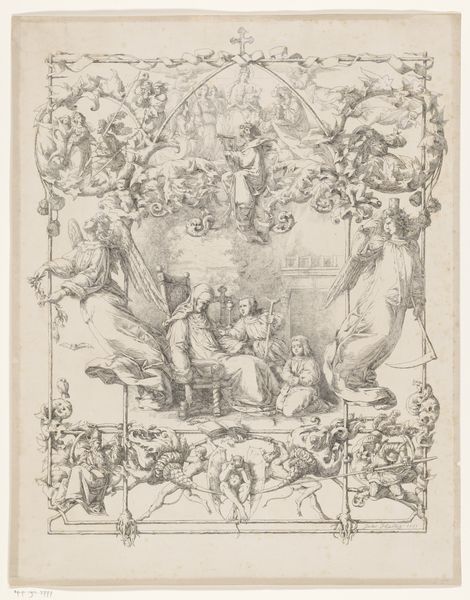
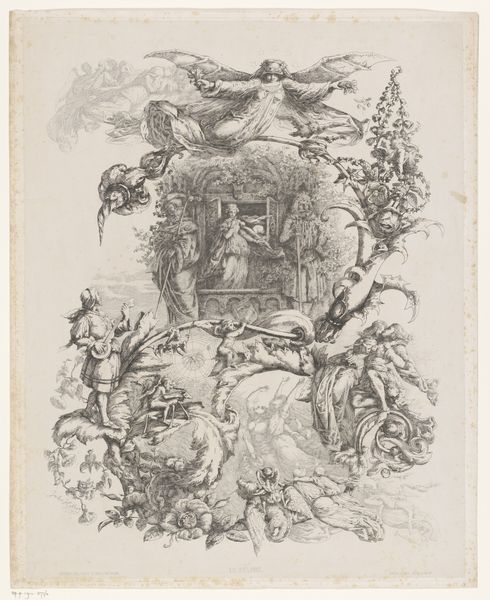
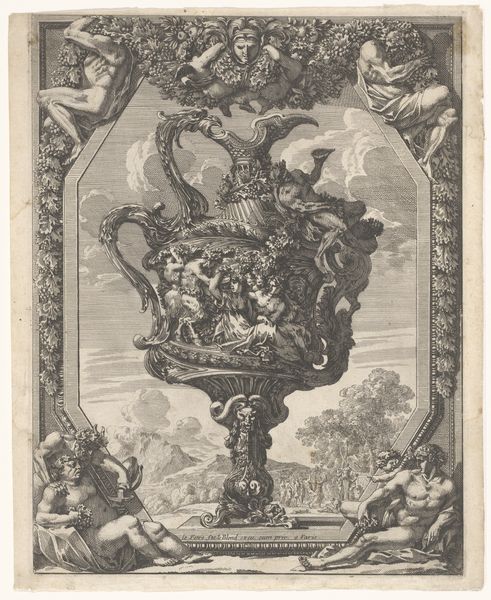
Curator: At first glance, the overwhelming sense of ornamentation strikes me. It's almost as if the central image is secondary to the elaborate frame. Editor: Precisely. What we’re seeing is an engraving created sometime between 1831 and 1906 by Jules Chrétien Charles Joseph Henri Helbig, titled "Man in een studeerkamer," or "Man in a Study." This piece immediately begs us to unpack the social contexts within academic art of that era. Curator: Tell me more. Because as my eye traces the lines and the interplay of light and shadow, I am fascinated by the structural contrast. We have a rather sedate scene in the center, framed by what looks like total chaos. Editor: In academic circles, the "man in a study" was frequently used as a metaphor for scholarly pursuits, or a life dedicated to the accumulation of knowledge. Yet, if we broaden the context and see who was really allowed to engage with scholarly work – what does that signify? The piece hints at exclusivity, in who has access to intellectual labor. Curator: That certainly holds a certain truth, although isn't the composition itself rather clever? Helbig uses the central figure as a still point amid swirling figures in motion, employing an almost baroque sensibility in his composition. It has that certain je ne sais quoi. Editor: Perhaps. But the question remains, for whom was this art intended, and what societal narratives did it uphold? It is a work of figuration with historic and narrative qualities, no less – which forces us to consider issues of gender and power. The ornamentation that is the visual core here serves a similar goal – obscuring social realities via ornate design choices. Curator: You make compelling points! Though I still find myself lost in the detailed engraving work itself – look how finely rendered each of those figures are within the borders. Editor: Yes, the execution is meticulous. However, looking at it with this discussion in mind adds depth to how one might view Helbig's composition today.