ceramic, terracotta
narrative-art
greek-and-roman-art
ceramic
figuration
roman-art
ancient-mediterranean
terracotta
Dimensions: H. 10 7/16 in. (26.5 cm)
Copyright: Public Domain
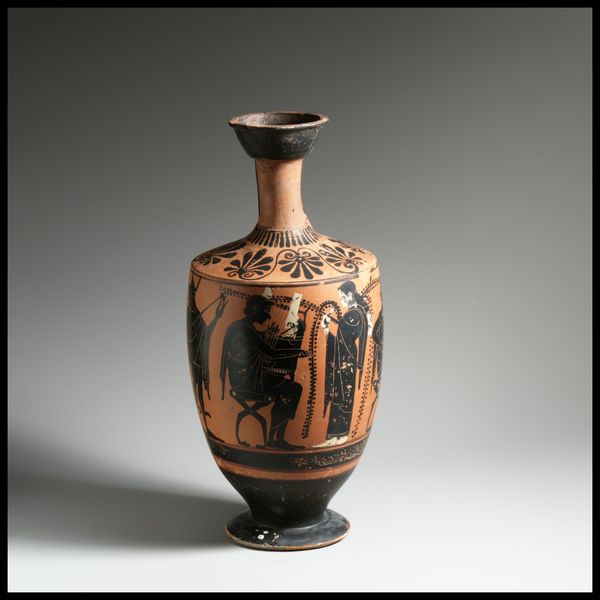
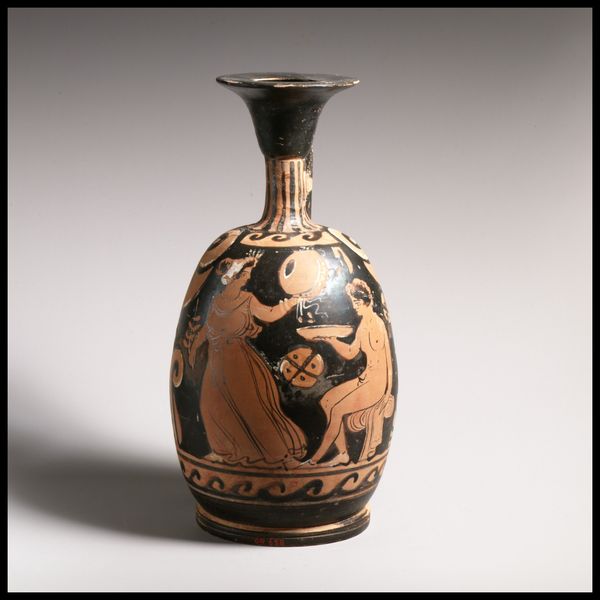
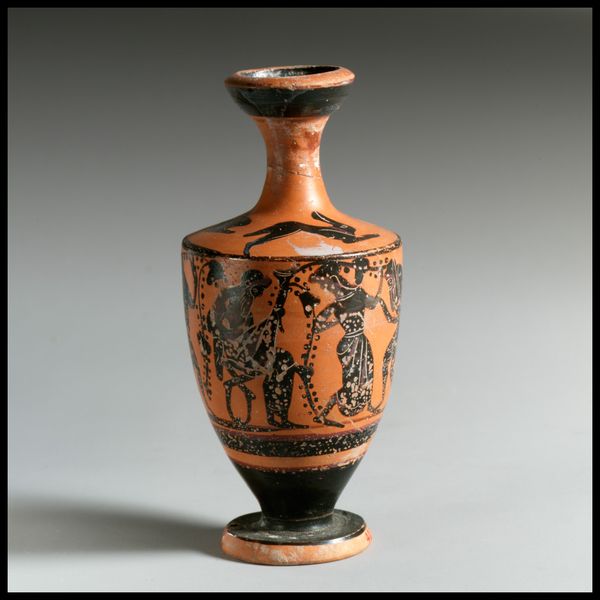
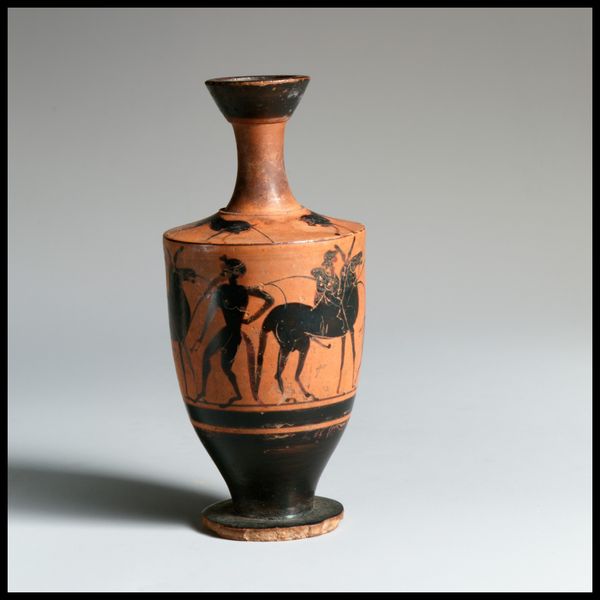
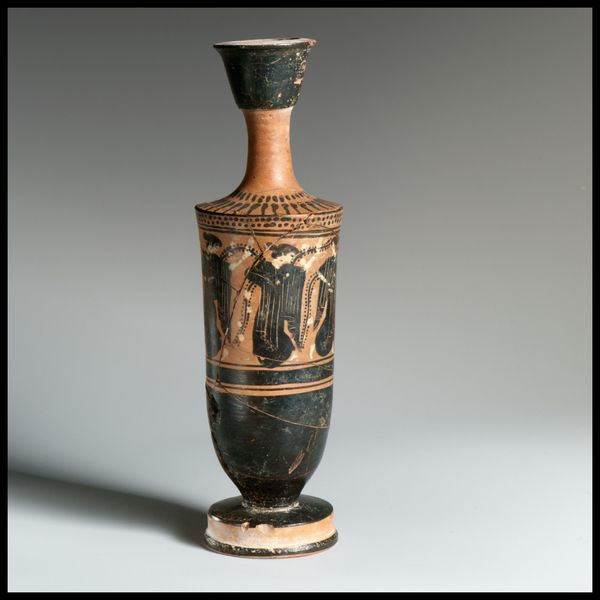
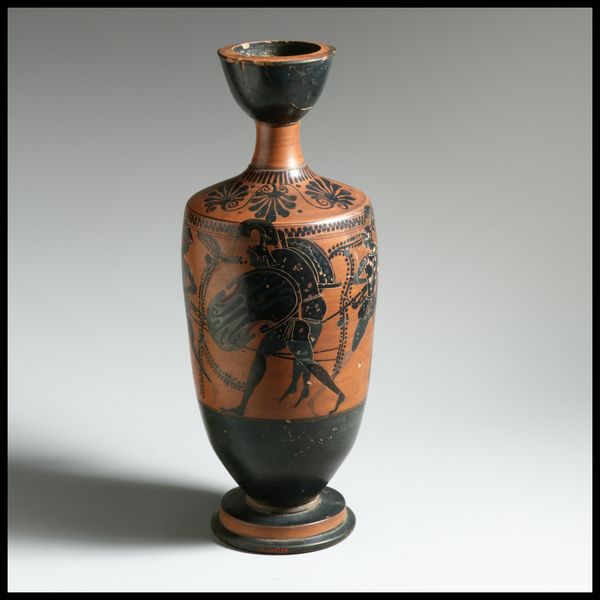
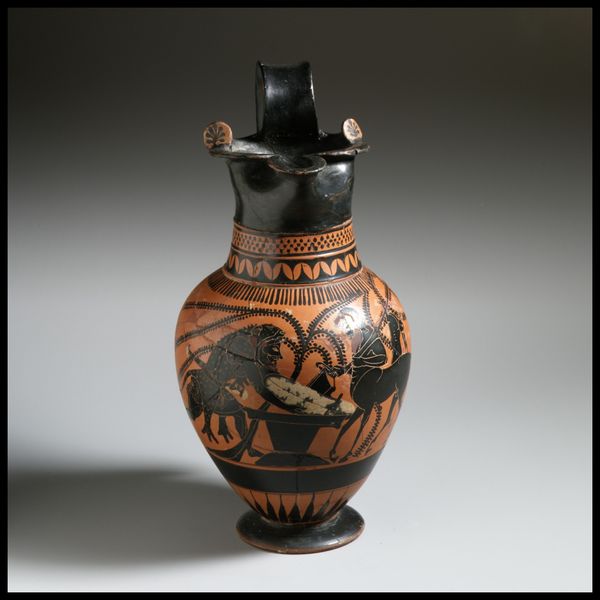
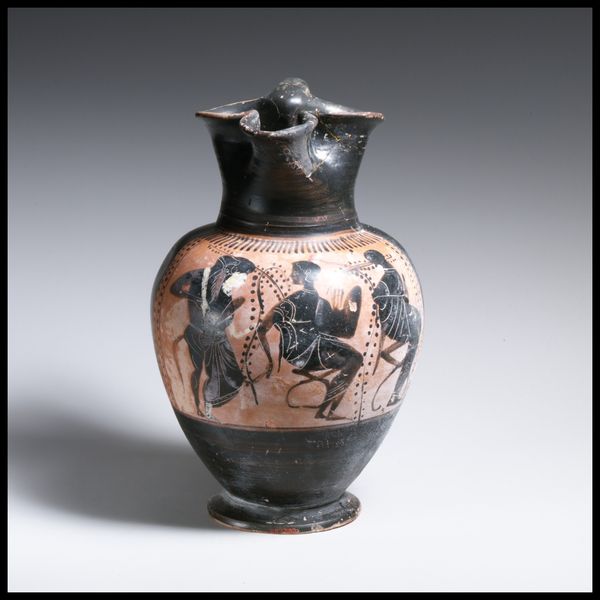
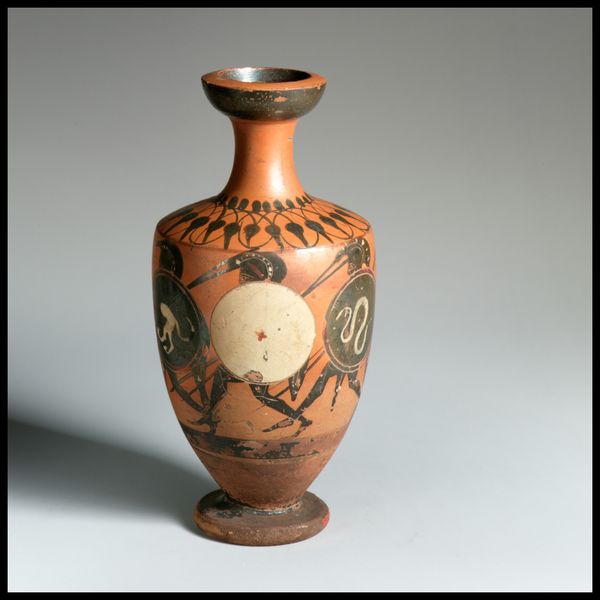
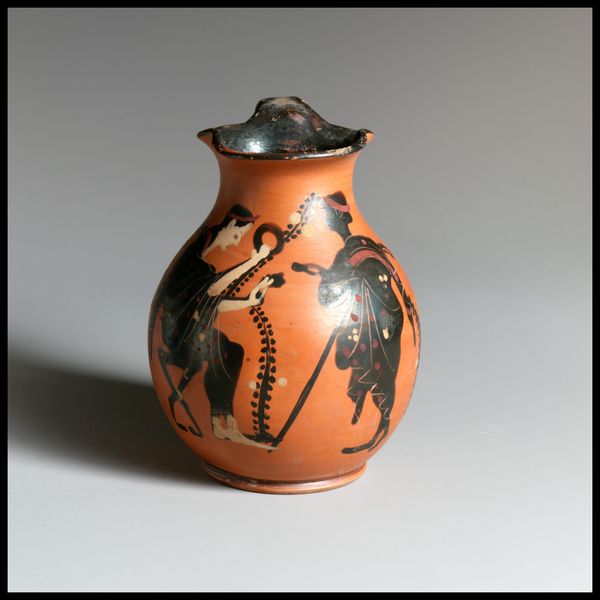
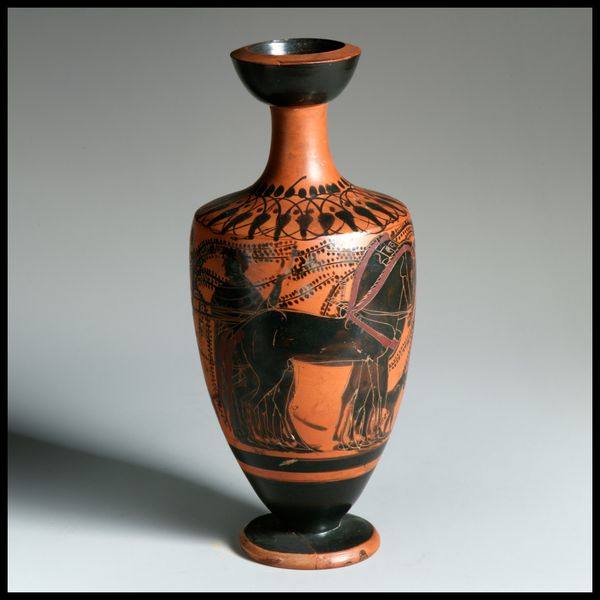
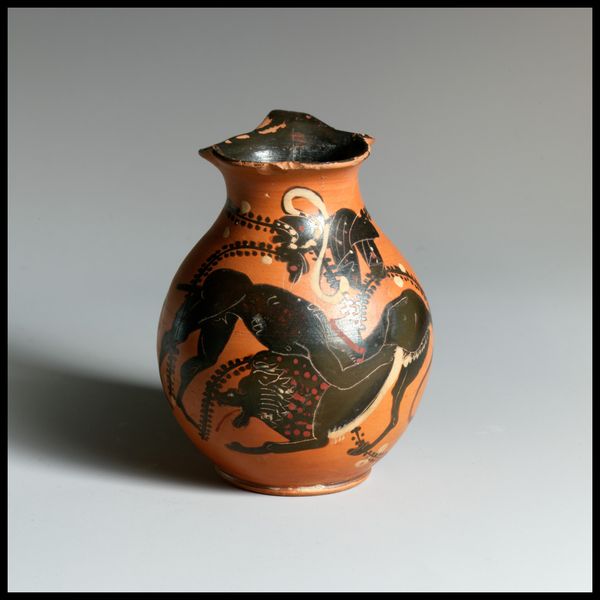
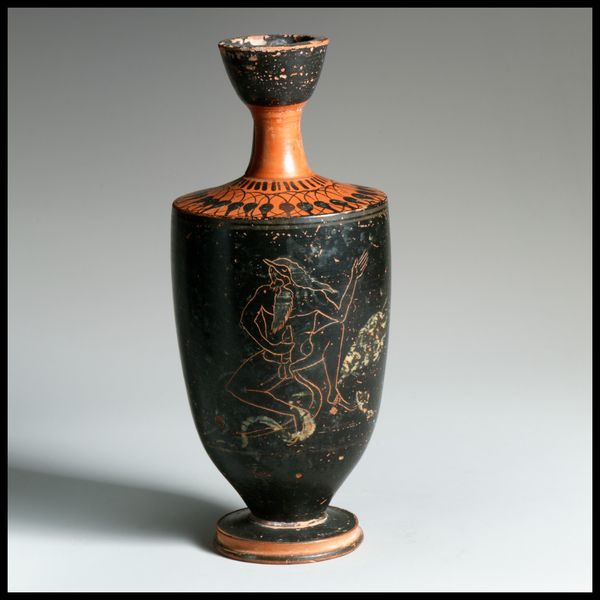
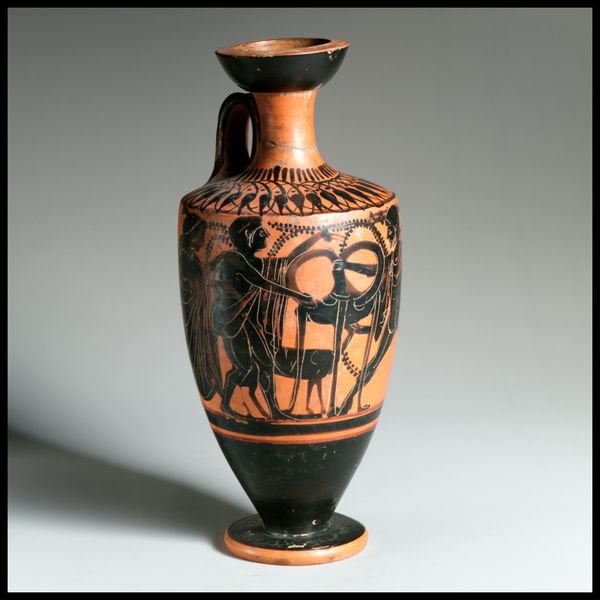
Curator: The Metropolitan Museum of Art holds this fascinating terracotta jug, known as an oinochoe. It dates all the way back to 520 BC, crafted in ancient Greece. I find the narrative imagery on this vessel truly remarkable. Editor: My first thought goes straight to the contrast—the stark black figures against the reddish terracotta ground really draws your eye in. It creates a bold, almost theatrical effect. Curator: Absolutely! The black-figure technique was very popular at the time. Artisans painted figures as silhouettes, using incised details to add texture and definition. What sort of figures do you believe are depicted, and what might it convey about ancient Grecian life? Editor: They look like a small group of men gathered, perhaps in discussion. They are wearing draperies that seem stylized yet convey a sense of decorum and, perhaps, their relative standing in society. I find it interesting to imagine its everyday use; it wasn't simply decorative. It must have featured in everyday events. What stories could be unlocked, just knowing it was passed around a room centuries ago. Curator: Precisely! The jug itself being an everyday vessel reinforces my conviction about this period. In our culture, such simple items are mass produced and quickly disposed. For them, this item might as well have been crafted of gold. How do you suppose that informs modern perceptions of beauty and craftsmanship, through such relics? Editor: That brings to light such interesting issues about the public's encounter with art in spaces such as museums. How are cultural biases encoded in museums which choose and display items which themselves speak to status, skill and the history of visual culture? Curator: It begs the question—do museums adequately address the complex social, political, and economic factors which shaped these artworks, or merely present a romanticized, decontextualized narrative? Editor: Exactly. These objects must never become silent vestiges of the past. We need active storytelling around them. I walk away from this vessel newly appreciative of just how such common materials become extraordinary documents. Curator: Agreed. These artifacts provide valuable windows into past beliefs and cultural continuities.
Comments
No comments
Be the first to comment and join the conversation on the ultimate creative platform.
 React
React Comment