
Curatorial notes
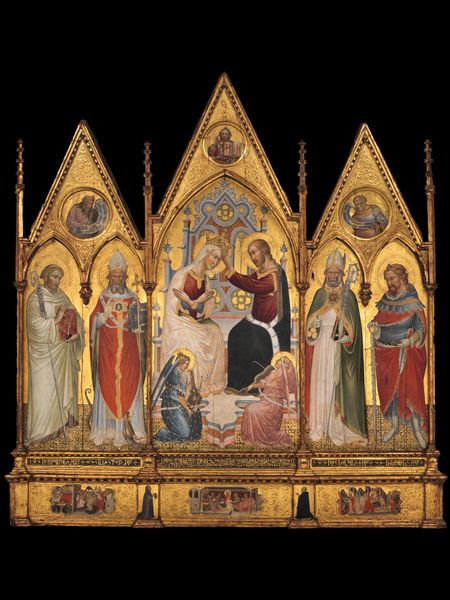
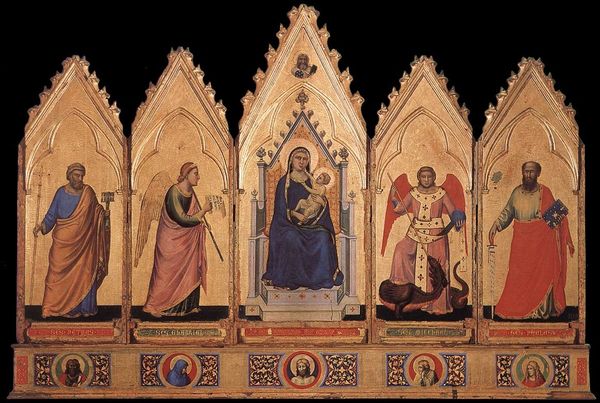
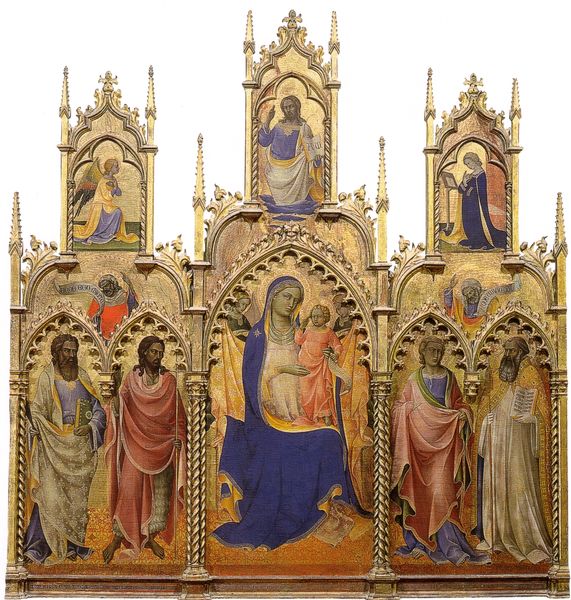
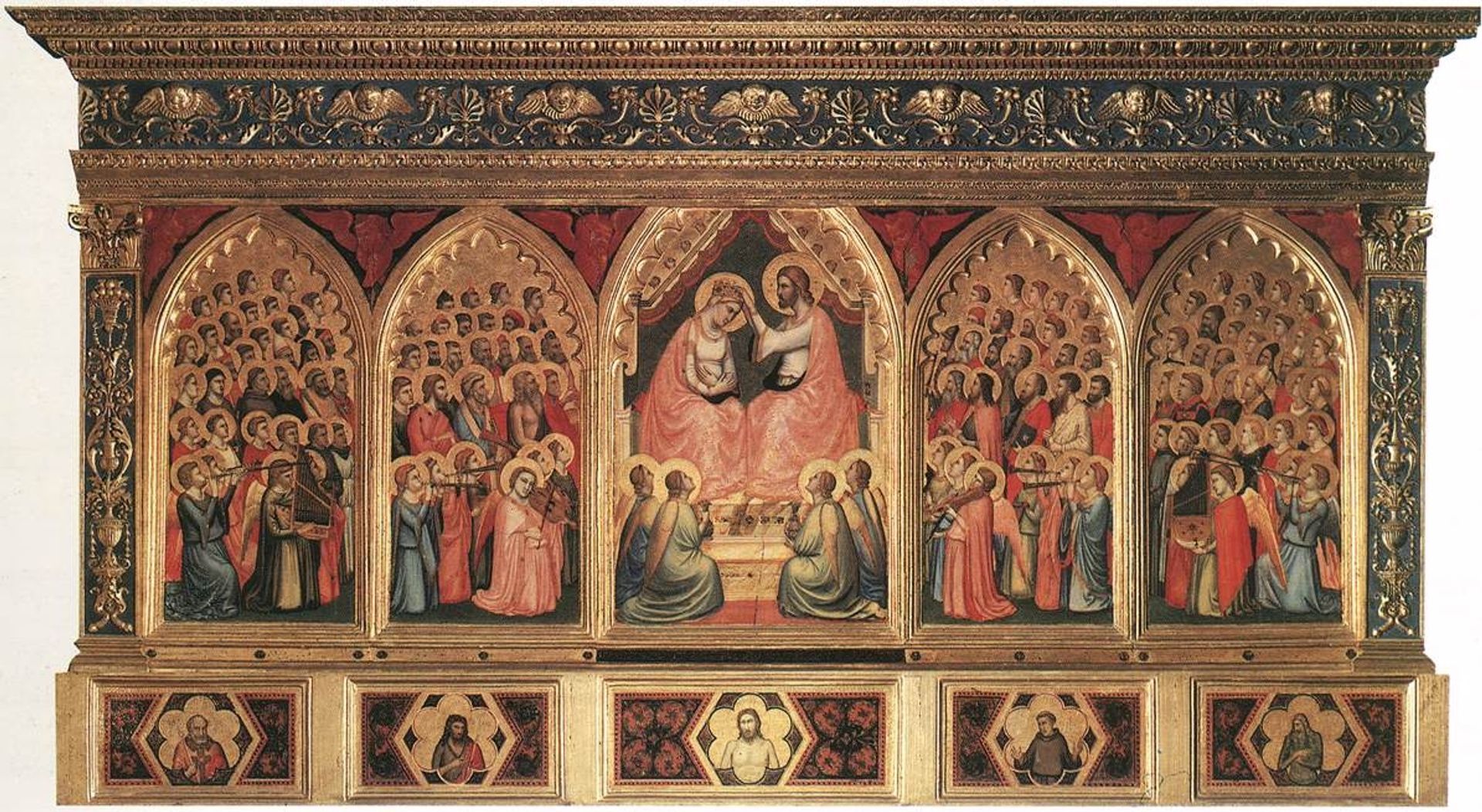
Editor: So, this is the "Baroncelli Polyptych" by Giotto, painted around 1334. It's tempera on wood panel. I'm struck by how the gold leaf seems to overwhelm everything, emphasizing its value, I suppose. How should I think about this piece? Art Historian: I see a careful construction and allocation of precious resources to fulfill a commission. The use of tempera, demanding meticulous preparation and application, speaks volumes about artistic labor and guild control. And you're right to notice the gold leaf; think of its monetary worth reflecting earthly and divine power. Who was paying for it, and who had access to these paintings? Editor: Right, it was the Baroncelli family. How does knowing it was a private commission change things? Art Historian: Precisely! Knowing the patron informs everything. What were their aspirations, their concerns about lineage and piety? We need to examine the conditions of production – the workshops, the availability of materials, the social standing of Giotto himself. Consider the act of consumption, too: Who could access this visually rich artifact, and how did its location affect the audience’s experience and the Baroncelli's status? Editor: So, less about divine symbolism, more about earthly displays of wealth and power? Art Historian: It's never either/or. These materials had inherent symbolism, sure. But that symbolism becomes incredibly potent *because* of the wealth concentrated in this object. Think about the economic and social structures enabling this level of artistic patronage. Editor: Okay, I see how important context is. It's not just about beauty or faith; it's about money and materials shaping meaning. Thanks, this gives me so much to consider. Art Historian: Indeed, understanding art involves unveiling these layers of materiality, labor, and consumption, questioning boundaries between aesthetics and economics.