About this artwork
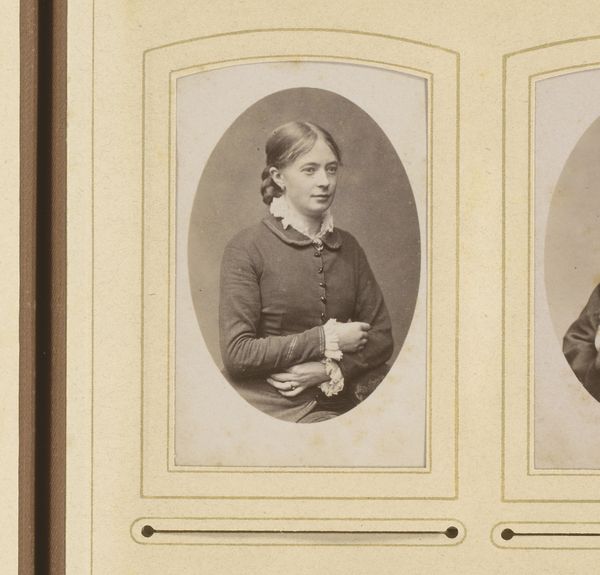
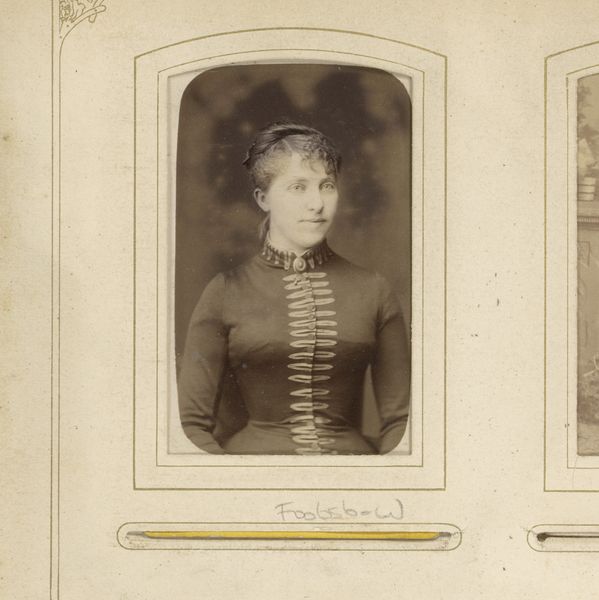
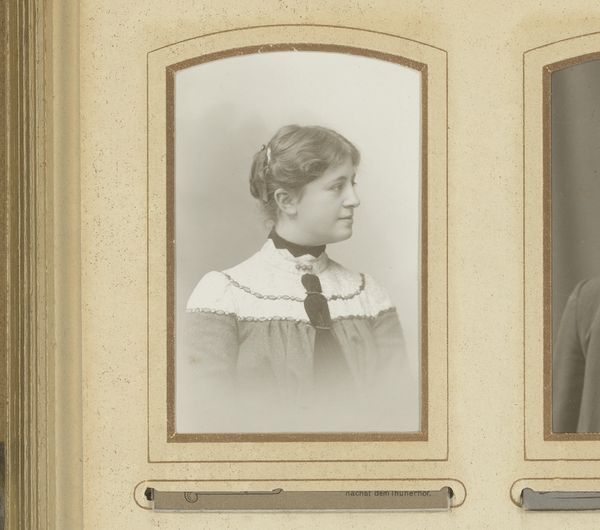
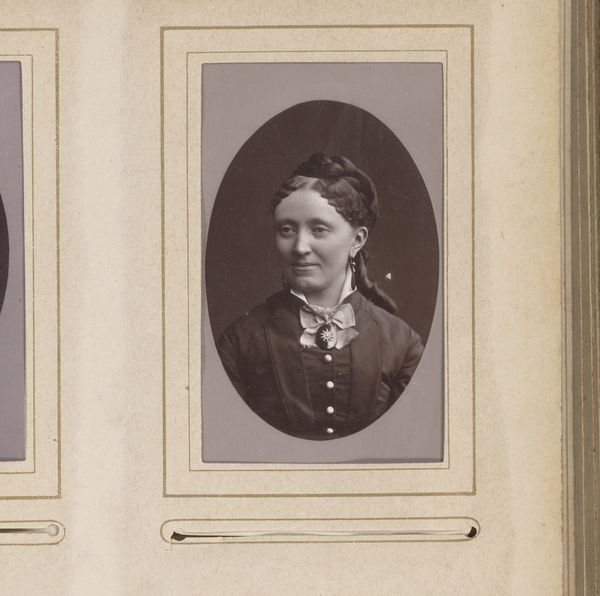
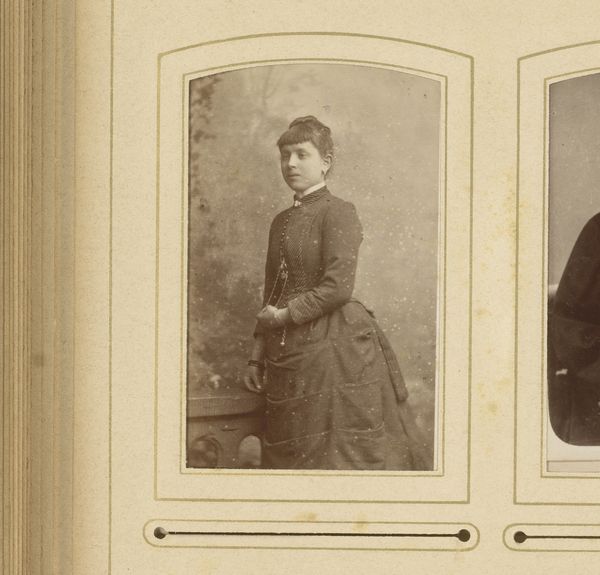
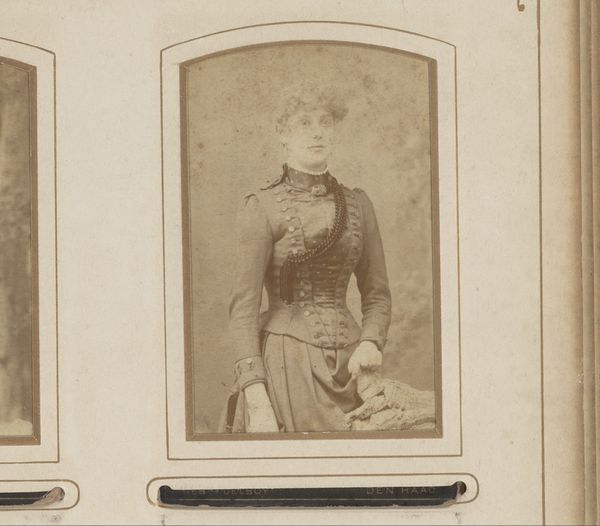
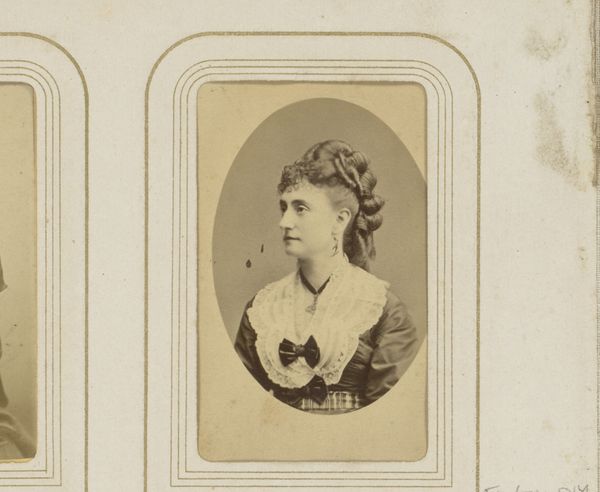
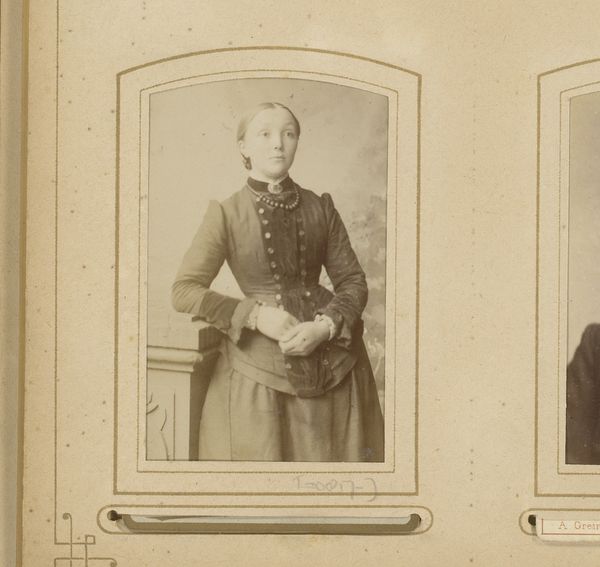
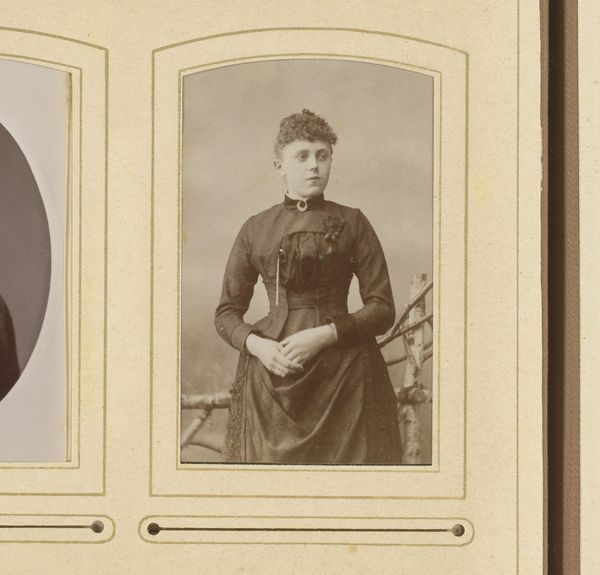
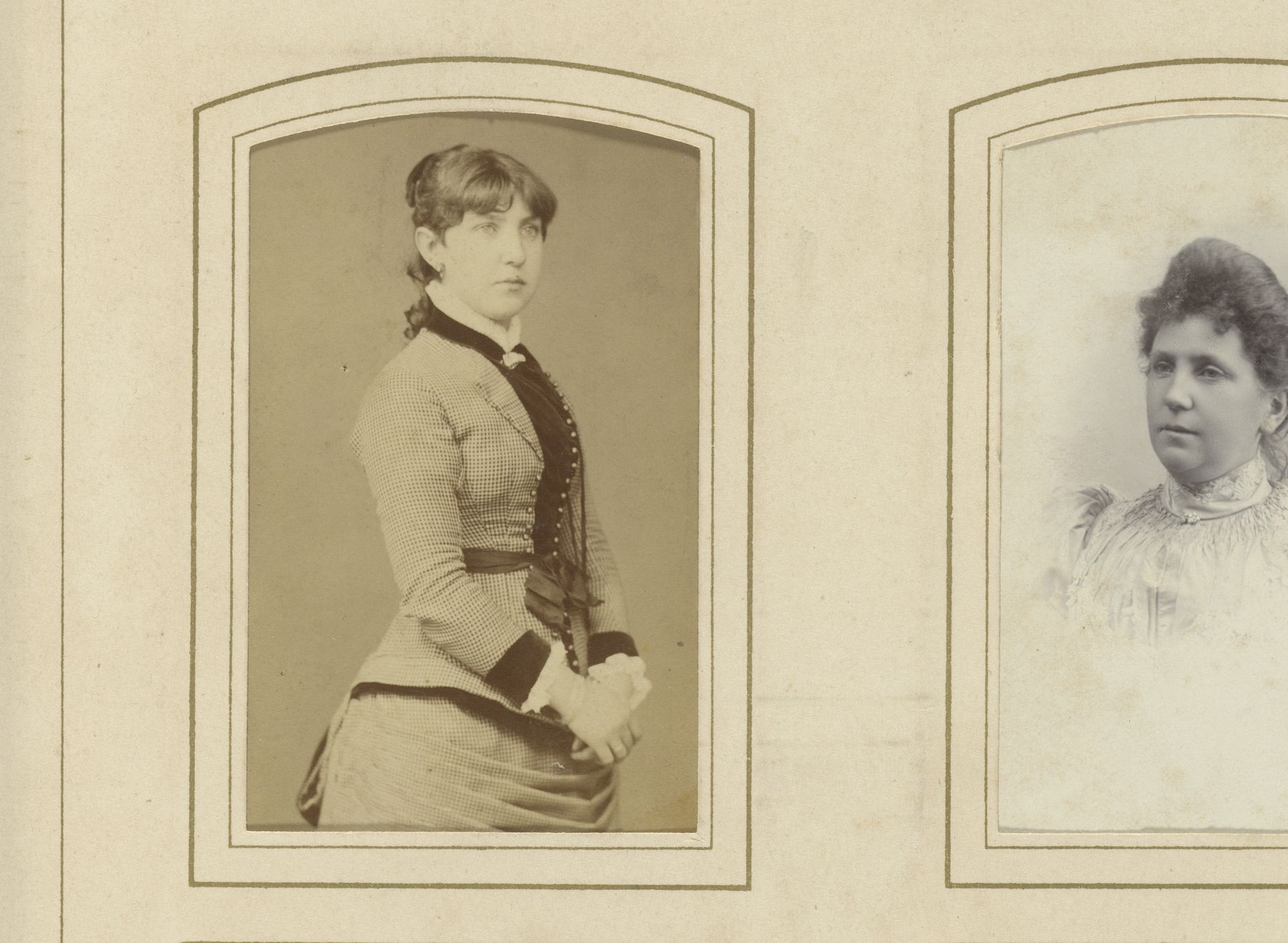
Editor: This gelatin-silver print, “Portret van een staande jonge vrouw,” from between 1865 and 1903 by De Lavieter & Co., has a wonderfully stern but somehow still delicate mood. I'm curious about how portraits like these functioned in society at the time. What can you tell me about it? Curator: Well, portraits, particularly photographic ones, became increasingly accessible to the middle class during this period. They offered a way to solidify social standing and project a desired image. Notice how her posture and clothing reflect societal expectations of women during that era? Editor: Definitely, she appears carefully composed, not spontaneous at all. It almost feels like an idealized version of herself, maybe even…aspirational? Curator: Precisely. Consider also how portrait studios like De Lavieter & Co. operated. They were businesses that actively shaped photographic conventions. To what extent do you think that impacted how women were presented in these early photographs? Editor: So, it wasn’t necessarily an unfiltered representation of this woman, but a constructed image adhering to popular trends and perhaps, even the photographer’s artistic choices… How do we know what the sitter actually felt about these poses? Curator: An excellent question. Finding direct evidence of sitters’ feelings can be tricky, so consider the prevailing socio-political currents that inform female self-presentation at this time. Can you see hints of it in the image itself? Editor: That’s fascinating. It shifts my perception, recognizing the photographer and the business as active participants and shapers of social narratives. I had naively perceived these as simple 'snapshots' in time, without really questioning how women are displayed, packaged, or even marketed, which gives this photograph greater historical impact. Curator: Precisely! That expanded contextual awareness helps reveal what these images signify, and it can transform the viewing experience.

Artwork details
- Medium
- photography, gelatin-silver-print
- Dimensions
- height 83 mm, width 52 mm
- Copyright
- Rijks Museum: Open Domain
Tags
Comments
Share your thoughts
About this artwork
Editor: This gelatin-silver print, “Portret van een staande jonge vrouw,” from between 1865 and 1903 by De Lavieter & Co., has a wonderfully stern but somehow still delicate mood. I'm curious about how portraits like these functioned in society at the time. What can you tell me about it? Curator: Well, portraits, particularly photographic ones, became increasingly accessible to the middle class during this period. They offered a way to solidify social standing and project a desired image. Notice how her posture and clothing reflect societal expectations of women during that era? Editor: Definitely, she appears carefully composed, not spontaneous at all. It almost feels like an idealized version of herself, maybe even…aspirational? Curator: Precisely. Consider also how portrait studios like De Lavieter & Co. operated. They were businesses that actively shaped photographic conventions. To what extent do you think that impacted how women were presented in these early photographs? Editor: So, it wasn’t necessarily an unfiltered representation of this woman, but a constructed image adhering to popular trends and perhaps, even the photographer’s artistic choices… How do we know what the sitter actually felt about these poses? Curator: An excellent question. Finding direct evidence of sitters’ feelings can be tricky, so consider the prevailing socio-political currents that inform female self-presentation at this time. Can you see hints of it in the image itself? Editor: That’s fascinating. It shifts my perception, recognizing the photographer and the business as active participants and shapers of social narratives. I had naively perceived these as simple 'snapshots' in time, without really questioning how women are displayed, packaged, or even marketed, which gives this photograph greater historical impact. Curator: Precisely! That expanded contextual awareness helps reveal what these images signify, and it can transform the viewing experience.
Comments
Share your thoughts