About this artwork
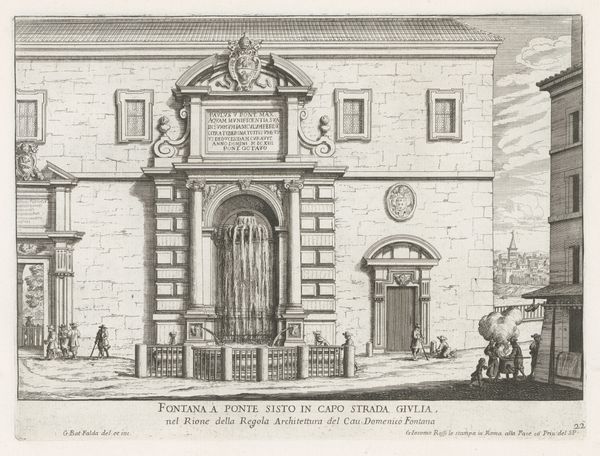
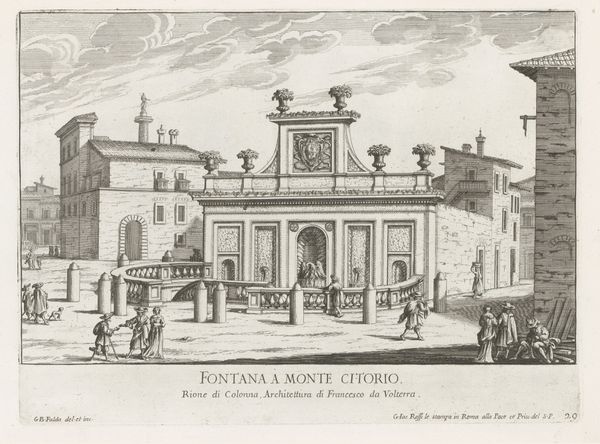
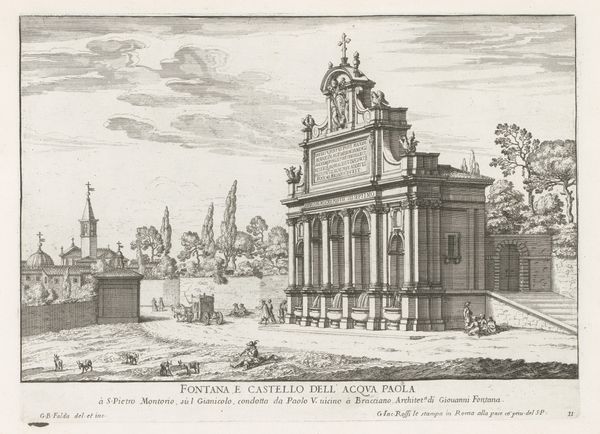
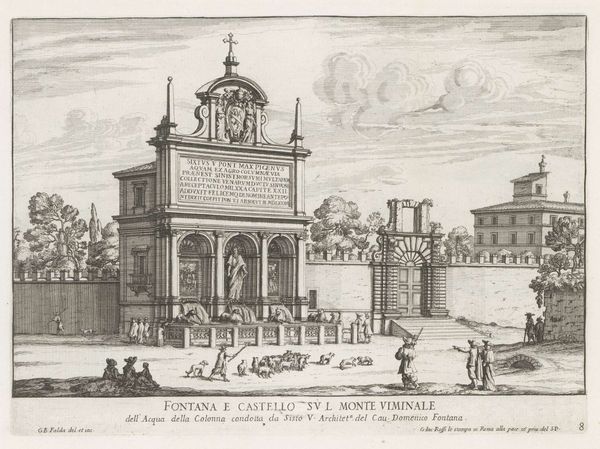
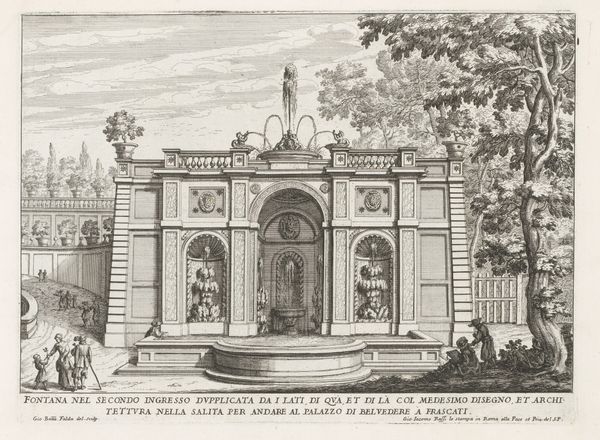
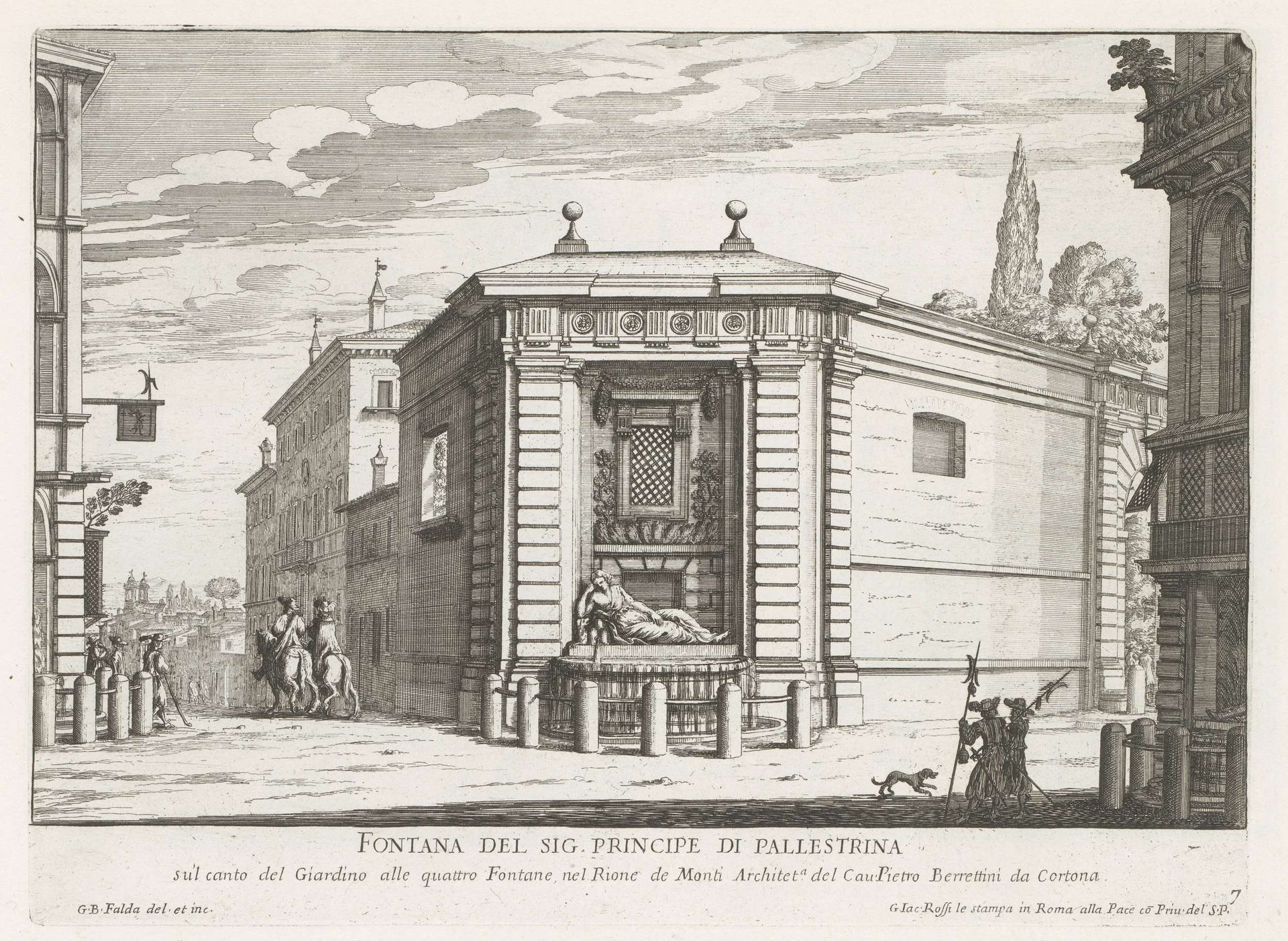
Giovanni Battista Falda created this print of the Dianafontein van de Quattro Fontane in Rome in the late 17th century using etching and engraving techniques. These processes, requiring acid to bite into a metal plate, are indirect and demand careful planning. Consider the labor involved: from the initial drawing to the skilled etching and engraving that captured the fountain’s architectural details and sculptural elements. The artist has used line work to create depth, shadow, and texture, giving the print a lifelike quality. The printmaking process itself had social significance, as prints made art and architecture accessible to a wider audience beyond the elite. Falda’s print not only documents the fountain but also disseminates its design, influencing architectural tastes and urban planning. By focusing on the materials and making of this print, we recognize the skilled labor involved and the broader social context of artistic production in 17th-century Rome. It highlights the importance of understanding techniques and their cultural impact, challenging any strict divide between art, craft, and social history.
Dianafontein van de Quattro Fontane te Rome
1653 - 1691

Giovanni Battista Falda
1643 - 1678Location
RijksmuseumArtwork details
- Medium
- print, engraving, architecture
- Dimensions
- height 220 mm, width 296 mm
- Location
- Rijksmuseum
- Copyright
- Rijks Museum: Open Domain
Tags
Comments
Share your thoughts
About this artwork
Giovanni Battista Falda created this print of the Dianafontein van de Quattro Fontane in Rome in the late 17th century using etching and engraving techniques. These processes, requiring acid to bite into a metal plate, are indirect and demand careful planning. Consider the labor involved: from the initial drawing to the skilled etching and engraving that captured the fountain’s architectural details and sculptural elements. The artist has used line work to create depth, shadow, and texture, giving the print a lifelike quality. The printmaking process itself had social significance, as prints made art and architecture accessible to a wider audience beyond the elite. Falda’s print not only documents the fountain but also disseminates its design, influencing architectural tastes and urban planning. By focusing on the materials and making of this print, we recognize the skilled labor involved and the broader social context of artistic production in 17th-century Rome. It highlights the importance of understanding techniques and their cultural impact, challenging any strict divide between art, craft, and social history.
Comments
Share your thoughts