print, engraving
portrait
baroque
portrait reference
history-painting
engraving
Dimensions: 354 mm (height) x 224 mm (width) (bladmaal)
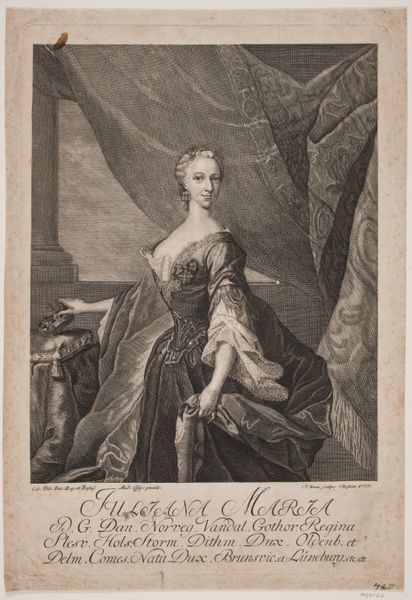
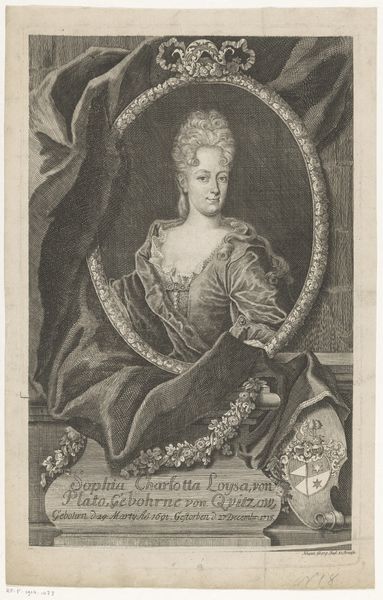
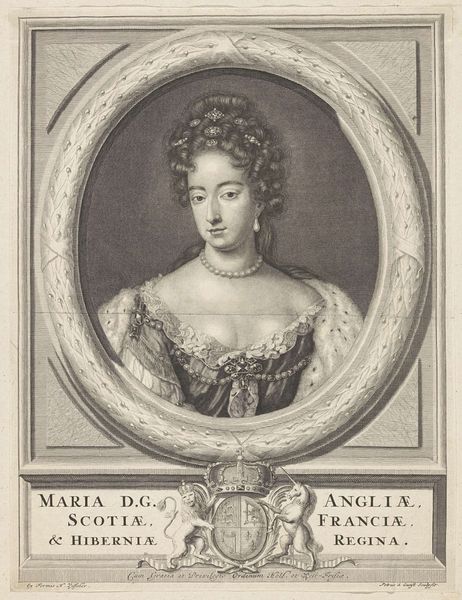
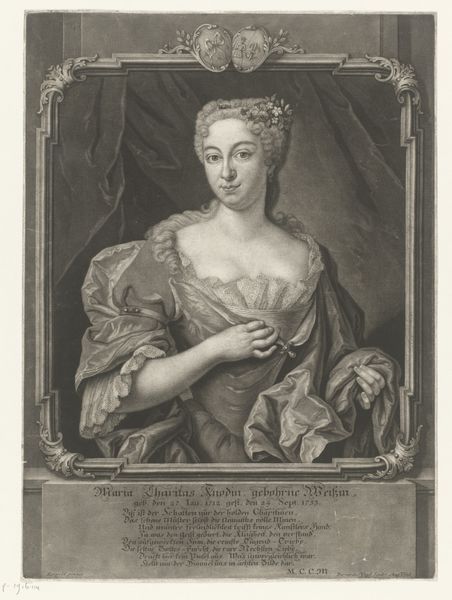
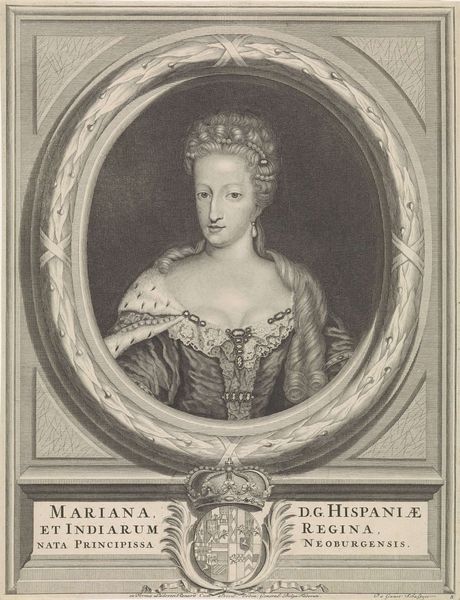
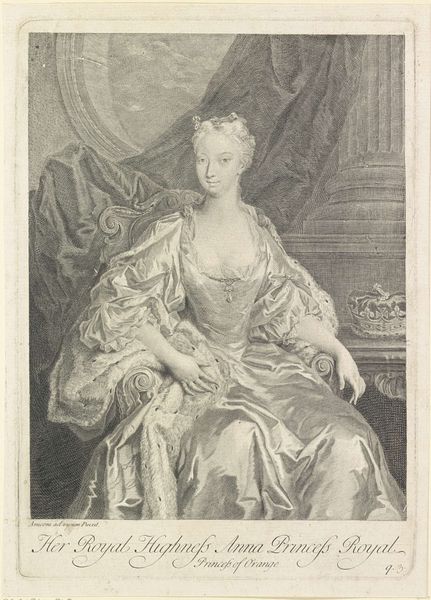
Curator: Here we have Jonas Haas' engraving from 1753, titled "Dronning Juliane Marie," or Queen Juliane Marie. It’s quite grand. What strikes you first about it? Editor: Oh, immediately the textures! All those finely etched lines creating depth in the drapery and her gown. It almost vibrates with busyness, like a swarm of industrious ants meticulously building up the Queen's image. Curator: Exactly! Haas truly exploits the printmaking process, doesn’t he? Notice the details of the ermine trim, for instance. To me, this exemplifies Baroque printmaking—the ornate, the lavish, a deliberate display of status achieved through meticulous work. Editor: Right, because consider the labor involved in creating the matrix for printing. Engraving is such a physical and deliberate act. Each line, a choice, a removal of material...it's so much more than simply transferring an image. It’s a collaboration between artist, material, and social expectations. She needed this portrait. Haas needed the work. We get to witness that convergence centuries later. Curator: And her titles boldly displayed. Reine de Danem, Norrige des Goths et Vandal…Queen of Denmark, Norway, of the Goths and Vandals. Though perhaps more symbolic than literal at that point in history, no? But it really does underline how images are actively part of the language of power. She's clutching a length of what appears to be fabric as if asserting authority over her garments and regalia. Editor: Yes, a tactile representation of dominion! It almost reminds you how clothing production, from textile to final adornment, structured social hierarchies then...and continues to even now, in very real terms. But do you also get the feeling that the artist also perhaps pokes fun at those exact power relations through excess detail? It’s a little exaggerated. Curator: Hmm, a subtle mockery? Intriguing! Perhaps the slightest hint of commentary in the almost overwhelming accumulation of detail. Well, it is food for thought. Editor: For sure, it reminds us that prints like these were essentially mass media of their time and raise vital questions around labor and historical consumption. Curator: Precisely. I am constantly amazed at what details historical depictions like these unveil about technique and society at the time.
Comments
No comments
Be the first to comment and join the conversation on the ultimate creative platform.
 React
React Comment