1586
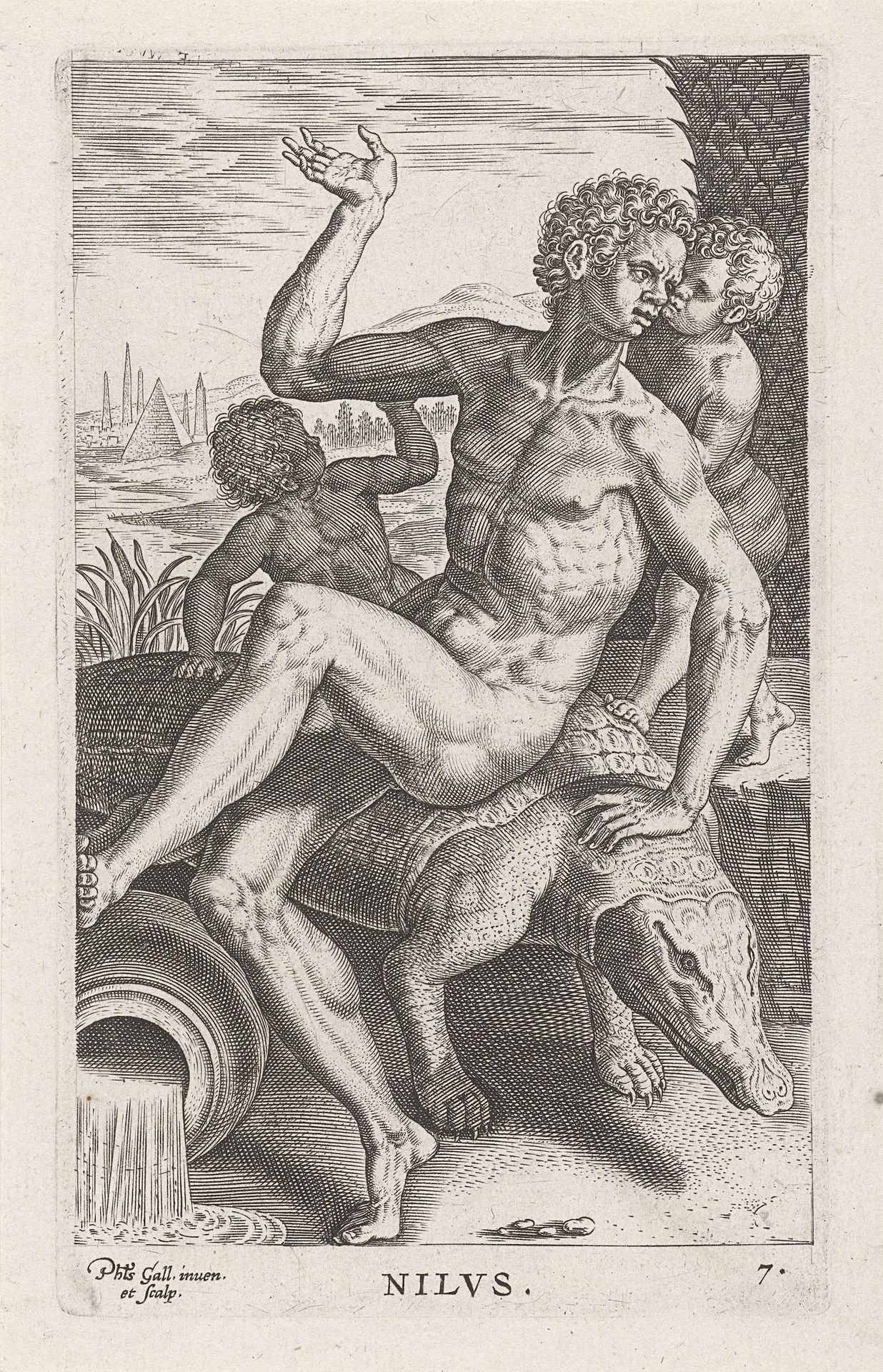
Riviergod Nilus

Philips Galle
1537 - 1612Location
RijksmuseumListen to curator's interpretation
Curatorial notes
Philips Galle created this engraving, "Riviergod Nilus," in the late 16th century. During this period, there was a growing European fascination with distant lands, often filtered through a lens of colonialism and exoticism. The artwork depicts the river god Nilus, embodying the Nile River, as a muscular, dark-skinned man. Galle’s representation reflects the complex intersection of race, power, and representation in European art. Nilus is accompanied by children, symbolizing fertility and abundance, and is seated on a crocodile, an animal associated with Egypt. The pyramids in the background reinforce the Egyptian setting. Representations like these often served to reinforce a sense of European dominance over foreign lands and peoples, while simultaneously acknowledging the allure and mystery of these cultures. The emotional impact of seeing such a figure is complicated, raising questions about cultural appropriation, the exoticization of non-European cultures, and the power dynamics inherent in representation. "Riviergod Nilus" compels us to consider how historical depictions shape contemporary perceptions of identity, race, and cultural heritage.