About this artwork
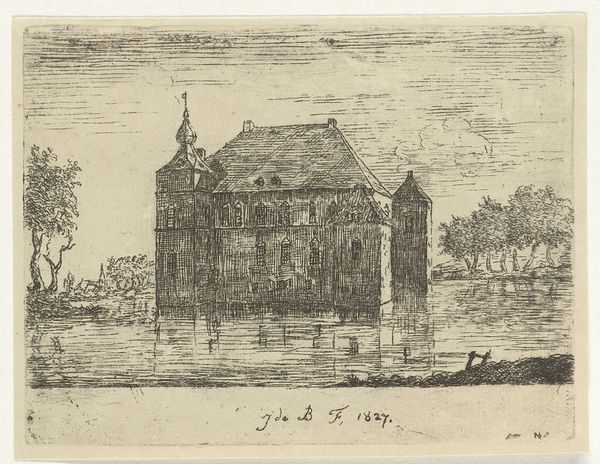
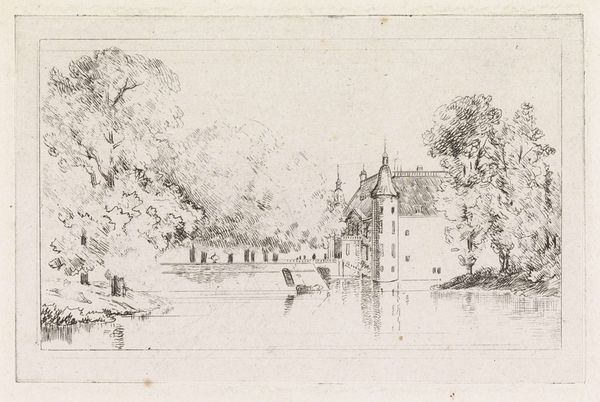
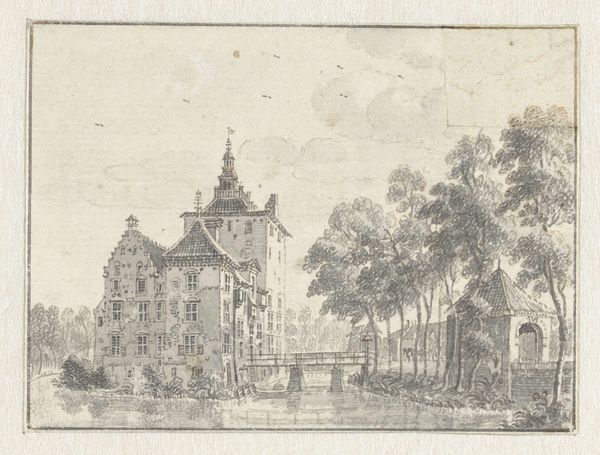
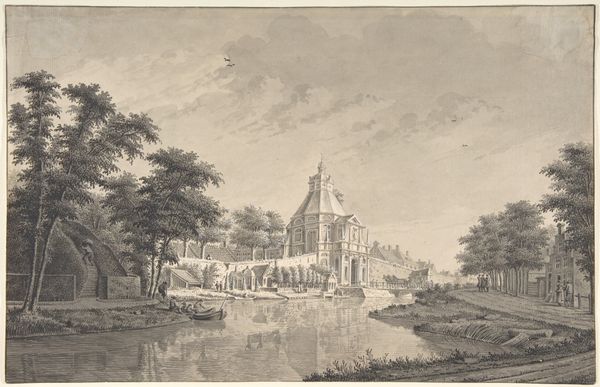
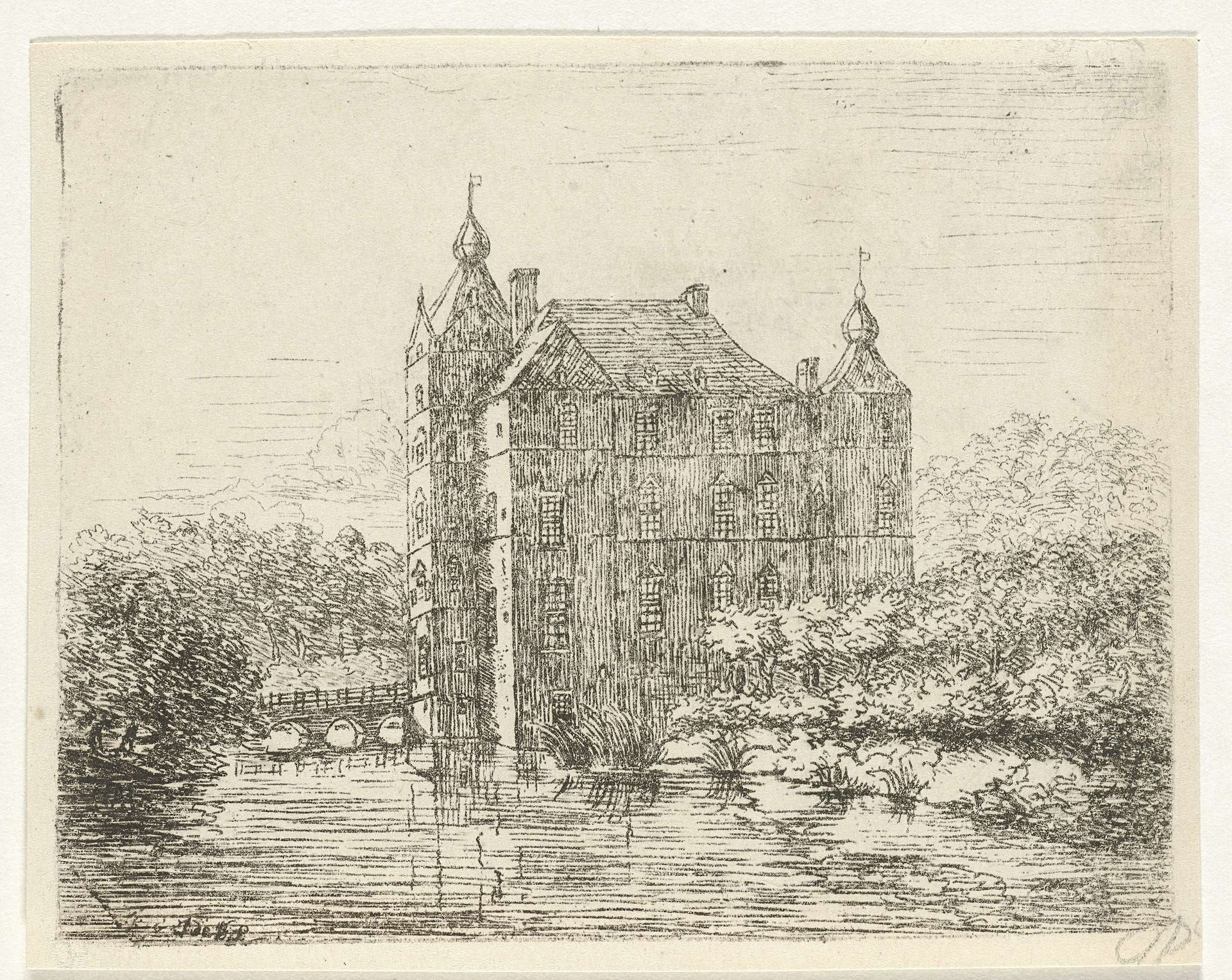
This etching, made by Reinierus Albertus Ludovicus baron van Isendoorn à Blois, gives us a view of the Cannenburch Castle in the Netherlands. The image presents a stately building surrounded by water and lush greenery. The castle, depicted with meticulous detail, reflects the artist's interest in architectural representation, while the surrounding landscape hints at the romantic appreciation for nature. The social and political history of the Netherlands during this period, with its emphasis on aristocratic lineage and country estates, informs the context of this work. The artist, himself a baron, would have been part of this social class, and this artwork perhaps offers a glimpse into the values and interests of the Dutch aristocracy in the early 19th century. Understanding this image requires us to delve into the cultural values, class structures, and artistic conventions prevalent in the Netherlands at that time, using resources from archives, libraries, and other collections. This allows us to understand how art reflects and engages with the social conditions of its time.
Zijaanzicht van kasteel de Cannenburch
1796 - 1856

Artwork details
- Medium
- print, etching, engraving
- Dimensions
- height 78 mm, width 100 mm
- Copyright
- Rijks Museum: Open Domain
Tags
Comments
Share your thoughts
About this artwork
This etching, made by Reinierus Albertus Ludovicus baron van Isendoorn à Blois, gives us a view of the Cannenburch Castle in the Netherlands. The image presents a stately building surrounded by water and lush greenery. The castle, depicted with meticulous detail, reflects the artist's interest in architectural representation, while the surrounding landscape hints at the romantic appreciation for nature. The social and political history of the Netherlands during this period, with its emphasis on aristocratic lineage and country estates, informs the context of this work. The artist, himself a baron, would have been part of this social class, and this artwork perhaps offers a glimpse into the values and interests of the Dutch aristocracy in the early 19th century. Understanding this image requires us to delve into the cultural values, class structures, and artistic conventions prevalent in the Netherlands at that time, using resources from archives, libraries, and other collections. This allows us to understand how art reflects and engages with the social conditions of its time.
Comments
Share your thoughts