About this artwork
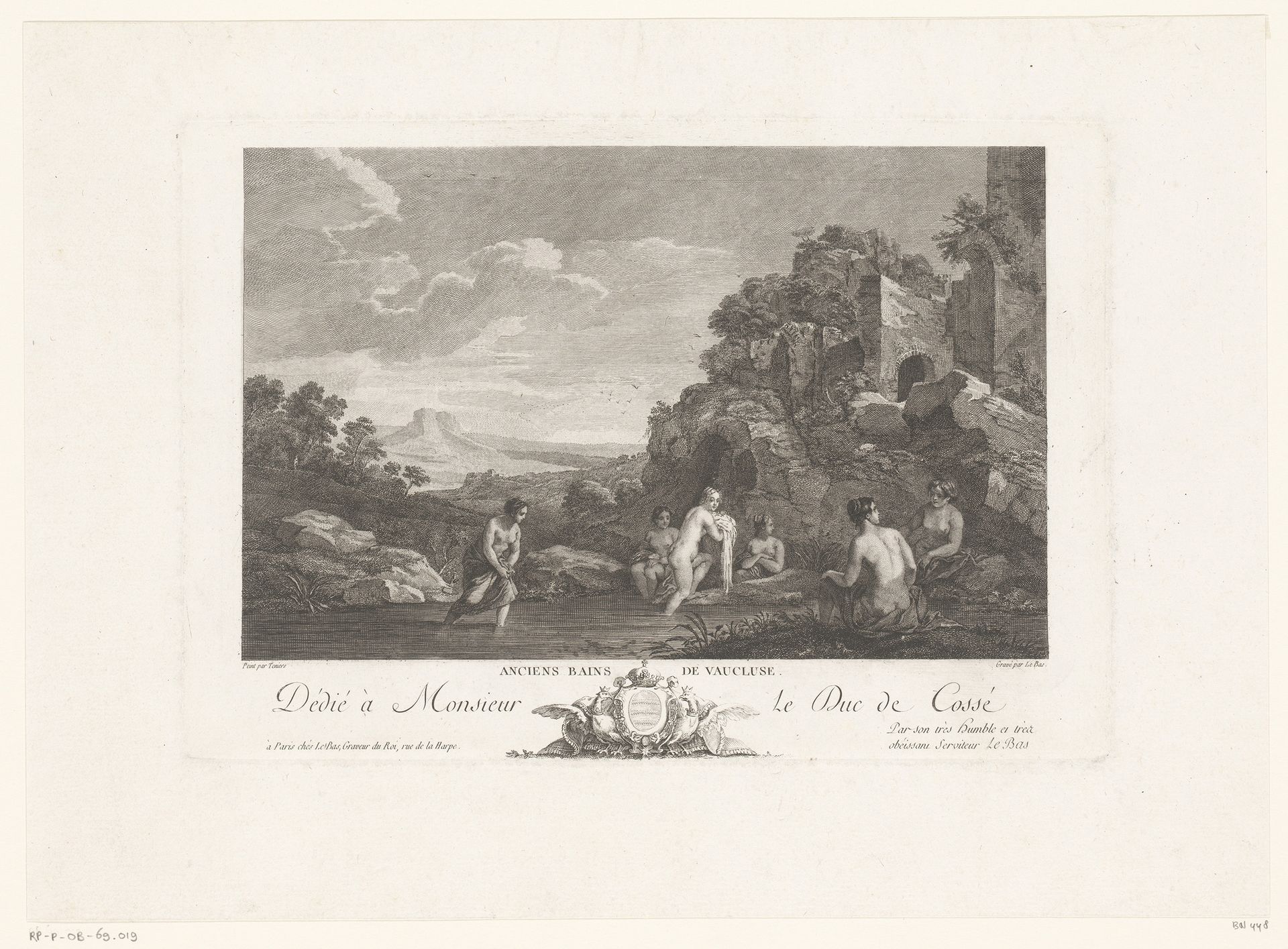
Jacques Philippe Le Bas created this print titled 'Bathing Women near a Ruin' in France during the 18th century, a time when the aristocracy were developing a taste for naturalistic scenes. The print's subject matter, a group of nude women bathing near classical ruins, connects to a broader cultural interest in antiquity. The ruin could allude to the transience of human achievement, a popular theme in art and literature during this period. Alternatively, it may refer to the archaeological digs that were taking place in Italy. Through visual cues such as the classical architecture, idyllic landscape and reclining nude figures, the image creates an association with classical art. The naturalism and informality of the scene, however, speak to a developing progressive aesthetic in French art, but at the same time it comments on traditional structures of class and gender. To understand the print more fully, researchers might consider consulting archives that document the archaeological movement. Examining period literature on aesthetics can also provide insights into the contemporary understanding of ruins and the nude female form in art. This will give us a greater understanding of the social conditions that shaped the production of this artwork.
Badende vrouwen bij een ruïne
1717 - 1783

Jacques Philippe Le Bas
1707 - 1783Location
RijksmuseumArtwork details
- Medium
- print, engraving
- Dimensions
- height 192 mm, width 278 mm
- Location
- Rijksmuseum
- Copyright
- Rijks Museum: Open Domain
Tags
Comments
Share your thoughts
About this artwork
Jacques Philippe Le Bas created this print titled 'Bathing Women near a Ruin' in France during the 18th century, a time when the aristocracy were developing a taste for naturalistic scenes. The print's subject matter, a group of nude women bathing near classical ruins, connects to a broader cultural interest in antiquity. The ruin could allude to the transience of human achievement, a popular theme in art and literature during this period. Alternatively, it may refer to the archaeological digs that were taking place in Italy. Through visual cues such as the classical architecture, idyllic landscape and reclining nude figures, the image creates an association with classical art. The naturalism and informality of the scene, however, speak to a developing progressive aesthetic in French art, but at the same time it comments on traditional structures of class and gender. To understand the print more fully, researchers might consider consulting archives that document the archaeological movement. Examining period literature on aesthetics can also provide insights into the contemporary understanding of ruins and the nude female form in art. This will give us a greater understanding of the social conditions that shaped the production of this artwork.
Comments
Share your thoughts