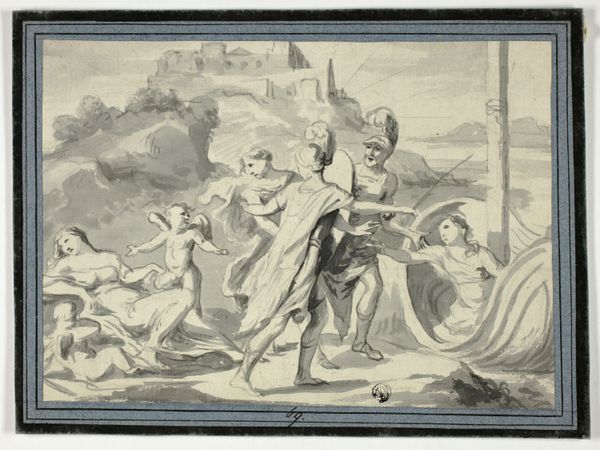
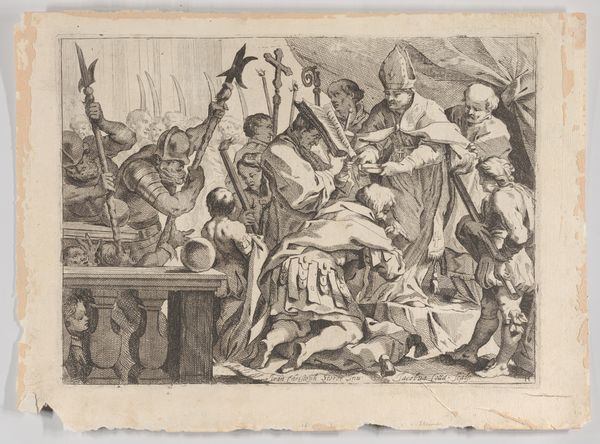
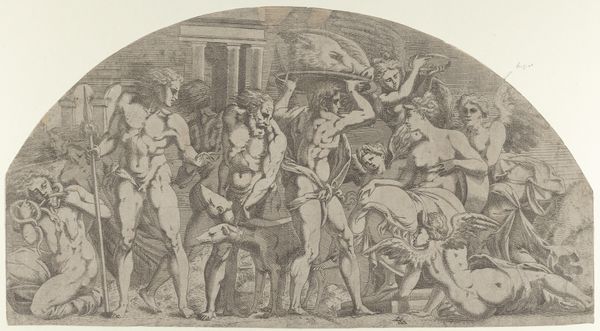
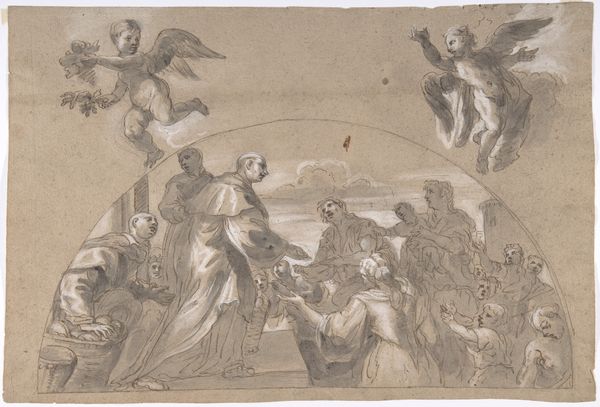
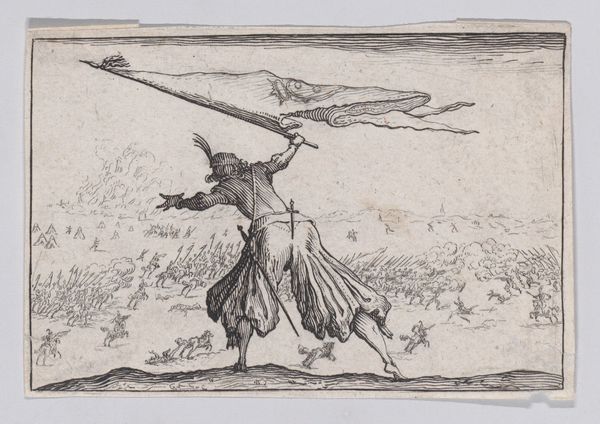
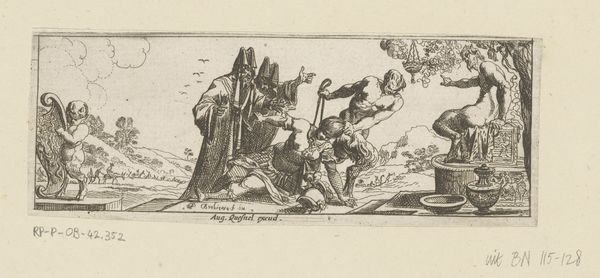
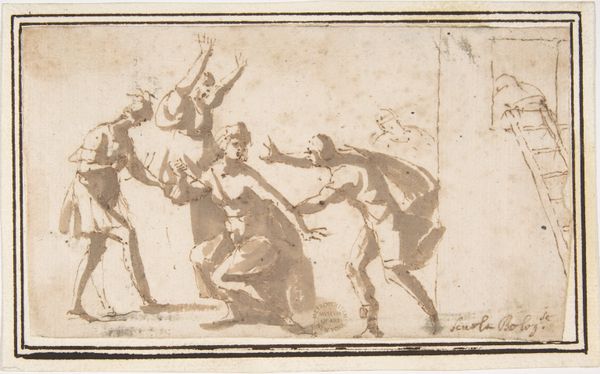
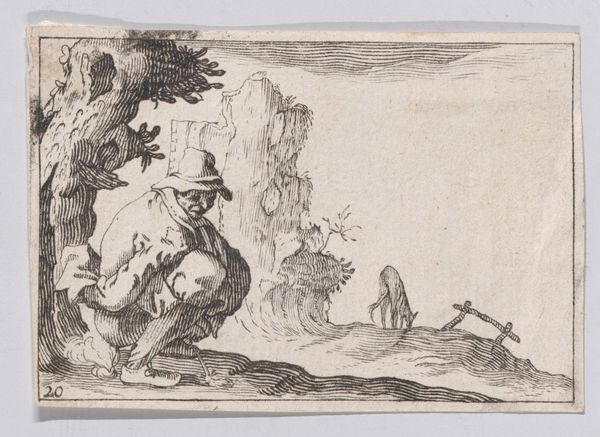
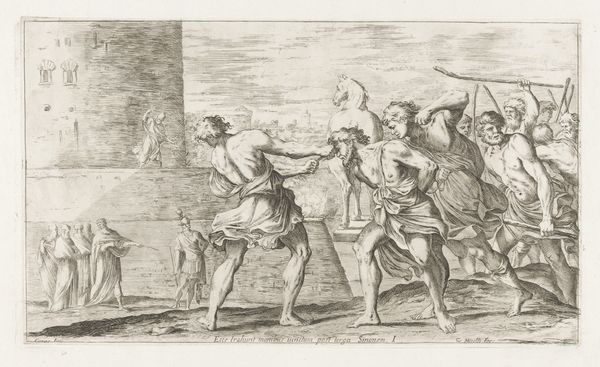
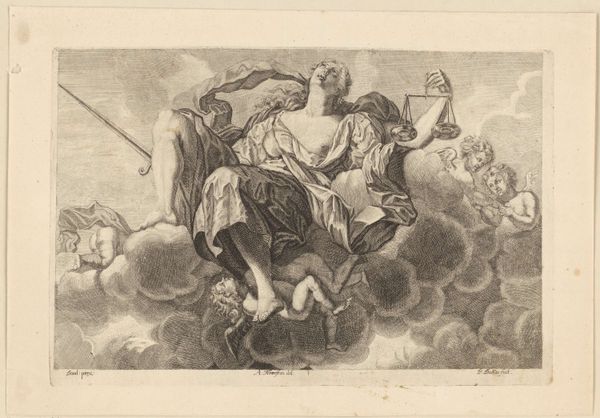
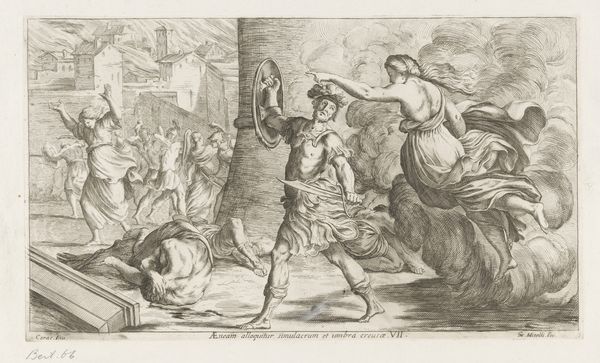
Reverse Copy of Escarmouche dans un Circque (Skirmish in a Circus), from "Les Caprices" 1620 - 1700


drawing, print
drawing
baroque
figuration
history-painting
Dimensions: Sheet: 1 15/16 x 2 15/16 in. (5 x 7.5 cm)
Copyright: Public Domain
Editor: Here we have "Reverse Copy of Escarmouche dans un Circque (Skirmish in a Circus), from "Les Caprices"", created sometime between 1620 and 1700. It's an anonymous print now residing at the Met. It's certainly a busy scene. What strikes me is the chaos depicted. What do you make of it? Curator: It's fascinating how prints like this circulated in early modern Europe. Reproductions made art and ideas more accessible, but also raised questions of originality and authenticity. Have you considered how the *Caprices* series engages with contemporary social or political issues? Editor: Not particularly, I was mainly responding to the immediate impression. What kinds of issues would it engage with? Curator: Well, circuses weren't simply entertainment; they were also arenas for displays of power, control, and often, violence. The "skirmish" could allude to political unrest, religious conflict, or even the spectacles of the court. Think about who was commissioning and consuming these images. Whose narratives were being amplified? Editor: So the print, beyond being a scene, is performing some kind of social function? Showing us an active battle... Maybe this circus setting reflects the broader society? Curator: Exactly! Consider the role of the anonymous artist. Does this anonymity give them more freedom to comment on social issues? How might the museum’s presentation of this work shape its contemporary reception? Is it merely an aesthetic object, or something more? Editor: I hadn't thought about it that way, that circulation gives power. It definitely gives me a lot to consider. Thank you! Curator: It is exciting to reflect on art's interaction with culture and power. A great piece for starting an intriguing investigation!
Comments
No comments
Be the first to comment and join the conversation on the ultimate creative platform.
 React
React Comment