2001
Untitled


Listen to curator's interpretation
Curatorial notes
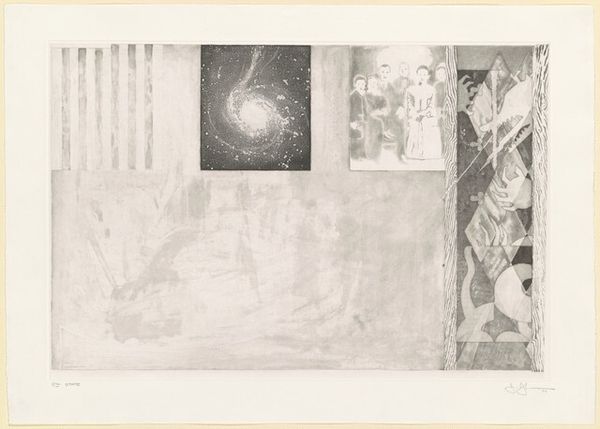
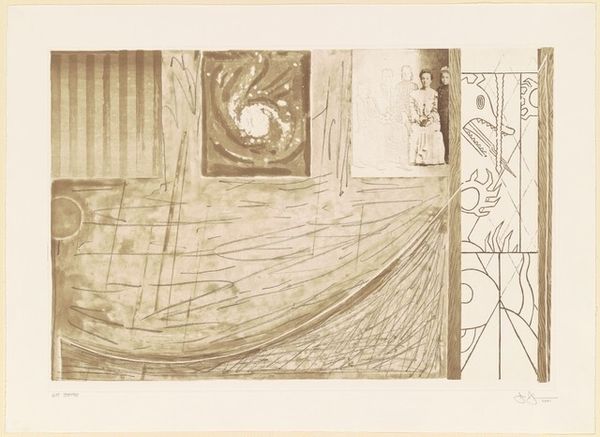
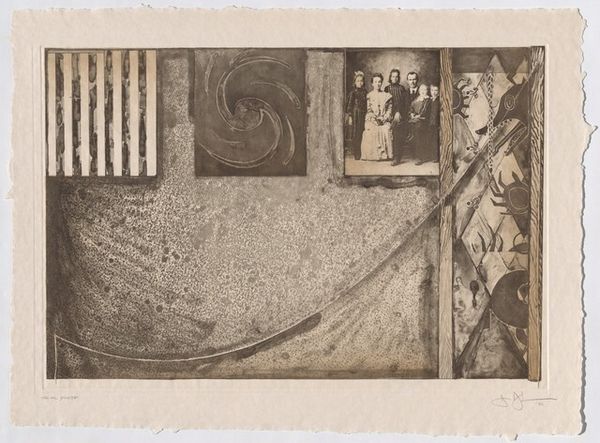
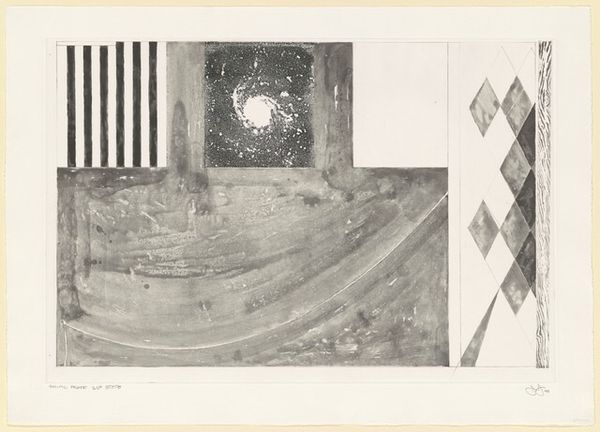
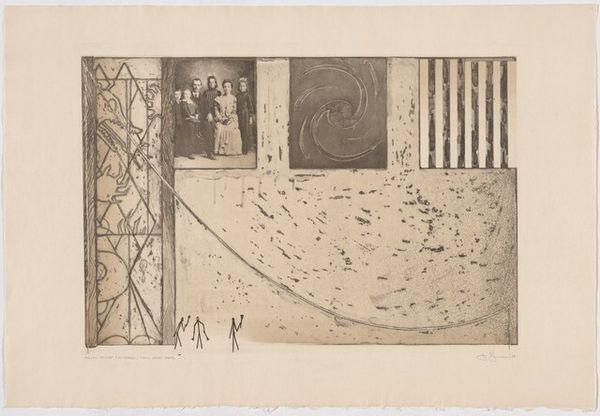
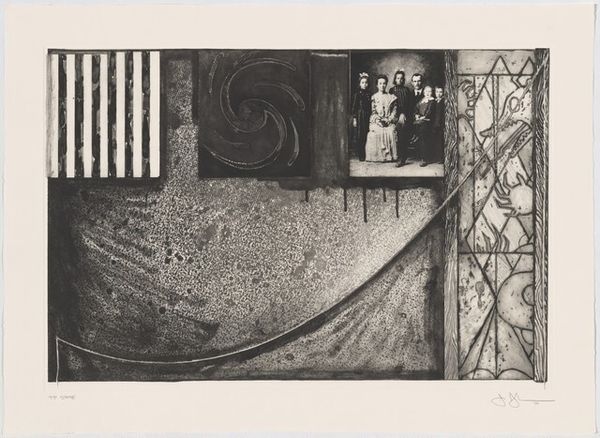
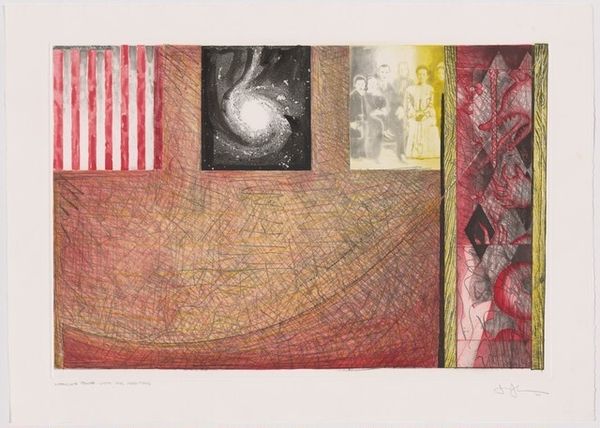
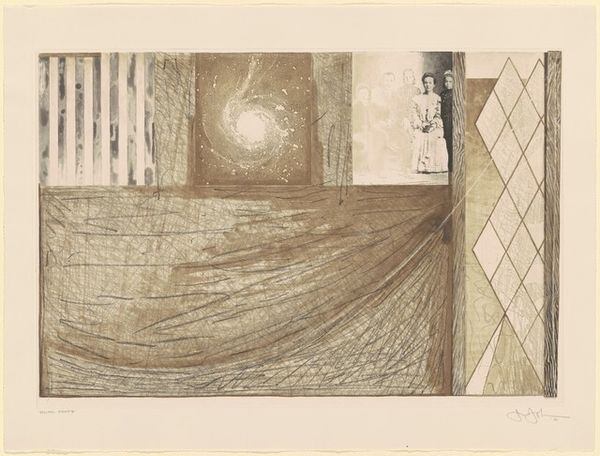
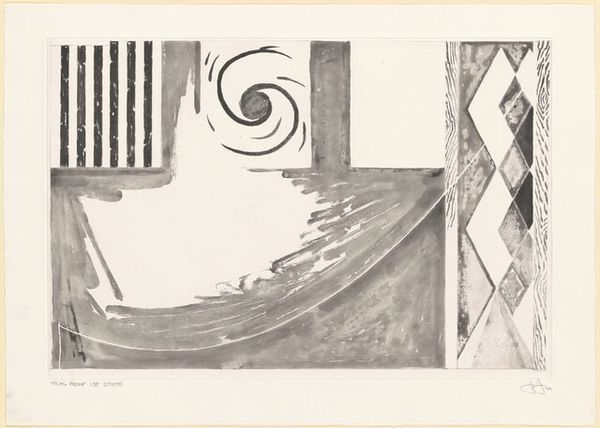
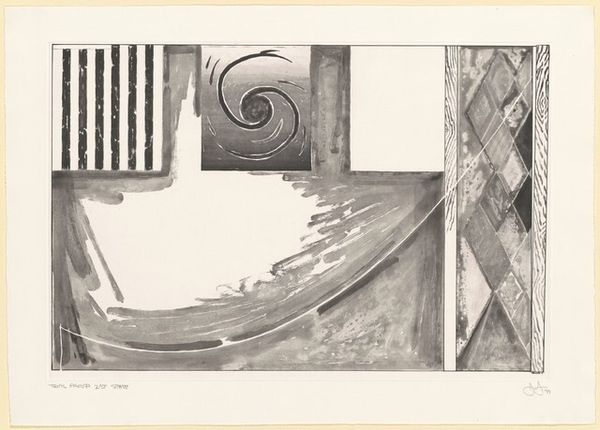
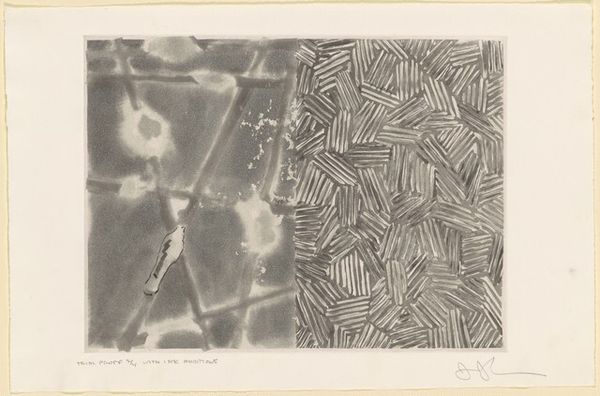
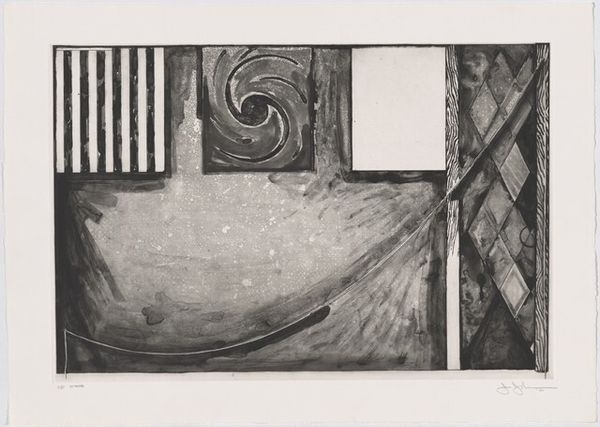
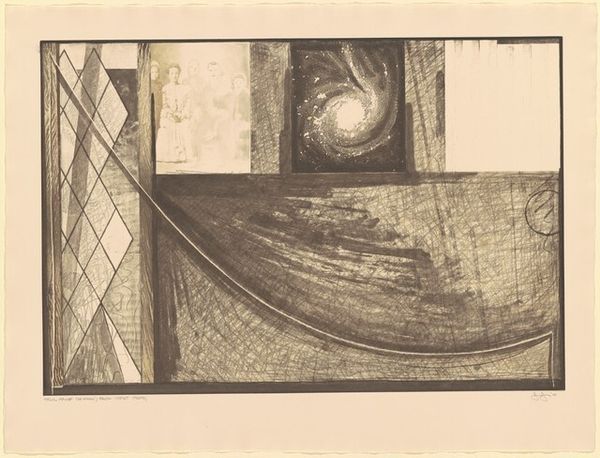
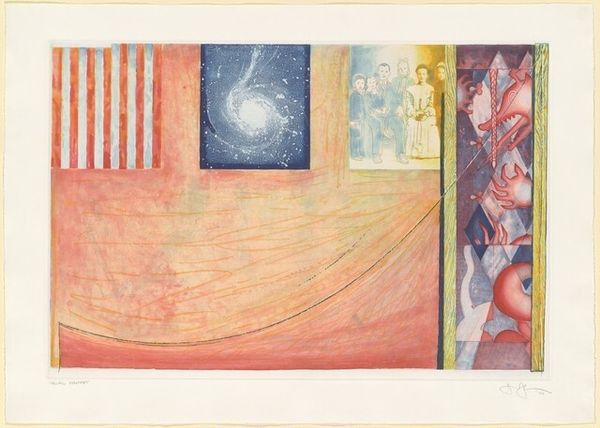
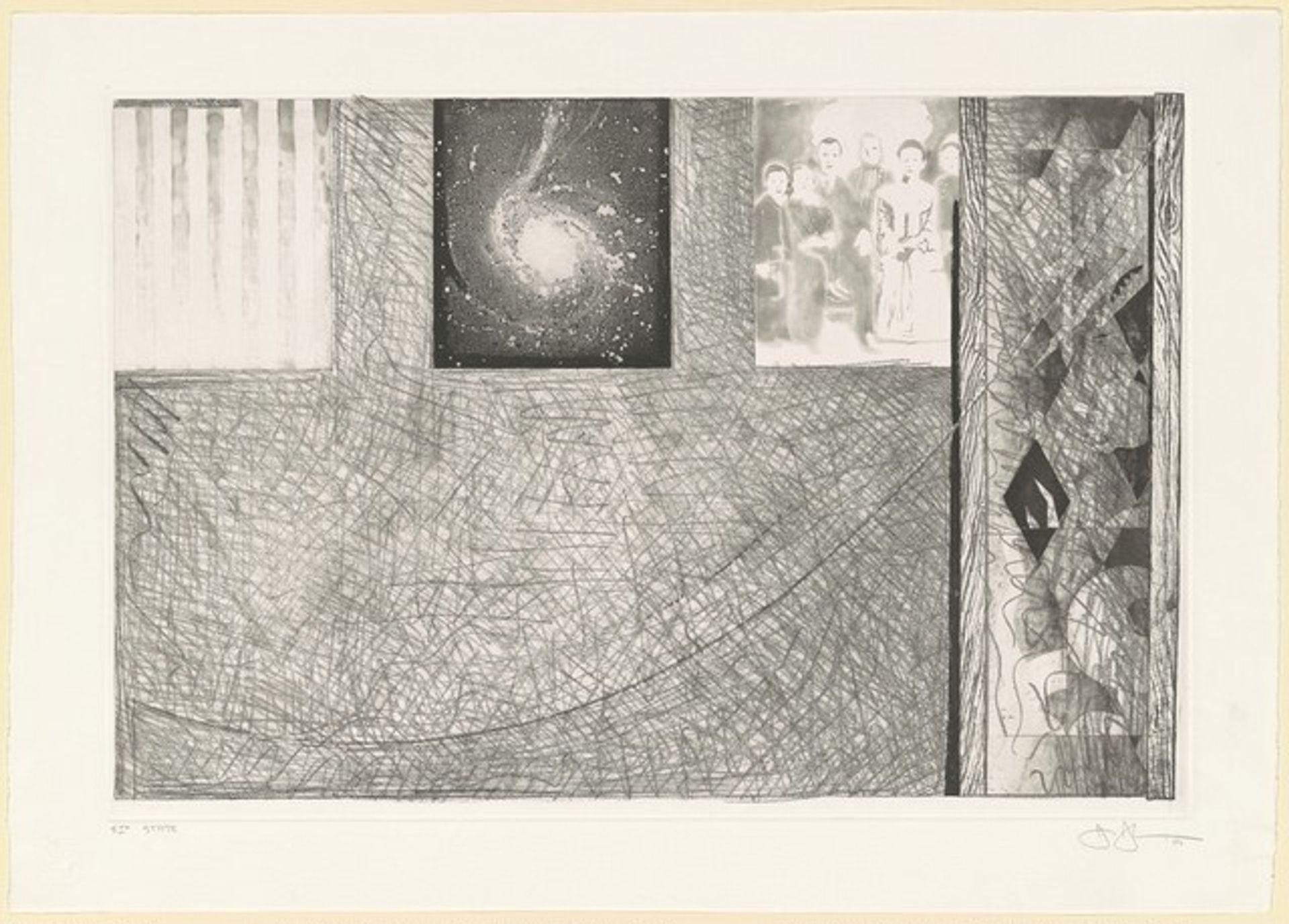
Curator: Jasper Johns created this intriguing, untitled mixed-media drawing and collage in 2001. Editor: My first impression? It's a visual puzzle. It’s austere, yet those disparate images hint at something deeply personal. There's a tension between the controlled lines and the almost dreamlike quality of the combined images. Curator: Exactly. Johns, of course, is known for using familiar imagery, forcing us to reconsider the act of seeing. This work layers images in a way that disrupts easy interpretation. It's a collage of print, drawing, and graphite—each medium adds a different layer of meaning. Editor: Those repeated lines create a palpable energy, a vibrating field that almost overwhelms the quieter symbolic elements. We've got what looks like a faded photograph, a galaxy, a pattern evocative of…well, of what exactly? And why these stark vertical lines? They feel like bars or maybe light itself. Curator: Perhaps it's about memory and perception, a commentary on how we piece together fragmented recollections. Note how the pale palette creates a sense of distance. Each section might represent a distinct moment or idea, yet they coexist, challenging us to connect the dots. The artist encourages individual responses to each piece. Editor: Those diamond shapes toward the right definitely trigger a sense of patterned artifice, a stage set perhaps. Does it suggest something artificial? Curator: One might see in them an engagement with the themes of illusion and representation that Johns explored throughout his career. Think about how Abstract Expressionism was being institutionalized and commodified; this aesthetic represents a response. Johns reinserts recognizable objects while destabilizing fixed meanings. Editor: This piece resonates on a subconscious level, stirring a sense of melancholy or wistfulness. The composition pulls apart; it defies resolution. Curator: Which is, I think, part of its strength. The act of interpretation becomes more important than finding a singular answer. The historical placement of this type of art is vital to understand because it creates a new language with repeated themes. Editor: Absolutely. After looking at it longer, that initial feeling of a puzzle shifts. It’s less about finding the solution, more about experiencing the beautiful complexity of being puzzled.