drawing, coloured-pencil, paper, watercolor
#
portrait
#
drawing
#
coloured-pencil
#
paper
#
watercolor
#
coloured pencil
#
romanticism
#
genre-painting
Dimensions: height 374 mm, width 284 mm
Copyright: Rijks Museum: Open Domain
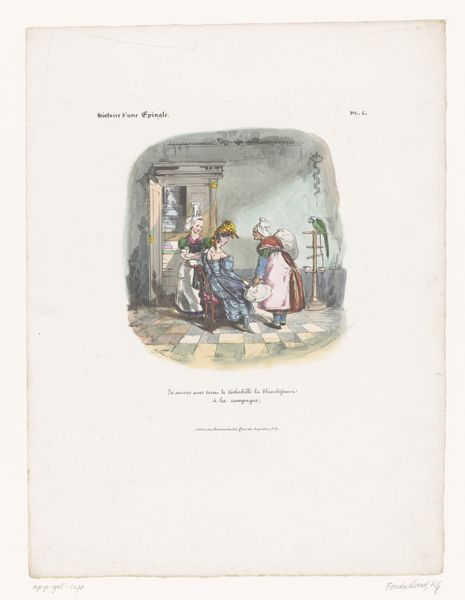
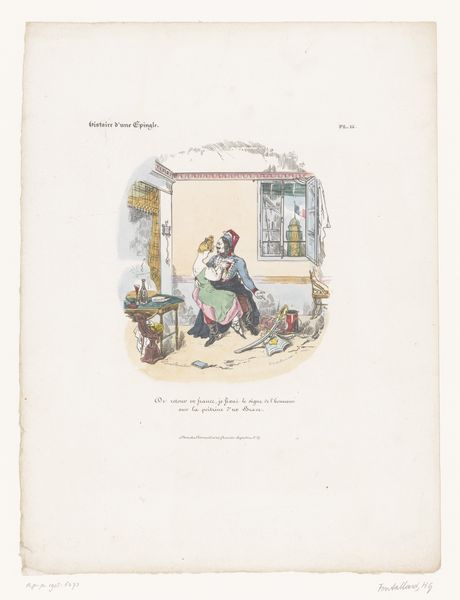
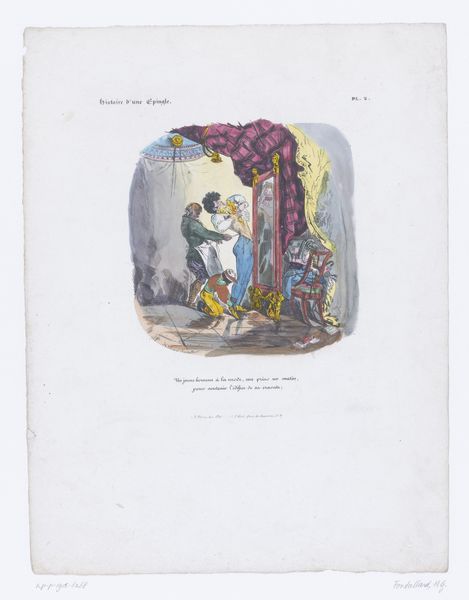
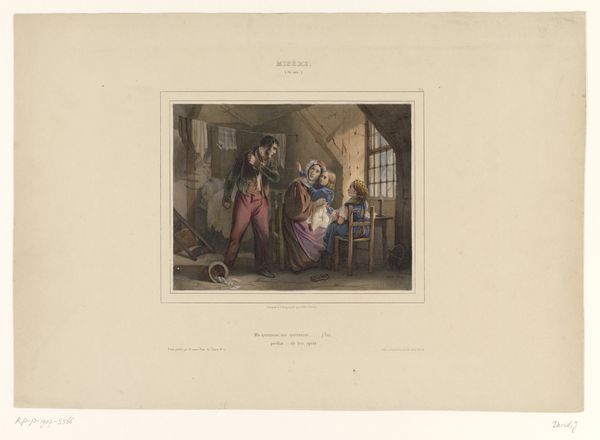
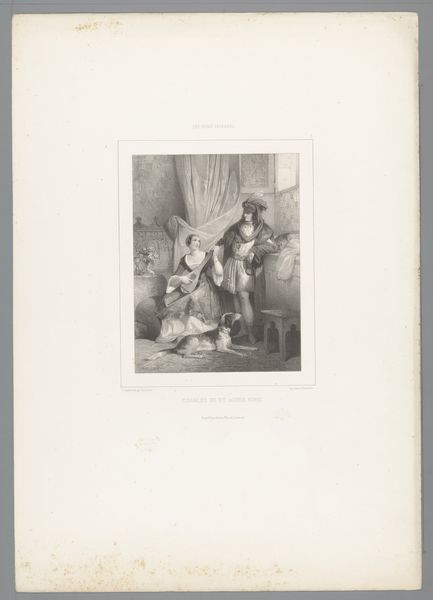
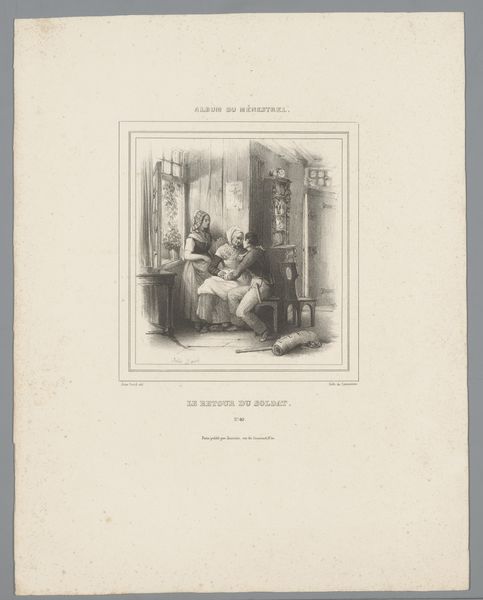
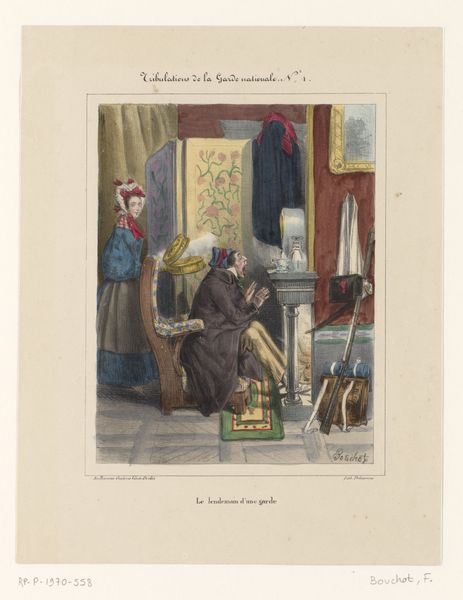
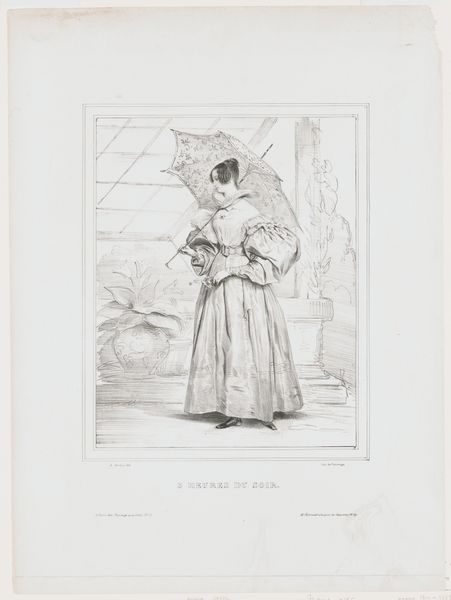
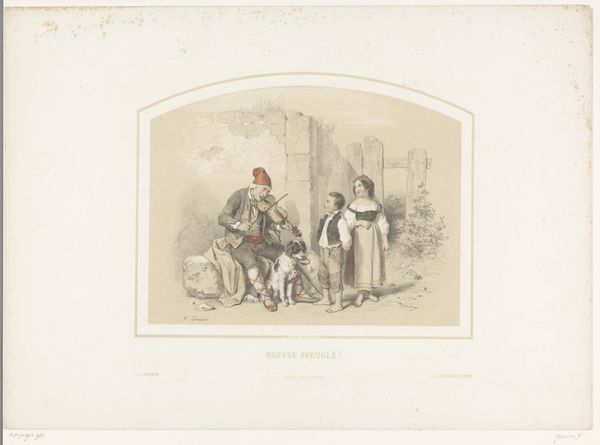
Editor: This drawing, "Engelse vrouw zet rouwsluier vast in het haar," or "English woman fastening a mourning veil in her hair," created around 1828 by Henri-Gérard Fontallard, is quite striking. The use of watercolor and coloured pencil on paper gives it a delicate feel. I’m curious about the cultural implications of mourning attire in the 19th century. What do you see in this piece? Curator: I see a deliberate construction of a moment meant to resonate with a specific audience. The artist highlights the societal expectations placed upon women in mourning during the Romantic period. Think about the symbolism embedded here: the veil itself becomes a public declaration, an emblem of grief meticulously presented for social consumption. Who is she performing grief for? Editor: Performing grief? That's an interesting perspective. I initially saw it as a personal moment of sadness. Are you suggesting that displays of mourning were almost theatrical in some way? Curator: Exactly! The scale of the production reveals a desire to publicize one's emotions for communal sympathy. A widow in deep mourning occupied a very specific and scrutinized role within 19th-century society. How does the interior setting further emphasize this concept of "performance?" Editor: The opulent interior... maybe it shows her social status, and how her grief is being broadcasted from a place of privilege? Perhaps mourning was also a status symbol, strangely enough? Curator: Precisely. This work subtly unpacks the complex relationship between personal emotion and public expectation during that era. Did you notice any possible political dimensions within genre scenes like this? Editor: It's amazing how much context is packed into what seemed like a simple portrait. Thanks for sharing your insights! I will definitely look at Romantic art differently. Curator: Indeed, exploring art through the lens of its socio-political milieu enriches our understanding immensely. And thinking about that initial response… is "simplicity" really the key element here?
Comments
No comments
Be the first to comment and join the conversation on the ultimate creative platform.
 Collect
 React
React Comment
More like this