About this artwork
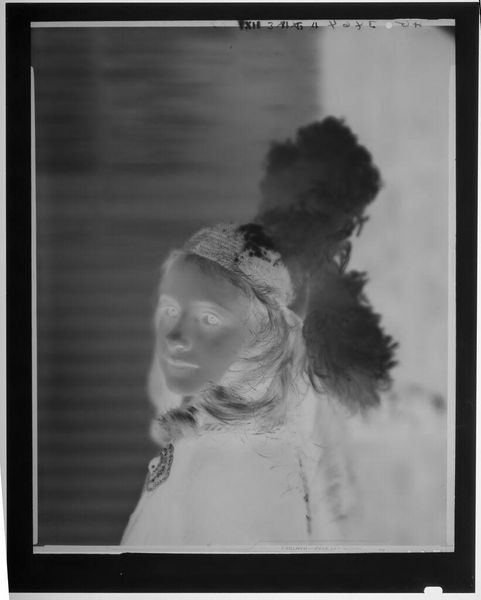
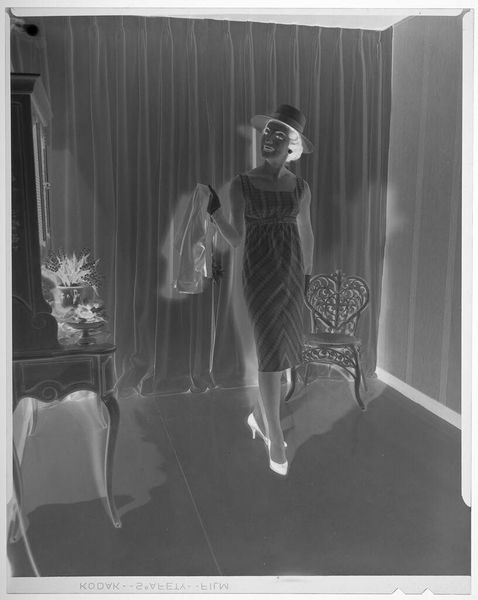
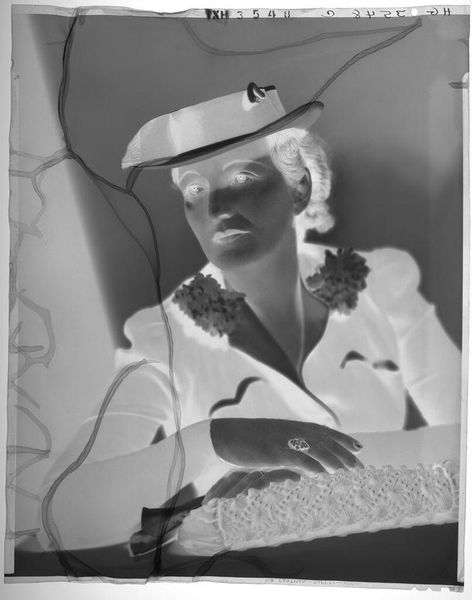
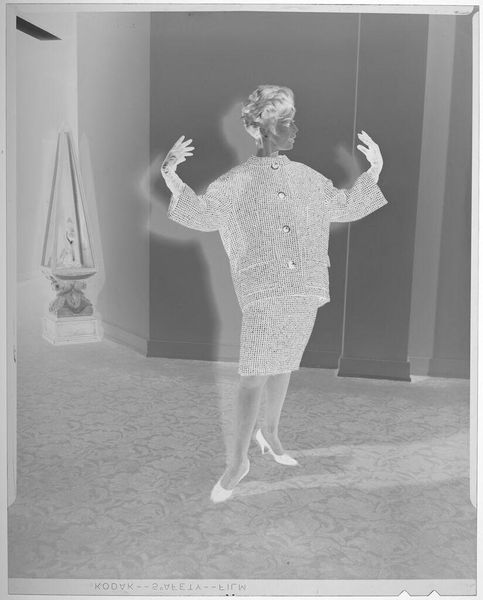
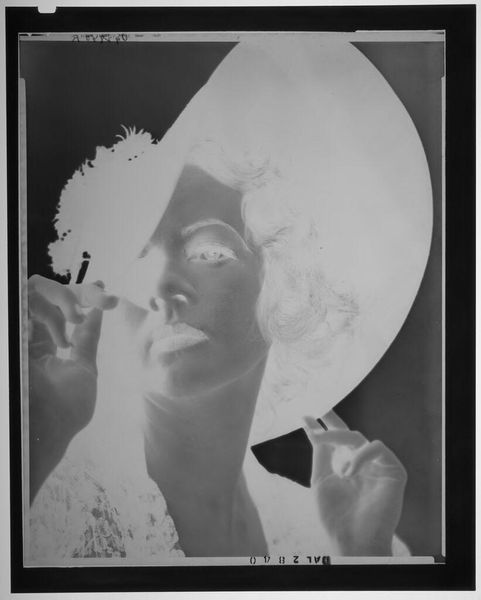
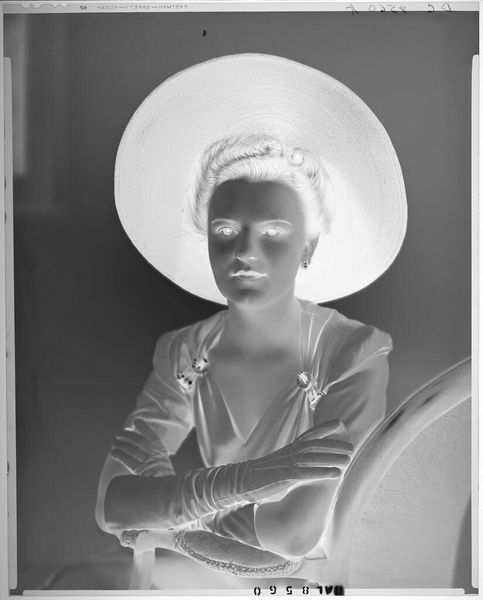
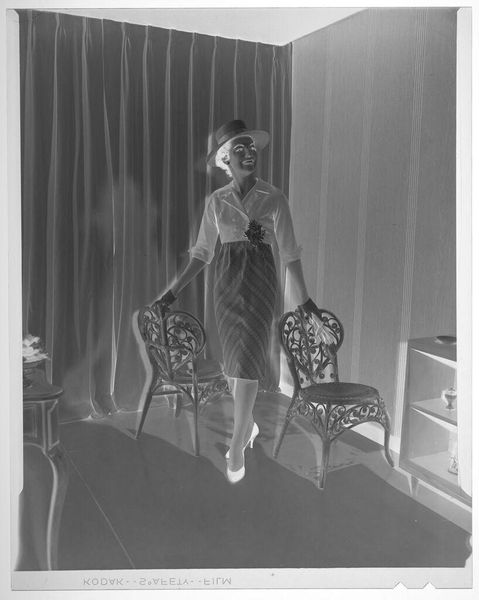
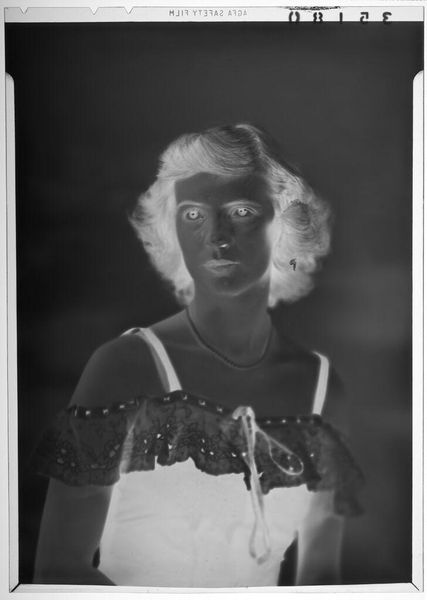
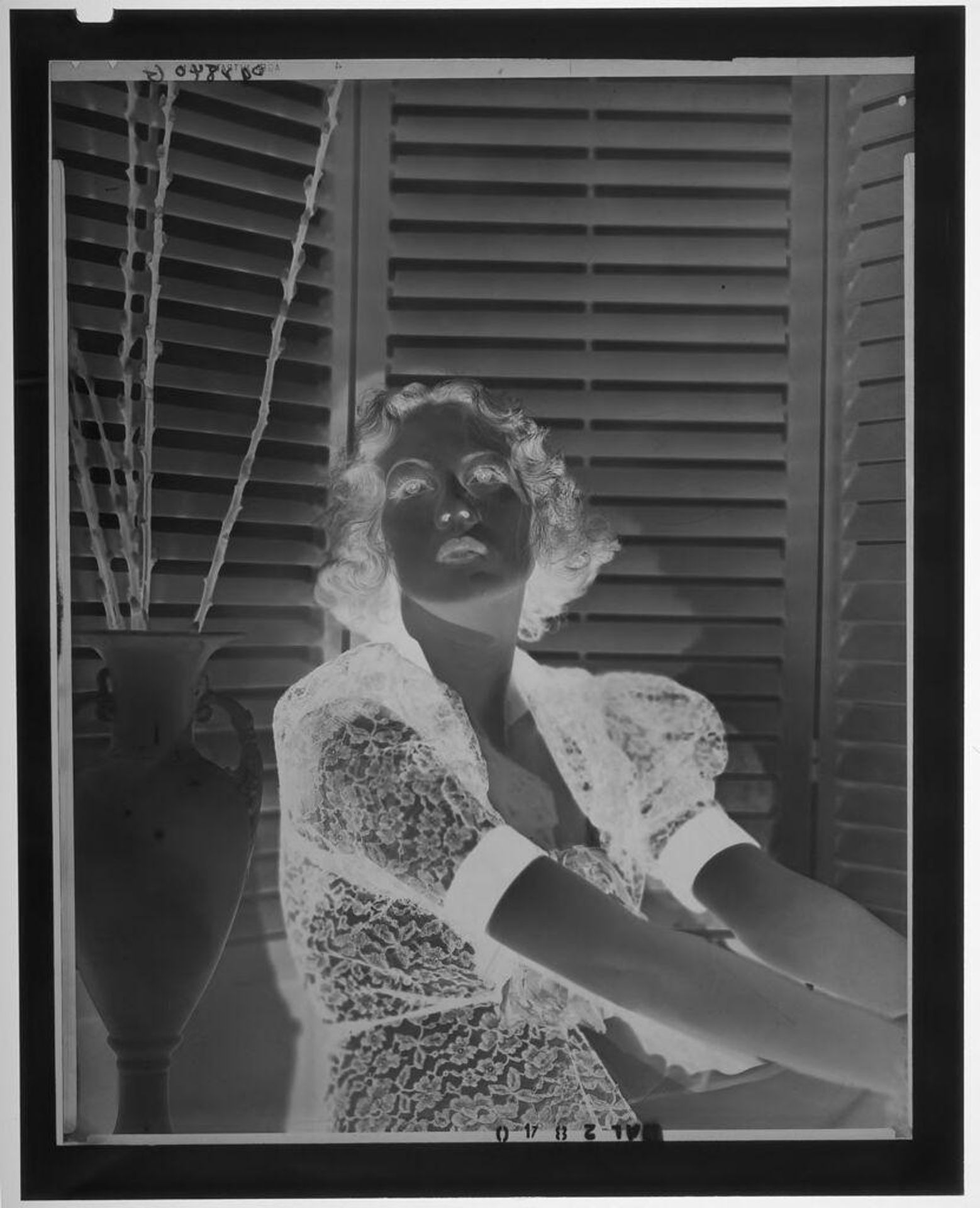
This photograph, made by Paul Gittings, presents a woman in a lacy dress seated in front of a window. Photographs like this one were made using darkroom techniques, and in this case, the use of the negative gives the image a rather ghostly quality. Note how the patterns of the blinds behind the sitter, and the vase to her left, set up a dialogue with the filigree of her dress. Lace is a textile that comes into being through interlacing threads, a slow, painstaking process originally done by hand. By the time of this photograph, the industrial revolution had transformed lace-making, allowing for more affordable, mass-produced patterns. What kind of labor was involved in making that dress? And what kind of leisure is being represented in this image? The photographer plays with the contrast of shadows, transforming the ordinary into something magical. The image asks us to reflect on the relationship between labor, class, and representation in photographic portraiture.
Untitled (woman in lacy dress seated in front of window with blinds)
c. 1945

Artwork details
- Dimensions
- image: 12.7 x 10.16 cm (5 x 4 in.)
- Location
- Harvard Art Museums
- Copyright
- CC0 1.0
Comments
Share your thoughts
About this artwork
This photograph, made by Paul Gittings, presents a woman in a lacy dress seated in front of a window. Photographs like this one were made using darkroom techniques, and in this case, the use of the negative gives the image a rather ghostly quality. Note how the patterns of the blinds behind the sitter, and the vase to her left, set up a dialogue with the filigree of her dress. Lace is a textile that comes into being through interlacing threads, a slow, painstaking process originally done by hand. By the time of this photograph, the industrial revolution had transformed lace-making, allowing for more affordable, mass-produced patterns. What kind of labor was involved in making that dress? And what kind of leisure is being represented in this image? The photographer plays with the contrast of shadows, transforming the ordinary into something magical. The image asks us to reflect on the relationship between labor, class, and representation in photographic portraiture.
Comments
Share your thoughts