1941 - 1942
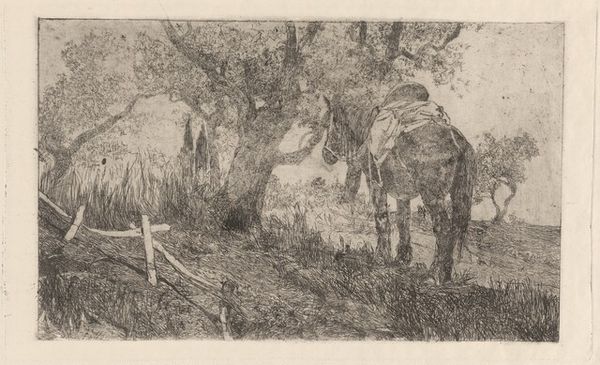
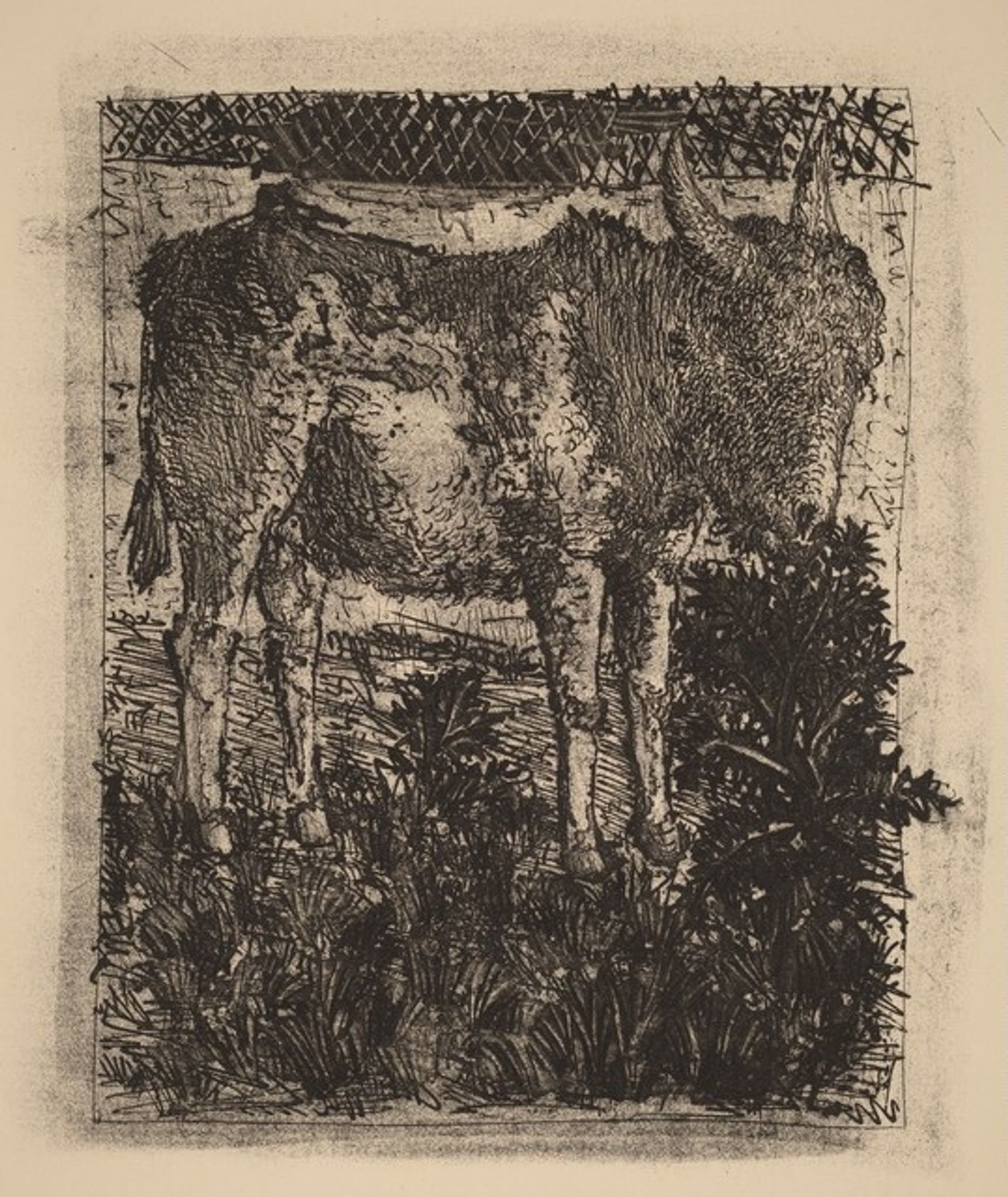
L'Ane (The Donkey)


Listen to curator's interpretation
Curatorial notes
Editor: Right, so here we have Picasso’s etching, L'Ane, or The Donkey, created between 1941 and 1942. It's got a sort of heavy, burdened feel to it, don't you think? All that dense cross-hatching. What strikes you about this piece? Curator: You nailed it – "burdened" is a great word. The donkey itself seems hemmed in, trapped almost, between that wiry fence and the thicket. Maybe a reflection of the times, wouldn't you say? Consider when it was made - during the Second World War. Editor: Absolutely, the historical context makes total sense. It feels claustrophobic, like the donkey is stuck. Do you think the cubist elements enhance that feeling? Curator: I do. Notice how the perspective is skewed, the form fractured? It's not just a picture of a donkey, it's about the idea of a donkey, the feeling of being a donkey, burdened, perhaps a little lost. Does that resonate with you? Editor: It definitely does. It’s like Picasso isn’t just showing us a donkey, but how the world feels, weighed down. Before looking at it, I had the simplistic idea that Picasso’s “blue period” captured the feeling of those times, I did not know other pieces, like this one, managed to translate those feelings of worry. Curator: It makes you wonder about the artist's state of mind when creating this piece. Art becomes a lens through which we can witness history. Editor: Exactly. It really brings home how an artist’s work is influenced by the world around them. I’ll definitely keep that in mind when analysing art in the future!