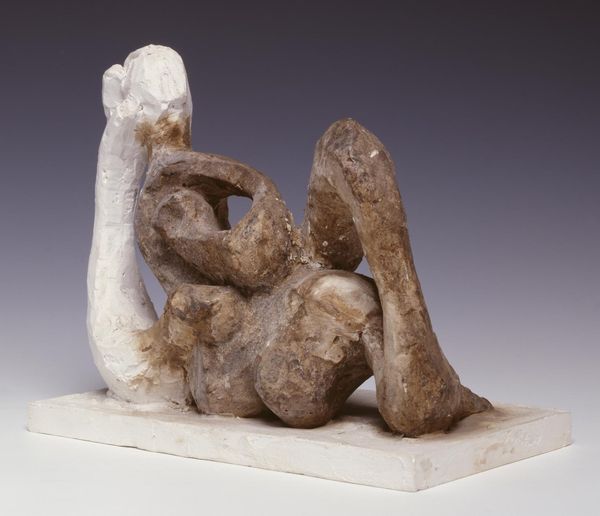
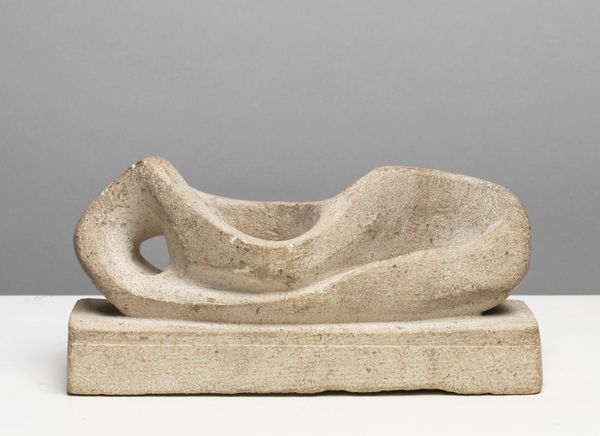
Dimensions: object: 76 x 108 x 38 mm
Copyright: © The estate of Jacques Lipchitz, courtesy, Marlborough Gallery, New York | CC-BY-NC-ND 4.0 DEED, Photo: Tate
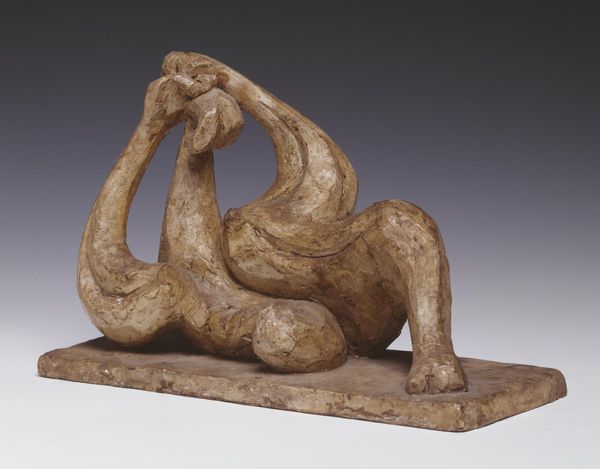
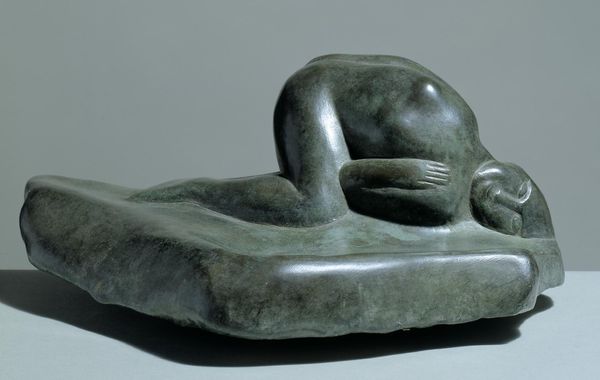
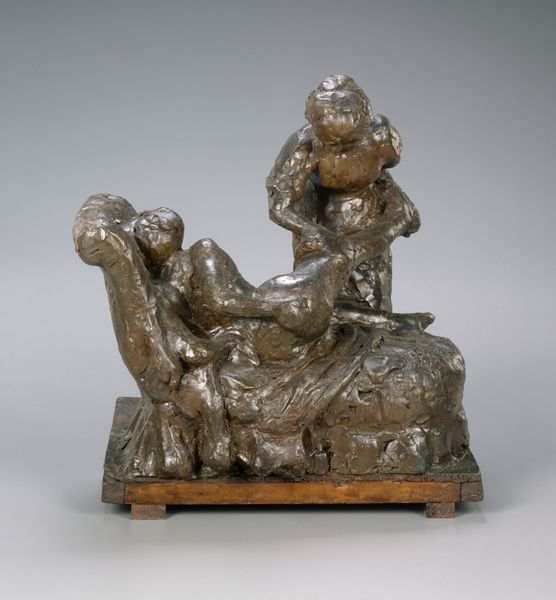
Editor: Here we have Jacques Lipchitz's petite sculpture, "Reclining Woman," currently housed at the Tate. It looks like bronze, and the form is so abstract. What am I meant to see here? Curator: Well, let’s consider the cultural climate of the early 20th century. What role did abstraction play in representing the human form, especially the female figure? Editor: It was a way to challenge traditional, often idealized, representations. Was Lipchitz responding to those conventions? Curator: Precisely. And how does this sculpture, as a public object, invite viewers to reconsider their expectations of beauty and femininity? It is also quite small. Do you believe the scale of a sculpture might have sociopolitical implications? Editor: It's true, its size makes it a very intimate object. I guess I had not considered that. Thanks!
Comments

tate 11 months ago
⋮
http://www.tate.org.uk/art/artworks/lipchitz-reclining-woman-t03520


Join the conversation
Join millions of artists and users on Artera today and experience the ultimate creative platform.
tate 11 months ago
⋮
The origins of this small sculpture lie in a commission Lipchitz received from the designer Coco Chanel for a pair of firedogs for a rococo-style fireplace. He designed each of the firedogs in the form of a reclining woman, composed from figure-of-eight curves. Chanel then commissioned him to make a sculpture for her garden, for which this is a study. The garden sculpture was never completed, but the study, which drew on the earlier work, was an important new departure for Lipchitz in its curvilinear shapes and its subject of a reclining woman. It is also one of the first hand-sized modelled maquettes made by the artist. Gallery label, August 2004
 Collect
More like this