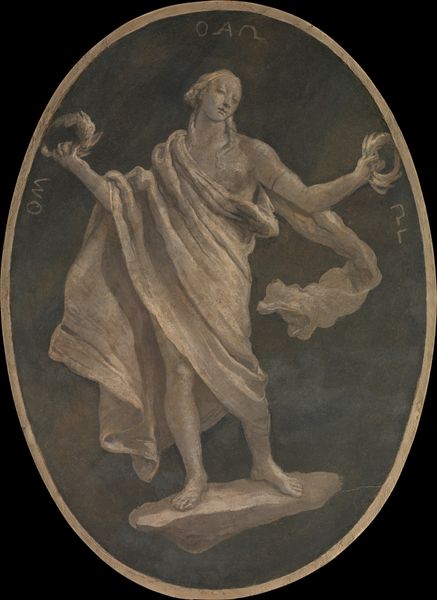
c. 1740 - 1750
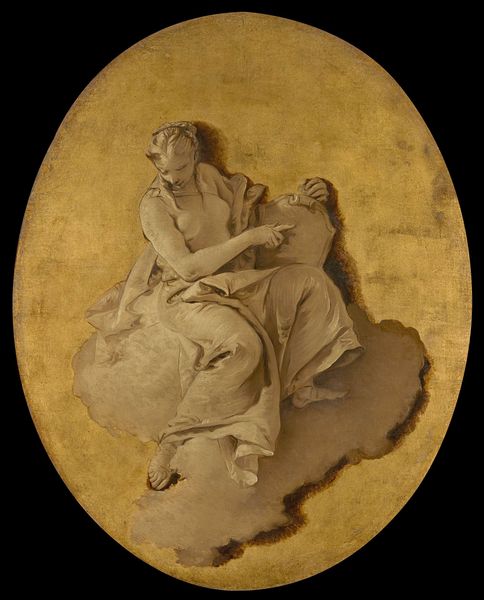
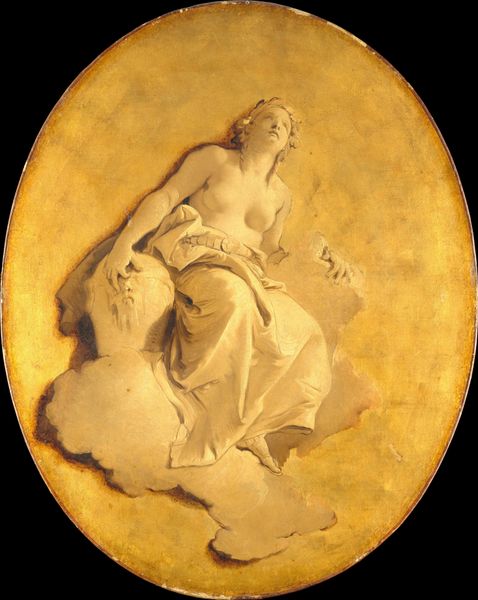
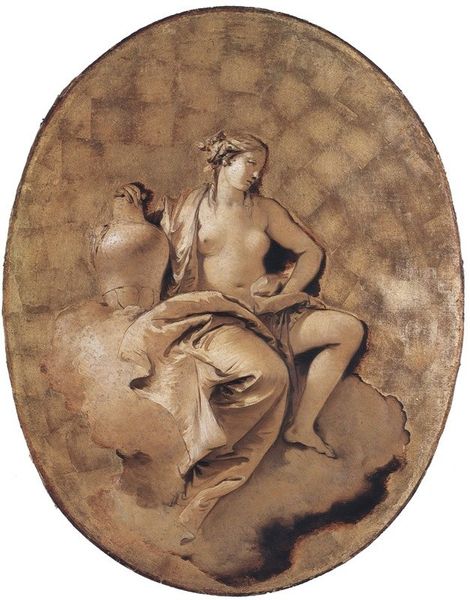
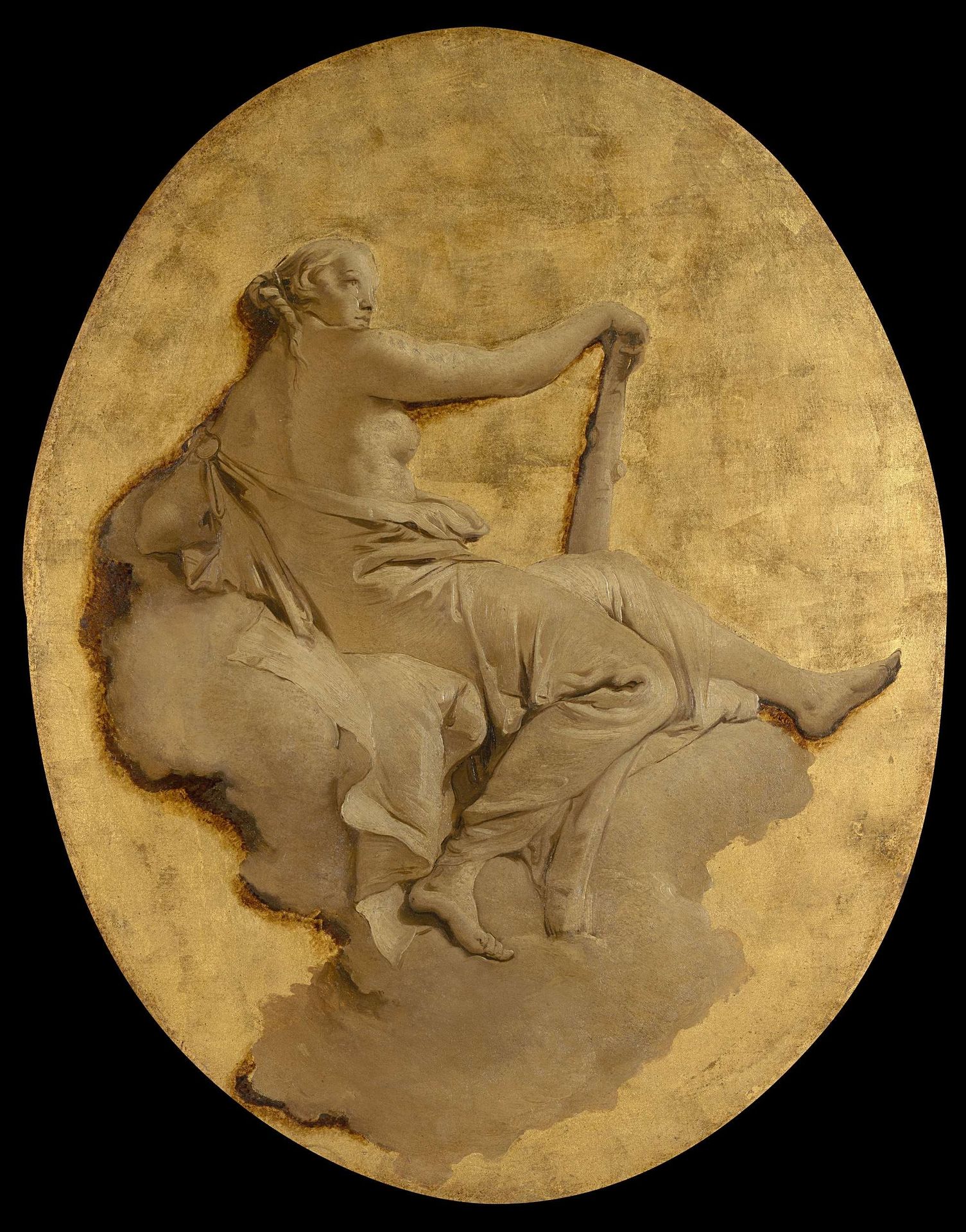
Allegorical Figure of a Woman with a Club (Fortitude?)

Listen to curator's interpretation
Curatorial notes
Curator: Looking at this tempera painting on panel by Giovanni Battista Tiepolo, dating to around 1740-1750, titled "Allegorical Figure of a Woman with a Club (Fortitude?)," one is struck by the dynamism he manages to convey with such limited color. Editor: Absolutely, there’s something immediately commanding about her posture. A nude figure, reclining on what appears to be a cloud, holding a hefty club. The contrast between her vulnerable nakedness and the potential violence she embodies is intriguing. The overall tonality of the work and that solid gold background give it a dream-like almost ethereal feel. Curator: That's perceptive. The cloud suggests a divine or elevated status, a frequent trope in Baroque allegorical painting. But it also evokes an ephemeral quality. The club—likely an attribute of Fortitude— grounds her power, a symbol recognized since antiquity. Editor: Indeed, the club carries significant weight—no pun intended! The recurring motif from mythology through medieval emblem books…what does it suggest to us about resilience when embodied by a female figure in this 18th century Rococo context? Is it celebrating feminine power, or is it subtly reinforcing ideas about how that strength should be tempered? Curator: A crucial question! Remember the work would likely have been a segment of a larger decorative mural scheme. While isolated, the composition echoes classical statuary with this woman seated. We need to consider not only feminine virtue as social instruction, but the patronage: what statement was a commissioning patron trying to make in the decoration of their salon? Editor: Point well taken, context shifts everything. The tension of strength held lightly is fascinating here though. It invites us to ask what sustains both an individual’s inner fortitude and the structures of power that govern society? Curator: The painting truly invites contemplation, and given Tiepolo's facility with light and dramatic gesture, it speaks to a moment where symbolic visual language and philosophical queries met on the gilded walls of 18th century Europe. Editor: Leaving us pondering what fortitude meant then…and what its complex and shifting image suggests for us today.