1824 - 1898
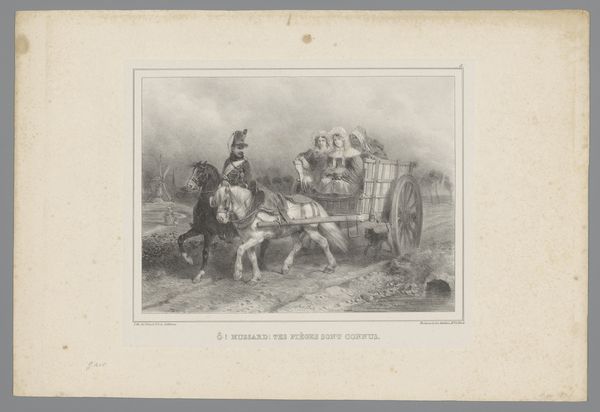
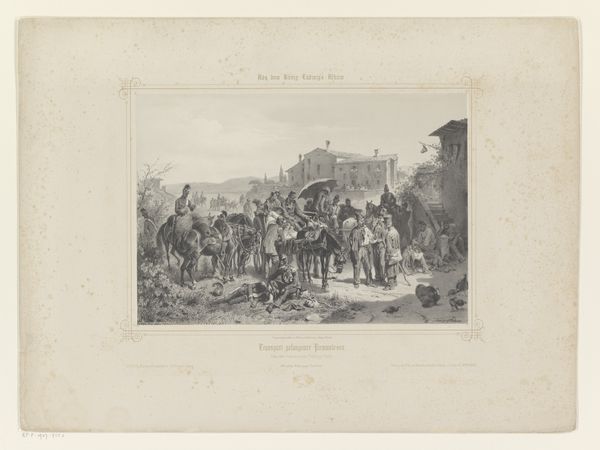
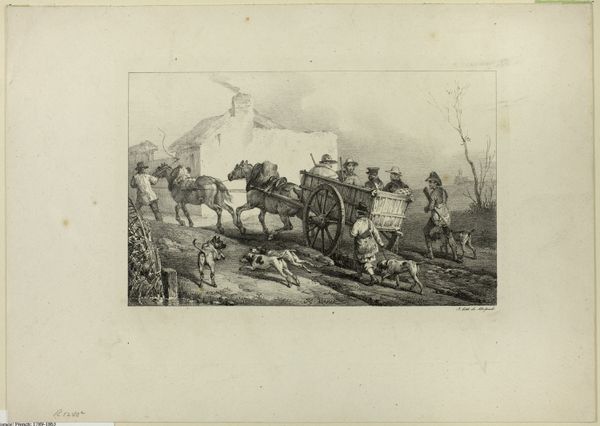
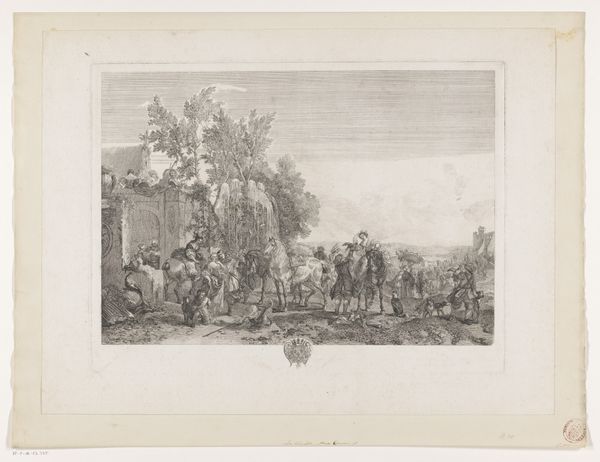
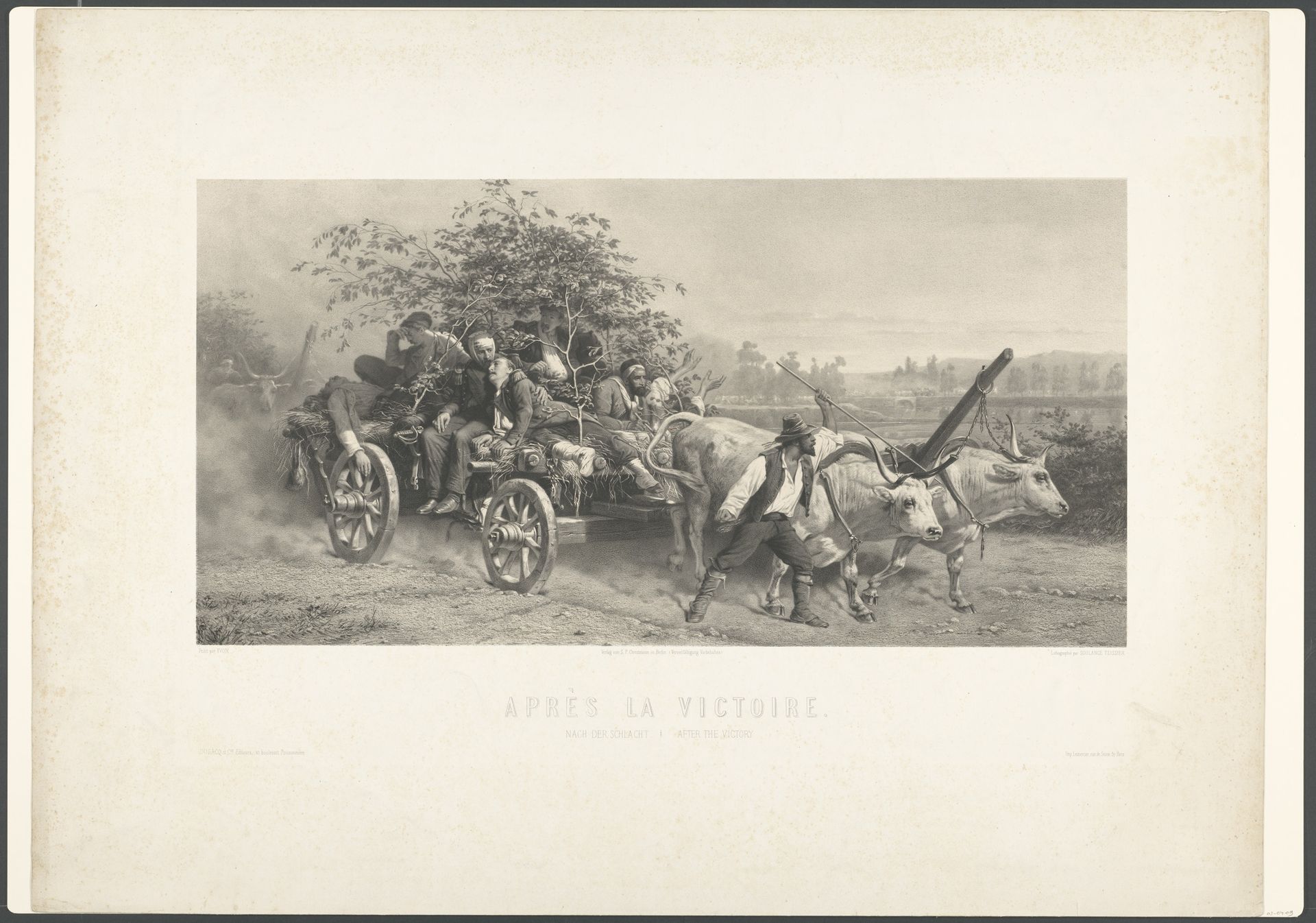
Ossenwagen met gewonde soldaten

Listen to curator's interpretation
Curatorial notes
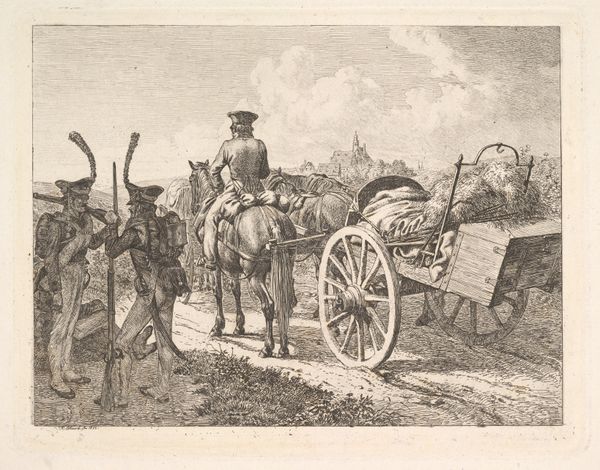
Editor: So, this print is called "Ossenwagen met gewonde soldaten," which translates to "Ox Cart with Wounded Soldiers," and is an etching by Louis Emmanuel Soulange-Teissier, likely created between 1824 and 1898. It feels quite somber. The etched lines create such detail in the figures and the landscape. What stands out to you about it? Curator: What strikes me is how this work blends high art aspirations—the grand theme of history painting—with the realities of material production and circulation. Engravings and etchings like this democratized imagery. How accessible would you say this print would have been at the time of production? Editor: That’s an interesting question. Because it's a print, presumably more affordable than a painting? Curator: Precisely. This print uses reproducible imagery to deliver narratives, but at the cost of masking and idealizing class and social relationships. It presents labor—the work of the ox and the driver—but where does the profit from such dissemination end up? Who is consuming these images, and what kind of relationship do they have to the suffering depicted? Consider the soldier; who would have gained from the material products that soldier defended? Editor: So, it’s not just about the artistic skill involved in creating the etching, but also about its role in a larger economic and social system? I hadn’t thought about it like that before. Curator: Exactly. Consider the material conditions that allowed its creation and distribution and the hands, seen and unseen, that brought it to the viewer. This etching invites us to consider not just the 'what' but also the 'how' and 'for whom.' Editor: That’s given me a completely new perspective on how to analyze prints. It is so much more than just the image itself. Thank you! Curator: And thanks to you, for looking closer and pushing beyond a mere appreciation of skill.