About this artwork
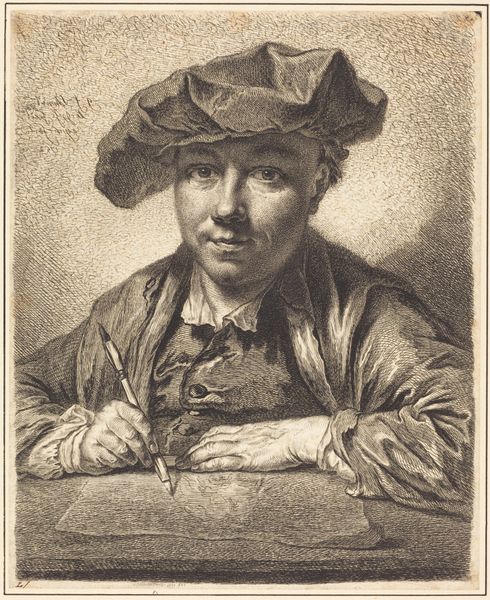
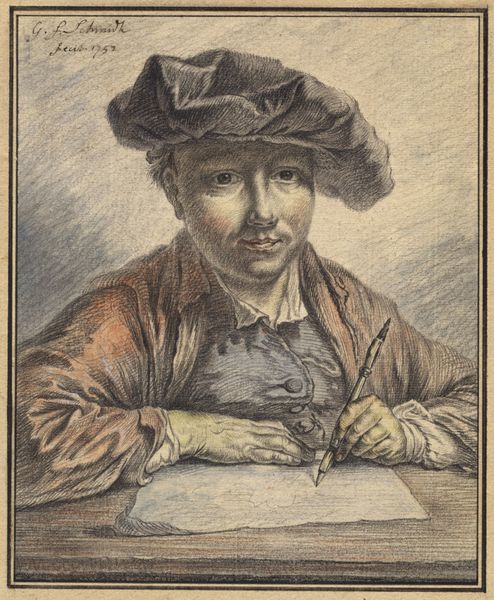
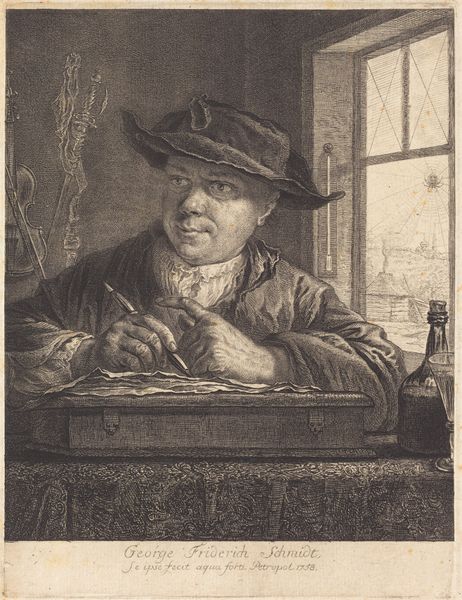
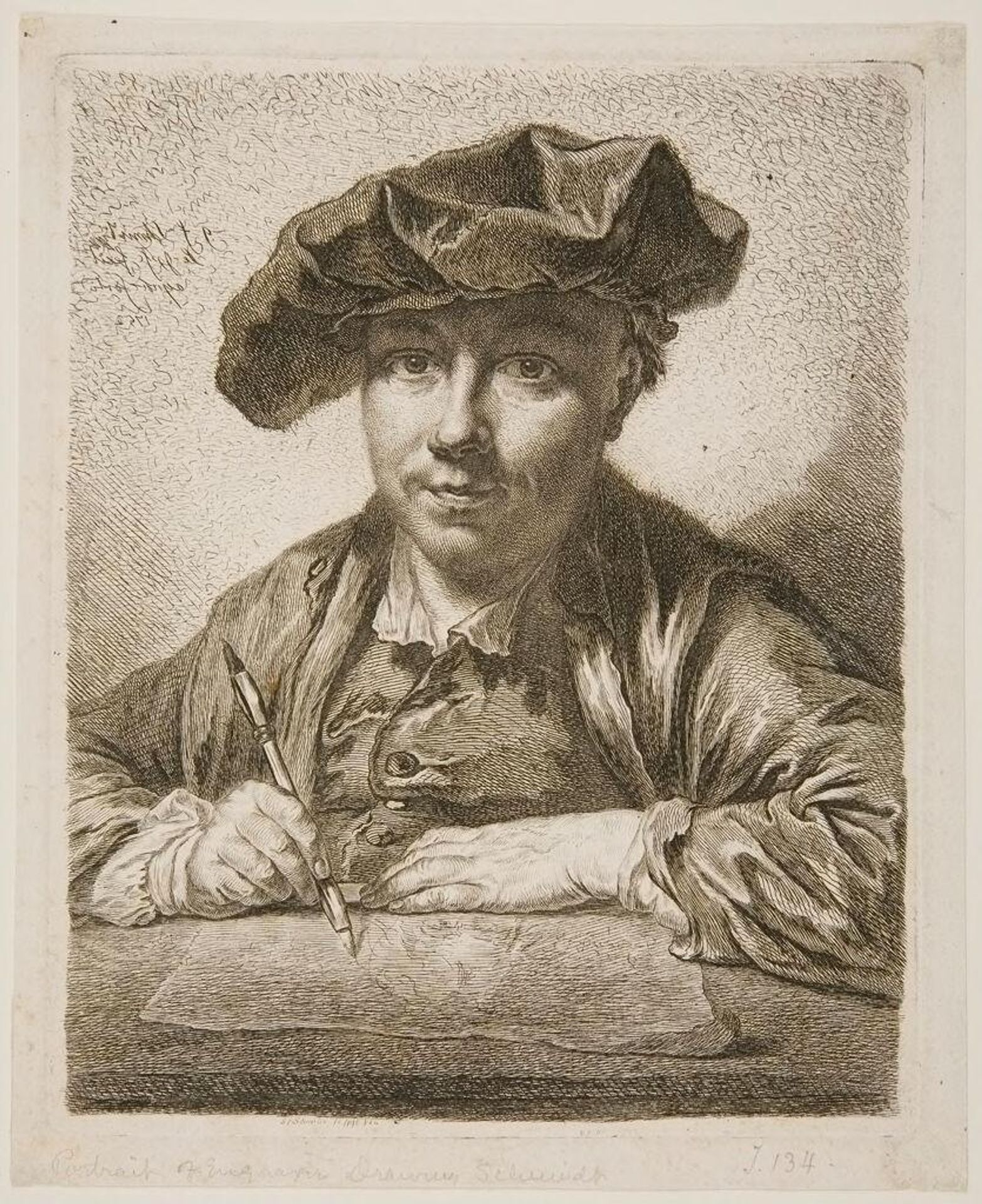
Curator: Here we have Georg Friedrich Schmidt's "Self-Portrait." Editor: It's evocative, isn't it? The delicate lines create a sense of immediacy, of witnessing the artist at work. Curator: Schmidt, a prominent 18th-century printmaker, was deeply engaged with the artistic and intellectual circles of his time. His self-portraits, like this one, speak to the rising status of the artist in society. Editor: The gaze, though… it’s not just about status. It's a conscious construction of identity, especially intriguing when considering the limited social mobility afforded artists then. How might his class and access impact his self-representation? Curator: Precisely. Schmidt used his prints not just for artistic expression but as a form of social currency, circulating his image amongst patrons and fellow artists to cultivate his reputation. Editor: So, it’s a visual negotiation of power, a carefully etched performance that blurs the line between self-expression and socio-political strategy. The image of an artist at work could be seen as a statement about the importance of labor. Curator: Indeed, understanding the printmaking process itself and its role in disseminating images is key to appreciating the artwork's significance. Editor: It encourages me to consider the work as more than just a portrait; it's a reflection on the role and perception of the artist in society and the power dynamics at play. Curator: Agreed. It’s a testament to how art and politics are intertwined, especially when artists begin to engage directly with portraying themselves.


Artwork details
- Location
- Harvard Art Museums
- Copyright
- CC0 1.0
Comments
Share your thoughts
About this artwork
Curator: Here we have Georg Friedrich Schmidt's "Self-Portrait." Editor: It's evocative, isn't it? The delicate lines create a sense of immediacy, of witnessing the artist at work. Curator: Schmidt, a prominent 18th-century printmaker, was deeply engaged with the artistic and intellectual circles of his time. His self-portraits, like this one, speak to the rising status of the artist in society. Editor: The gaze, though… it’s not just about status. It's a conscious construction of identity, especially intriguing when considering the limited social mobility afforded artists then. How might his class and access impact his self-representation? Curator: Precisely. Schmidt used his prints not just for artistic expression but as a form of social currency, circulating his image amongst patrons and fellow artists to cultivate his reputation. Editor: So, it’s a visual negotiation of power, a carefully etched performance that blurs the line between self-expression and socio-political strategy. The image of an artist at work could be seen as a statement about the importance of labor. Curator: Indeed, understanding the printmaking process itself and its role in disseminating images is key to appreciating the artwork's significance. Editor: It encourages me to consider the work as more than just a portrait; it's a reflection on the role and perception of the artist in society and the power dynamics at play. Curator: Agreed. It’s a testament to how art and politics are intertwined, especially when artists begin to engage directly with portraying themselves.
Comments
Share your thoughts