About this artwork
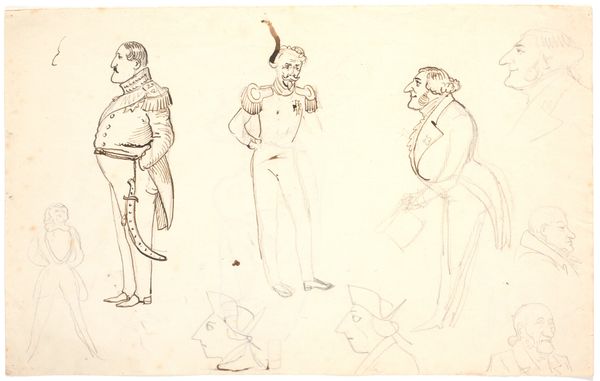
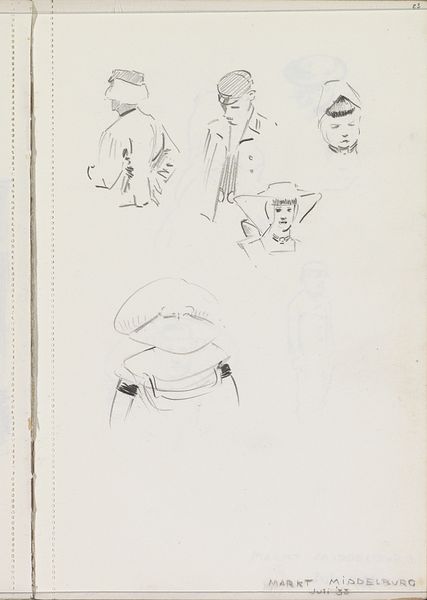
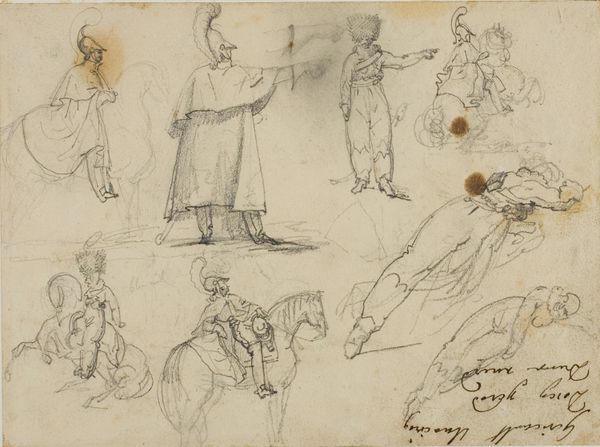
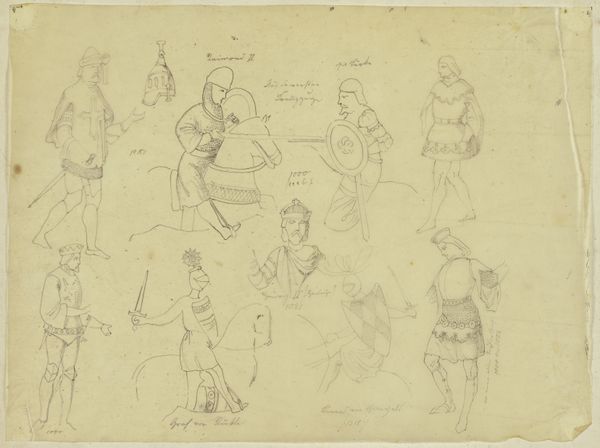
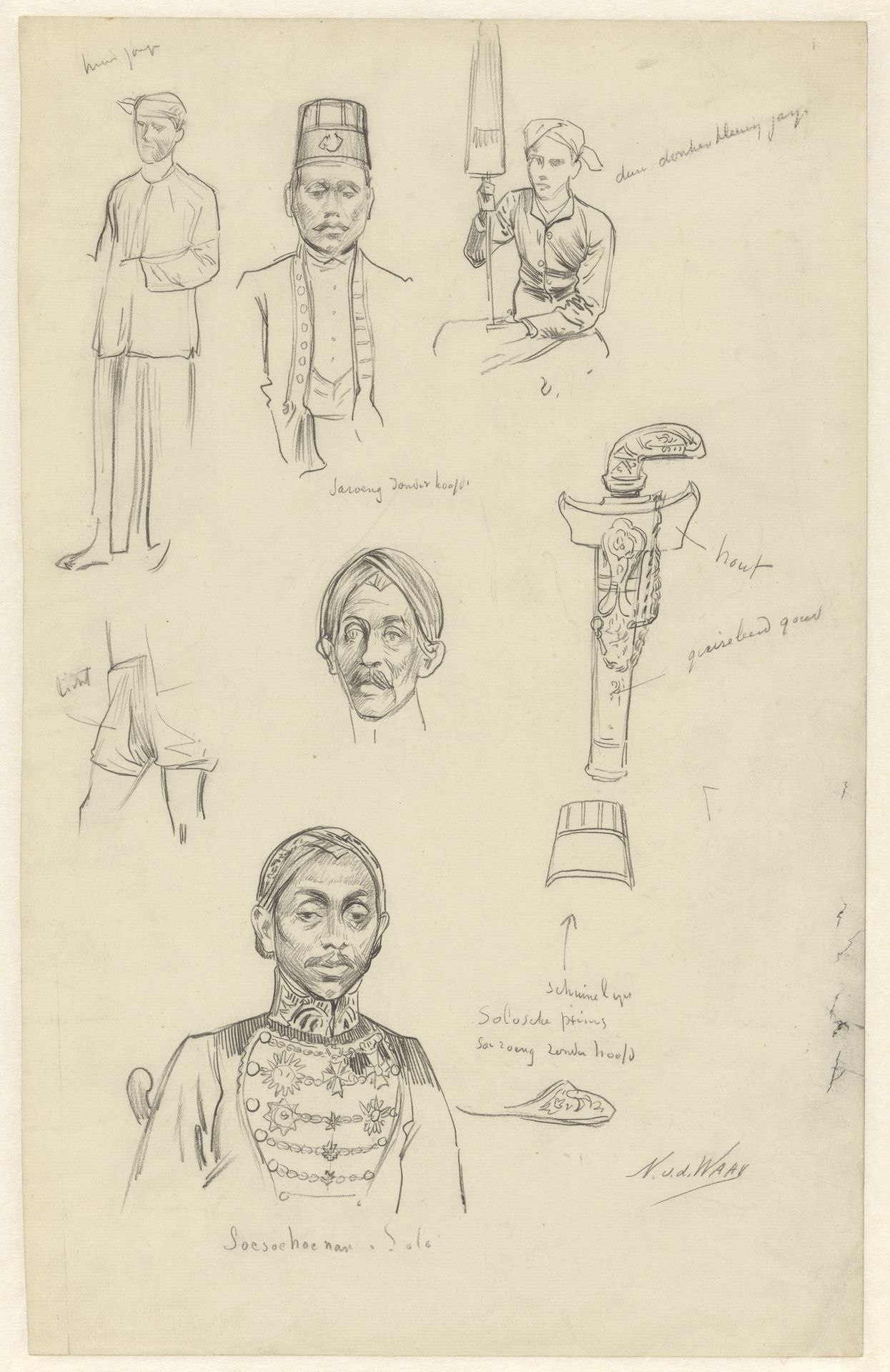
This is a study sheet by Nicolaas van der Waay with a portrait of the Susuhunan of Solo, along with clothing, headdresses, and a kris. Van der Waay, a Dutch artist, made this drawing during a time of significant colonial interactions between the Netherlands and Indonesia. The detailed sketches of attire and weaponry reflect the artist's interest in documenting the material culture and status symbols of the Solo Sultanate. The Susuhunan, as the ruler, is depicted with great attention to the details of his garments and ornamentation, elements deeply intertwined with Javanese identity, power structures, and cultural traditions. The kris, a traditional asymmetrical dagger, is included in the study. This weapon carries significant cultural and spiritual weight. Its presence here draws attention to the symbols of authority and masculinity within the Sultanate. This work may allow us to reflect on the complexities of cultural representation during colonial times and ponder the power dynamics inherent in such artistic endeavors.
Studieblad met een portret van de Soesoehoenan van Solo, kleding, hoofddeksels en een kris
1865 - 1936

Artwork details
- Medium
- drawing, paper, pencil
- Dimensions
- height 435 mm, width 274 mm
- Copyright
- Rijks Museum: Open Domain
Tags
Comments
Share your thoughts
About this artwork
This is a study sheet by Nicolaas van der Waay with a portrait of the Susuhunan of Solo, along with clothing, headdresses, and a kris. Van der Waay, a Dutch artist, made this drawing during a time of significant colonial interactions between the Netherlands and Indonesia. The detailed sketches of attire and weaponry reflect the artist's interest in documenting the material culture and status symbols of the Solo Sultanate. The Susuhunan, as the ruler, is depicted with great attention to the details of his garments and ornamentation, elements deeply intertwined with Javanese identity, power structures, and cultural traditions. The kris, a traditional asymmetrical dagger, is included in the study. This weapon carries significant cultural and spiritual weight. Its presence here draws attention to the symbols of authority and masculinity within the Sultanate. This work may allow us to reflect on the complexities of cultural representation during colonial times and ponder the power dynamics inherent in such artistic endeavors.
Comments
Share your thoughts