About this artwork
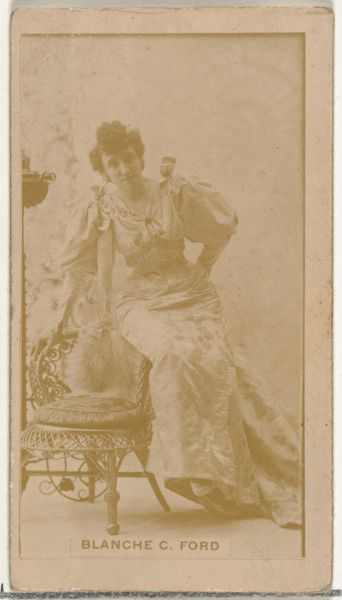
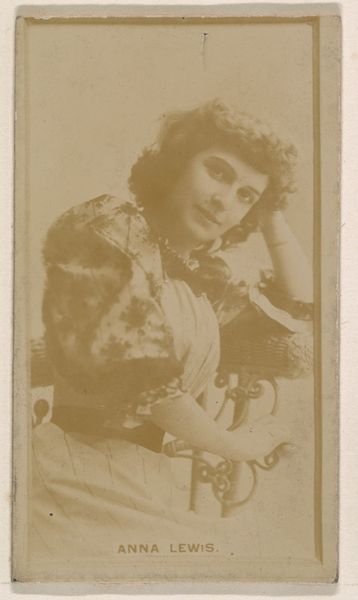
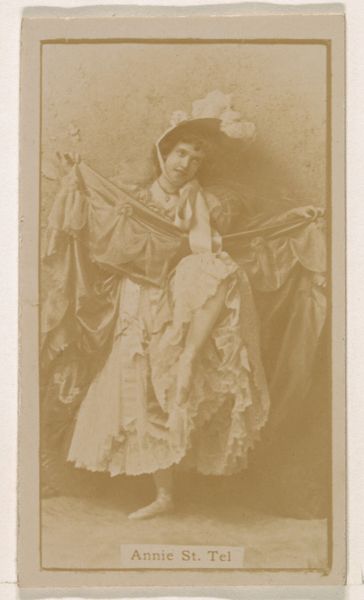
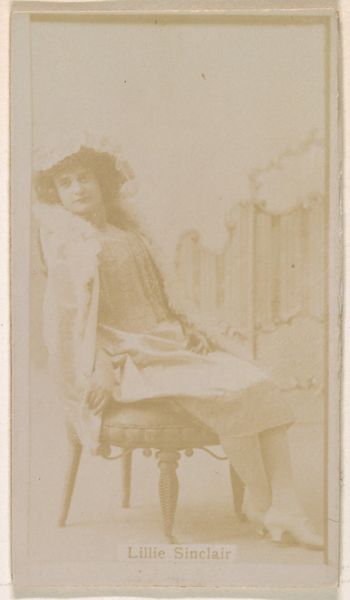
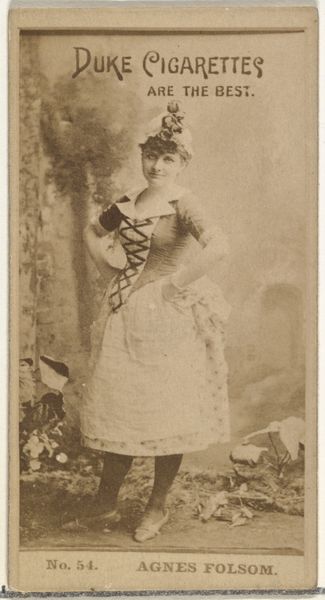
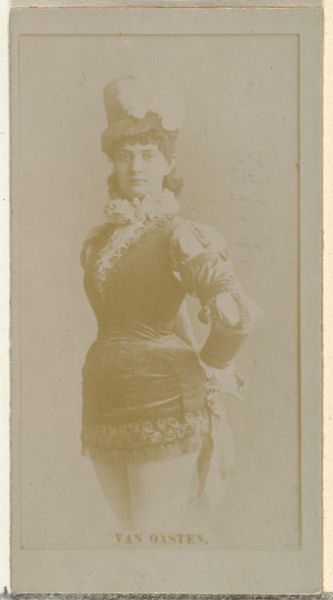
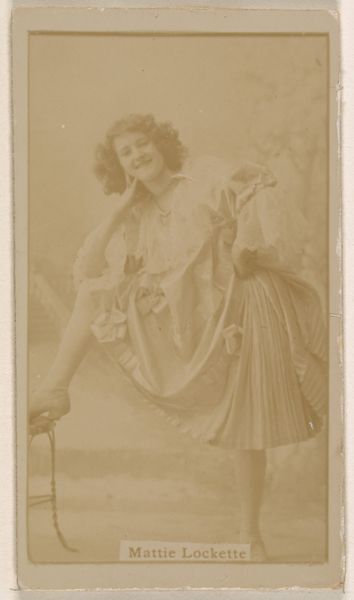
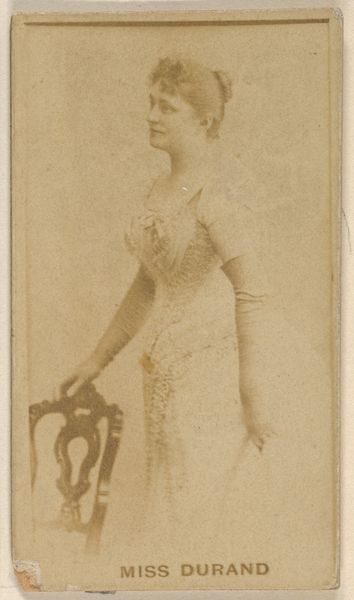
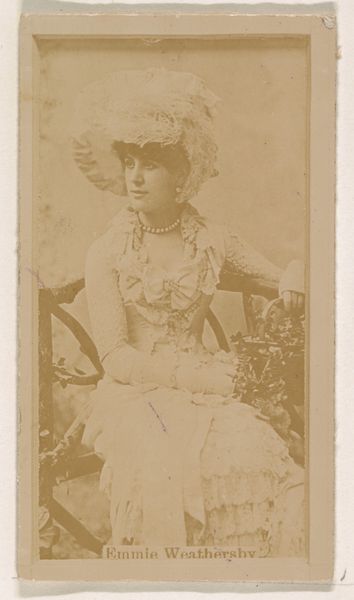
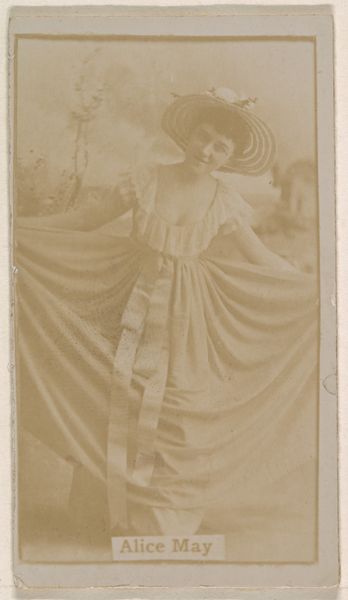
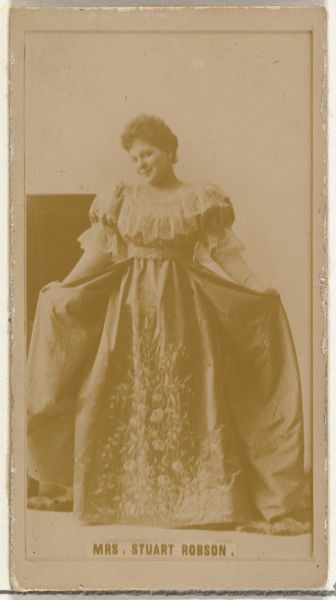
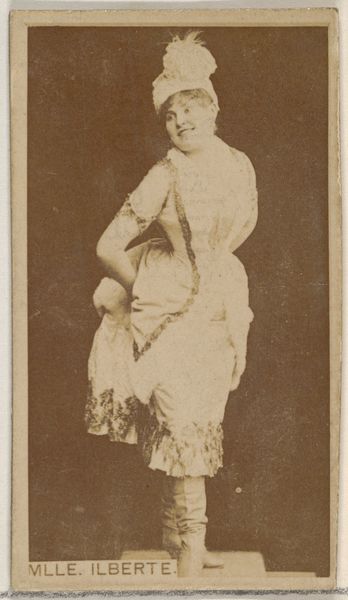
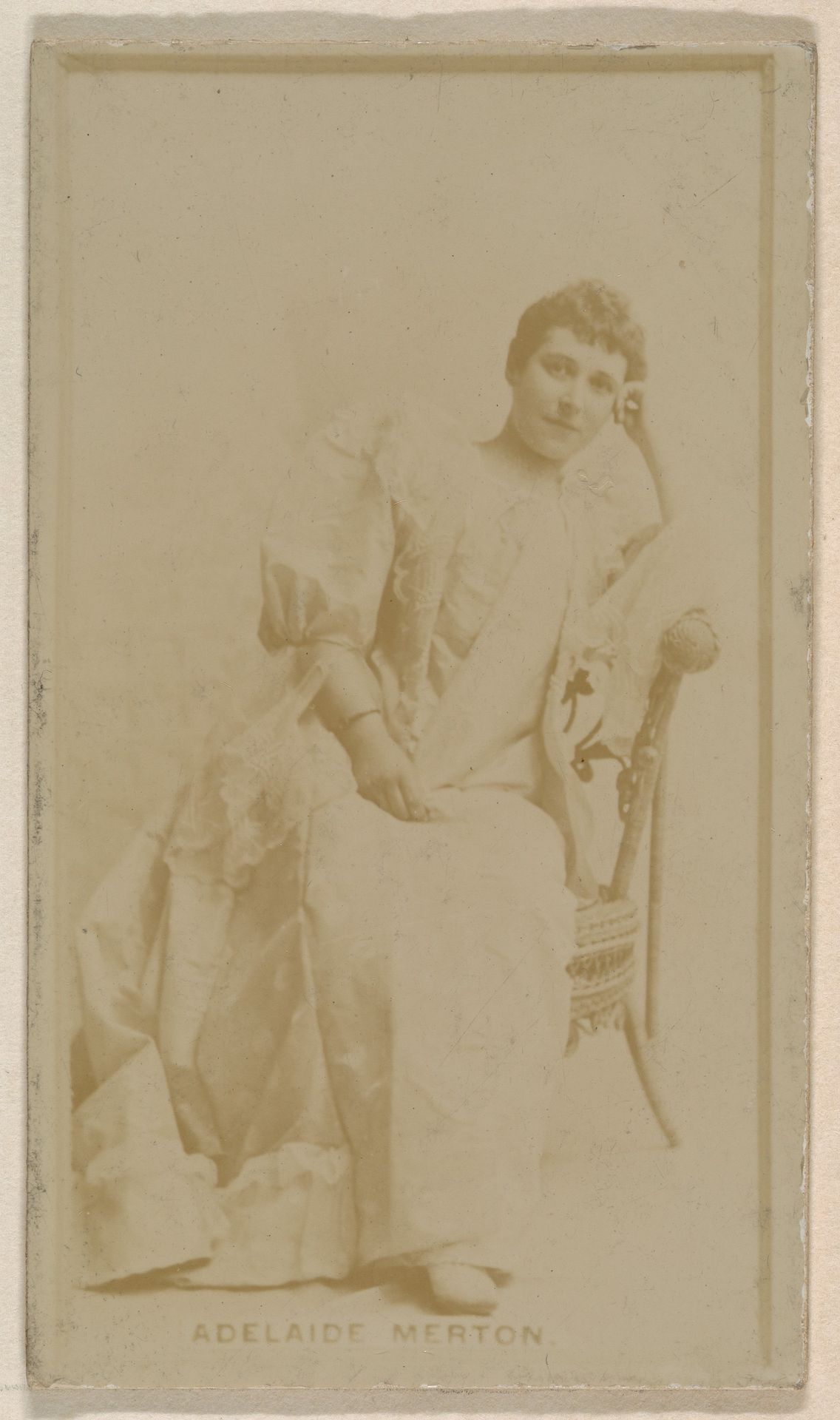
Editor: Here we have a photographic print from 1890, depicting Adelaide Merton. It’s part of the Actresses series by Kinney Brothers, used to promote Sweet Caporal Cigarettes. There’s a languid stillness to her pose that’s captivating. What strikes you when you see this, especially given its context as a cigarette advertisement? Curator: What interests me immediately is the intersection of femininity, celebrity, and commercialism at the turn of the century. These actresses, their images widely distributed, became signifiers not just of beauty but also of a burgeoning consumer culture. How complicit were women in their objectification during this time? Editor: That’s a thought-provoking point. The actresses definitely benefited from the exposure, gaining fame through these cards, but were they truly in control of their image? It feels exploitative. Curator: Precisely! The female form, already laden with social expectations, became a tool to move merchandise. These images normalize and commodify female representation. Did Merton have any say in how she was portrayed, or the message the image conveyed? I wonder how this kind of image affected women outside the entertainment industry. Did this add to the pressure that was put upon them, and their place in society at large? Editor: I hadn't thought about the wider implications. The distribution of these images... It’s really interesting to think about celebrity and the marketing of image intersecting with ideals of femininity during this era. Curator: Right, and it’s important to question the gaze at play. Who was the intended consumer? Were they meant to desire Adelaide Merton or simply the lifestyle associated with these products? Editor: So, seeing beyond the surface-level image and considering the socio-political ramifications...it offers a new lens. I will think about what the subject’s agency could have been in shaping it. Thanks! Curator: Absolutely, looking closely, the art becomes a starting point. And, really considering gender, power and representation will always complicate our reading.
Adelaide Merton, from the Actresses series (N245) issued by Kinney Brothers to promote Sweet Caporal Cigarettes
1890

Kinney Brothers Tobacco Company
1869 - 2011
The Metropolitan Museum of Art
Metropolitan Museum of Art, New York, NYArtwork details
- Medium
- drawing, print, photography
- Dimensions
- Sheet: 2 1/2 × 1 7/16 in. (6.4 × 3.7 cm)
- Location
- Metropolitan Museum of Art, New York, NY
- Copyright
- Public Domain
Tags
portrait
drawing
pictorialism
photography
Comments
Be the first to share your thoughts about this work.
About this artwork
Editor: Here we have a photographic print from 1890, depicting Adelaide Merton. It’s part of the Actresses series by Kinney Brothers, used to promote Sweet Caporal Cigarettes. There’s a languid stillness to her pose that’s captivating. What strikes you when you see this, especially given its context as a cigarette advertisement? Curator: What interests me immediately is the intersection of femininity, celebrity, and commercialism at the turn of the century. These actresses, their images widely distributed, became signifiers not just of beauty but also of a burgeoning consumer culture. How complicit were women in their objectification during this time? Editor: That’s a thought-provoking point. The actresses definitely benefited from the exposure, gaining fame through these cards, but were they truly in control of their image? It feels exploitative. Curator: Precisely! The female form, already laden with social expectations, became a tool to move merchandise. These images normalize and commodify female representation. Did Merton have any say in how she was portrayed, or the message the image conveyed? I wonder how this kind of image affected women outside the entertainment industry. Did this add to the pressure that was put upon them, and their place in society at large? Editor: I hadn't thought about the wider implications. The distribution of these images... It’s really interesting to think about celebrity and the marketing of image intersecting with ideals of femininity during this era. Curator: Right, and it’s important to question the gaze at play. Who was the intended consumer? Were they meant to desire Adelaide Merton or simply the lifestyle associated with these products? Editor: So, seeing beyond the surface-level image and considering the socio-political ramifications...it offers a new lens. I will think about what the subject’s agency could have been in shaping it. Thanks! Curator: Absolutely, looking closely, the art becomes a starting point. And, really considering gender, power and representation will always complicate our reading.
Comments
Be the first to share your thoughts about this work.