
Curatorial notes
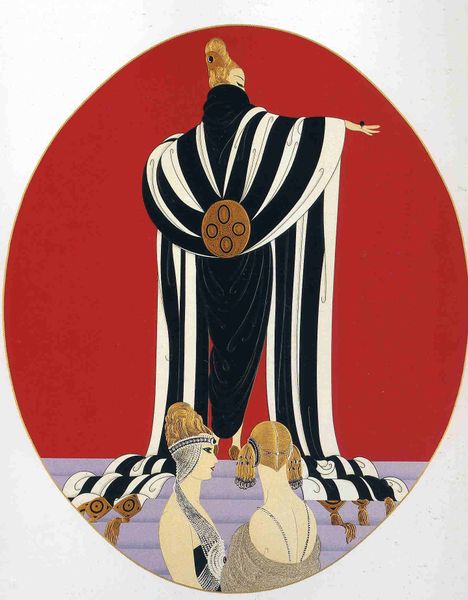
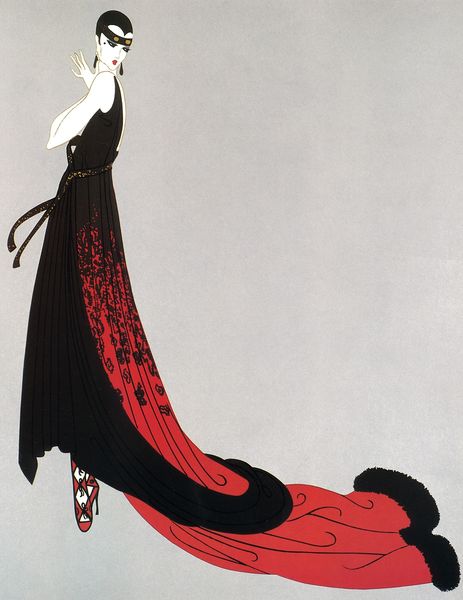
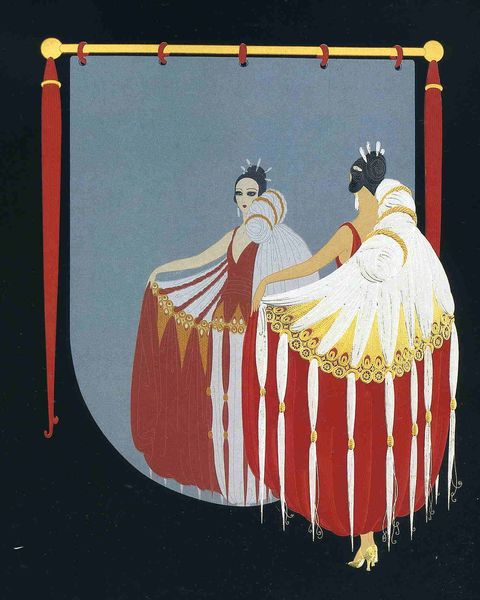
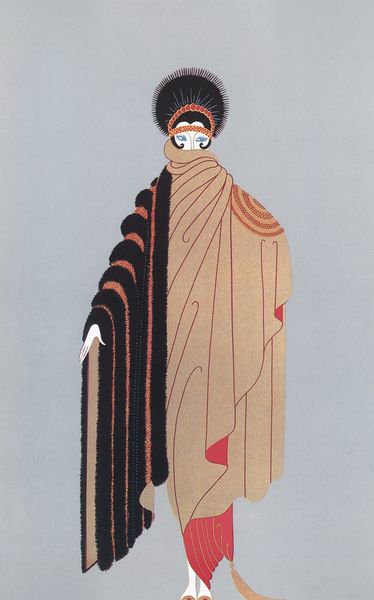
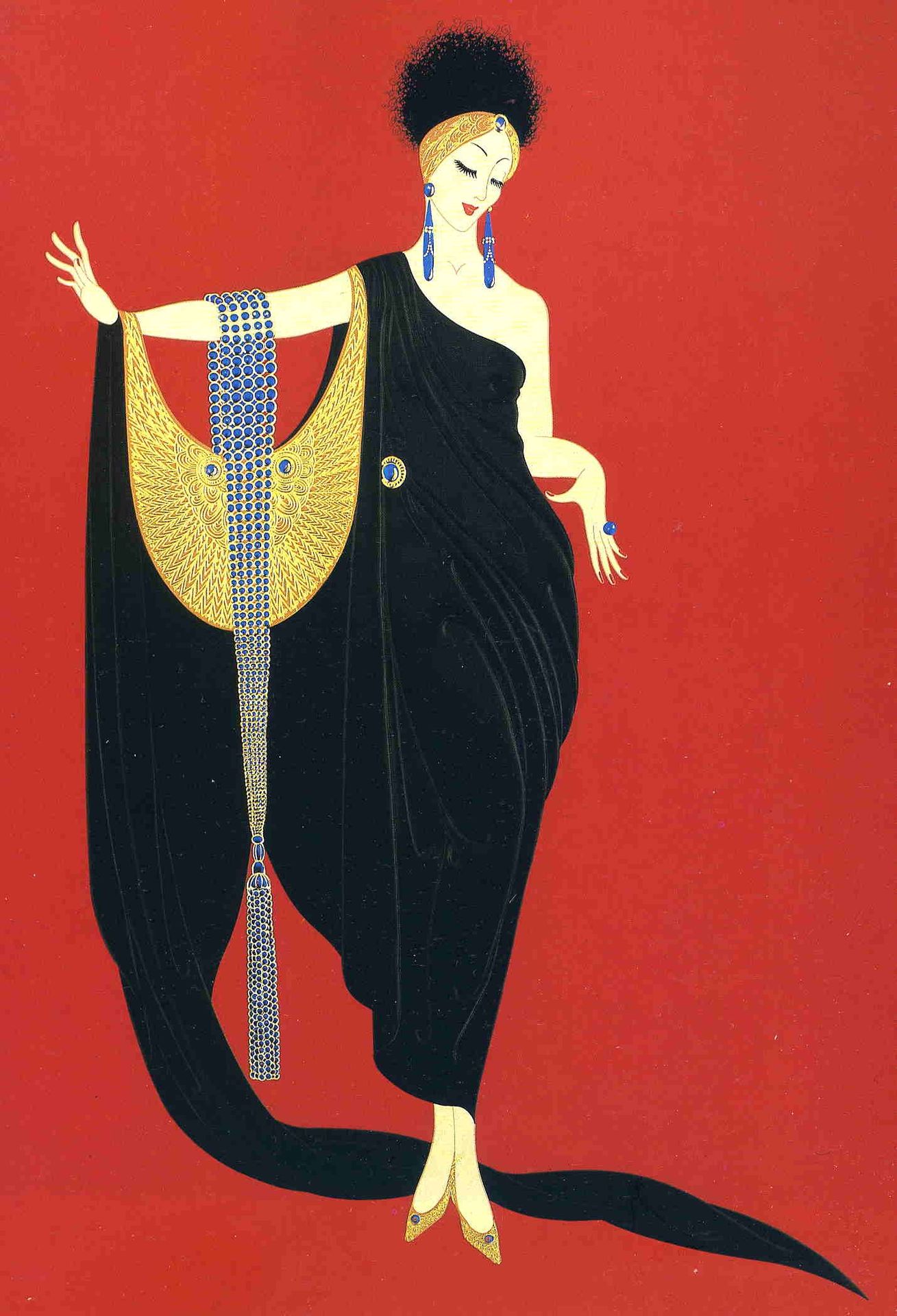
Editor: Looking at this illustration, titled "Glamour" by Erte, I'm struck by the contrast between the vibrant red background and the figure's black dress. It feels very much of a particular era, and quite striking. What catches your eye when you see it? Curator: The lithographic process that allows for this flat, graphic style interests me greatly. Think about the means of production – each color likely applied separately. It speaks to the industrialization of art and design, making "glamour" itself a manufactured, and therefore accessible, commodity. What materials were employed in the physical creation of this image? Editor: That's interesting, thinking about "glamour" as a commodity. I hadn’t considered the printmaking process itself being a key component. It makes me think about mass production and how that democratizes fashion and art. Curator: Exactly! And note the sharp lines, almost machine-like in their precision. Erte’s labor here intersects with industrial processes. Consider the original intent—was this for a magazine? A print for sale? Understanding its initial context reveals much about its relationship to a burgeoning consumer culture and who had access. What do you suppose it signified for viewers then? Editor: It makes me wonder if it was about accessibility or aspiration – were people buying into a fantasy that felt just within reach? The materials used must've influenced how it was received. Curator: Precisely. The specific inks and papers used contribute to its perceived value, both then and now. By analyzing the materials and production methods, we see "Glamour" less as a simple image and more as an object embedded within complex social and economic systems. So, thinking materially has altered your perception? Editor: Definitely! I see it now not just as an illustration, but also as a product of its time, shaped by manufacturing processes and consumer culture. Thanks for showing me the materiality behind this image.