
Curatorial notes
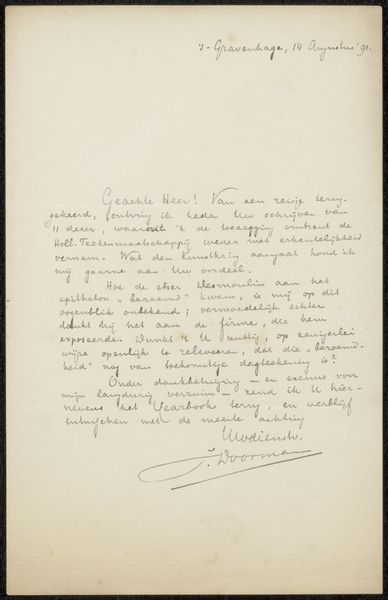
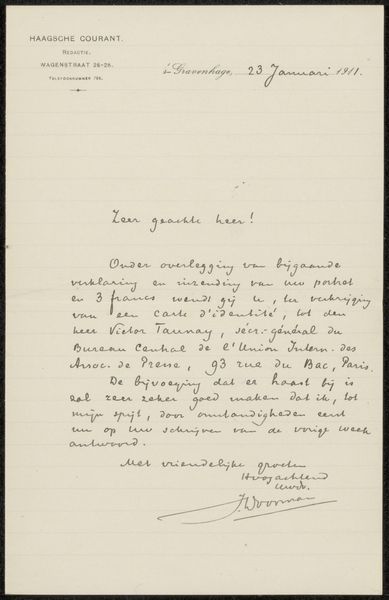
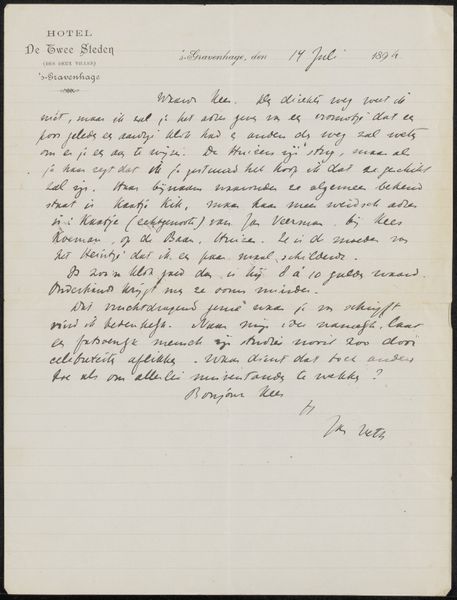
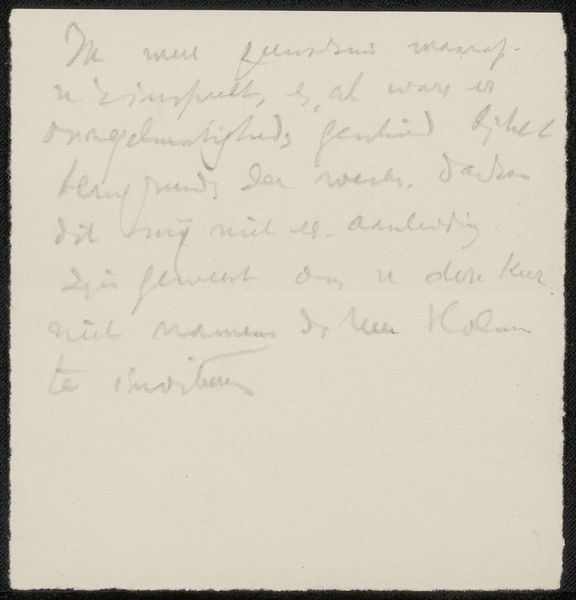
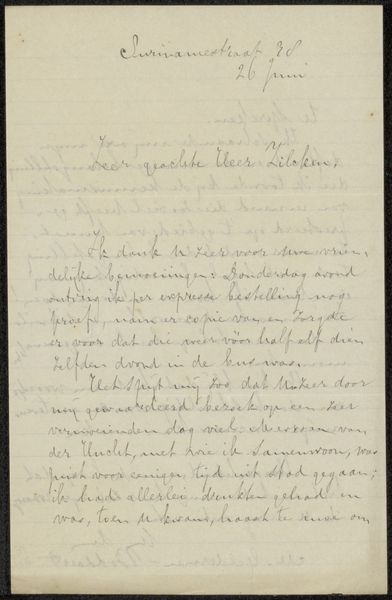
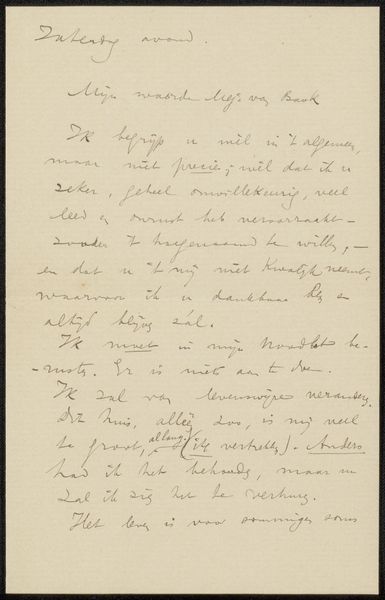
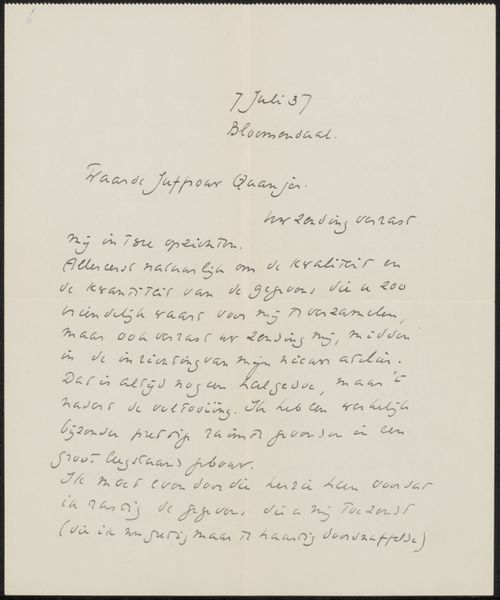
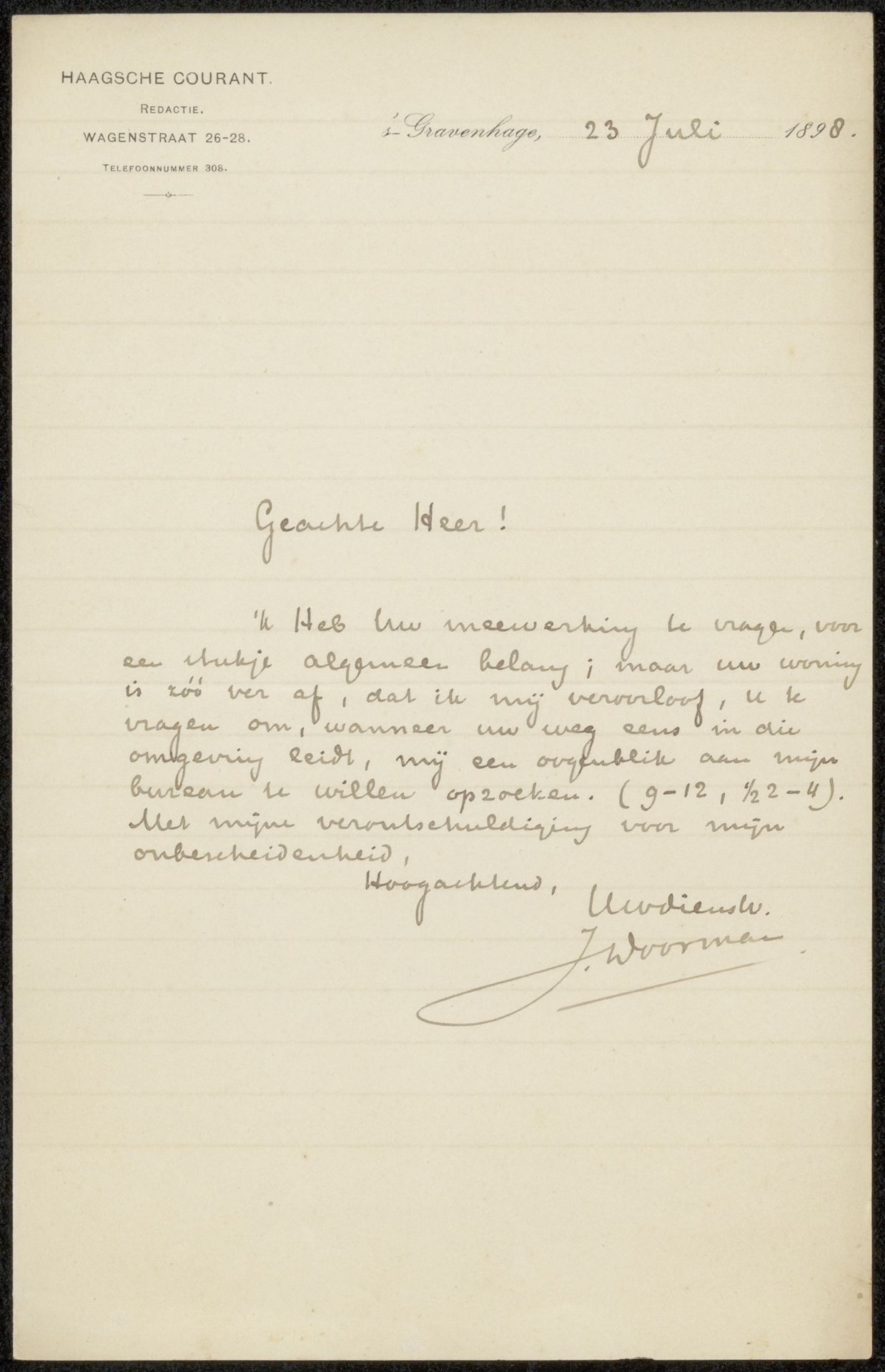
Curator: This work is entitled "Brief aan Philip Zilcken" by J. Doorman. We believe it originates from around 1898. It’s a drawing rendered in ink on paper. And what is your immediate reaction? Editor: You know, it strikes me as surprisingly intimate, this glimpse into a personal correspondence. It feels vulnerable somehow, like eavesdropping on someone's thoughts. I get the sense that the writing style of the time held different weight; there’s more intent there. Curator: Absolutely. The handwritten word held a very different cultural position than it does today. The very act of handwriting can be viewed symbolically. What stands out to me here is Doorman's elegant, precise calligraphy, embodying the ideals of formality and erudition. This script is not simply conveying information; it is performing it. Editor: And I find it funny that he includes his available business hours at the end, sandwiched between the apology and formal sign off. "I apologize for my intrusion, by the way I'm free to be intruded upon between 9 and 12!" I see that and picture this gentleman ready and waiting, a stickler for both protocol and efficiency. Curator: Exactly. It speaks to a culture steeped in formality and convention. The elaborate phrasing and humble tone are indicative of the social expectations and conventions of the era, also what was socially acceptable and "allowed" at that time. We, perhaps, see things differently. Editor: There’s almost a ritualistic element to it, isn't there? This careful construction of a letter to politely nudge or propose… Nowadays, we would have likely have written one direct, simple sentence by text message or email. It makes me appreciate that bygone consideration for the art of writing. Curator: The language in this work suggests a carefully calibrated balance of deference and professional expectation. These social dance moves of professional communication are a signifier of a specific moment in time and of what constituted respect between two colleagues. Editor: Reflecting on this short communication, it offers so much to chew on; a reminder of how cultural context shapes even our simplest exchanges. Curator: Precisely, and a window into how the written word was once imbued with a certain sacredness and considered elegance we now seldom find in modern-day communications.