About this artwork
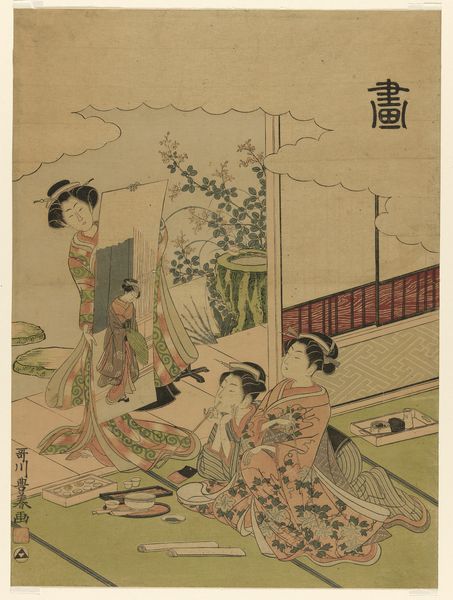
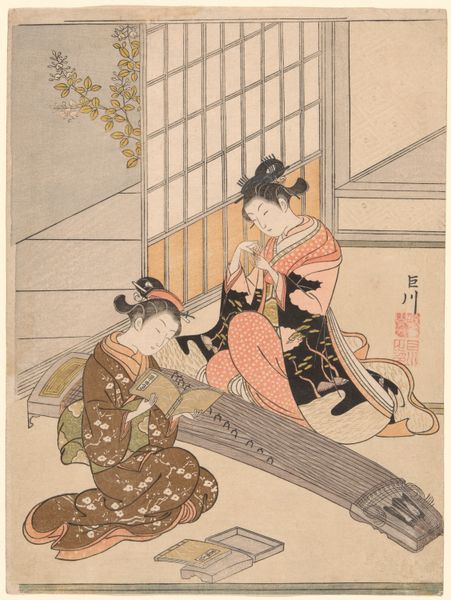
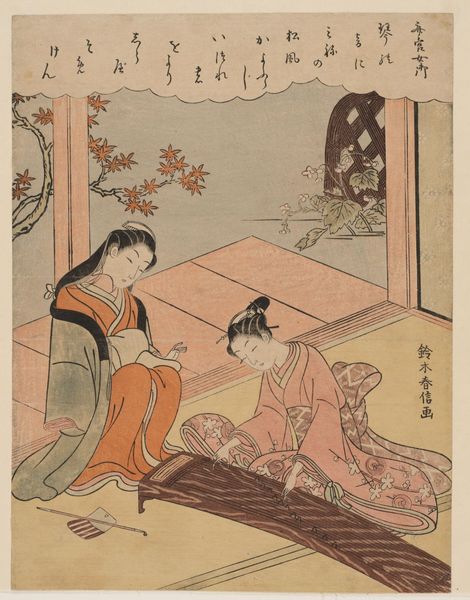
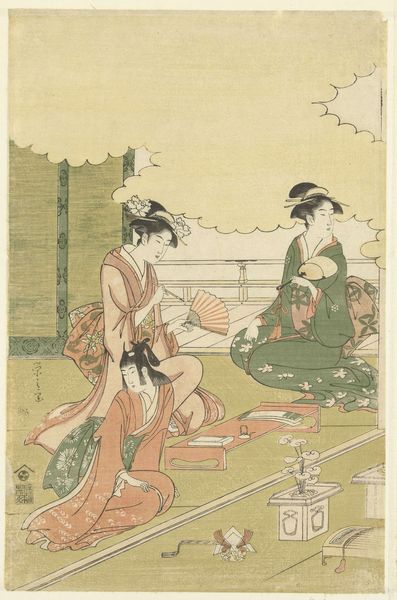
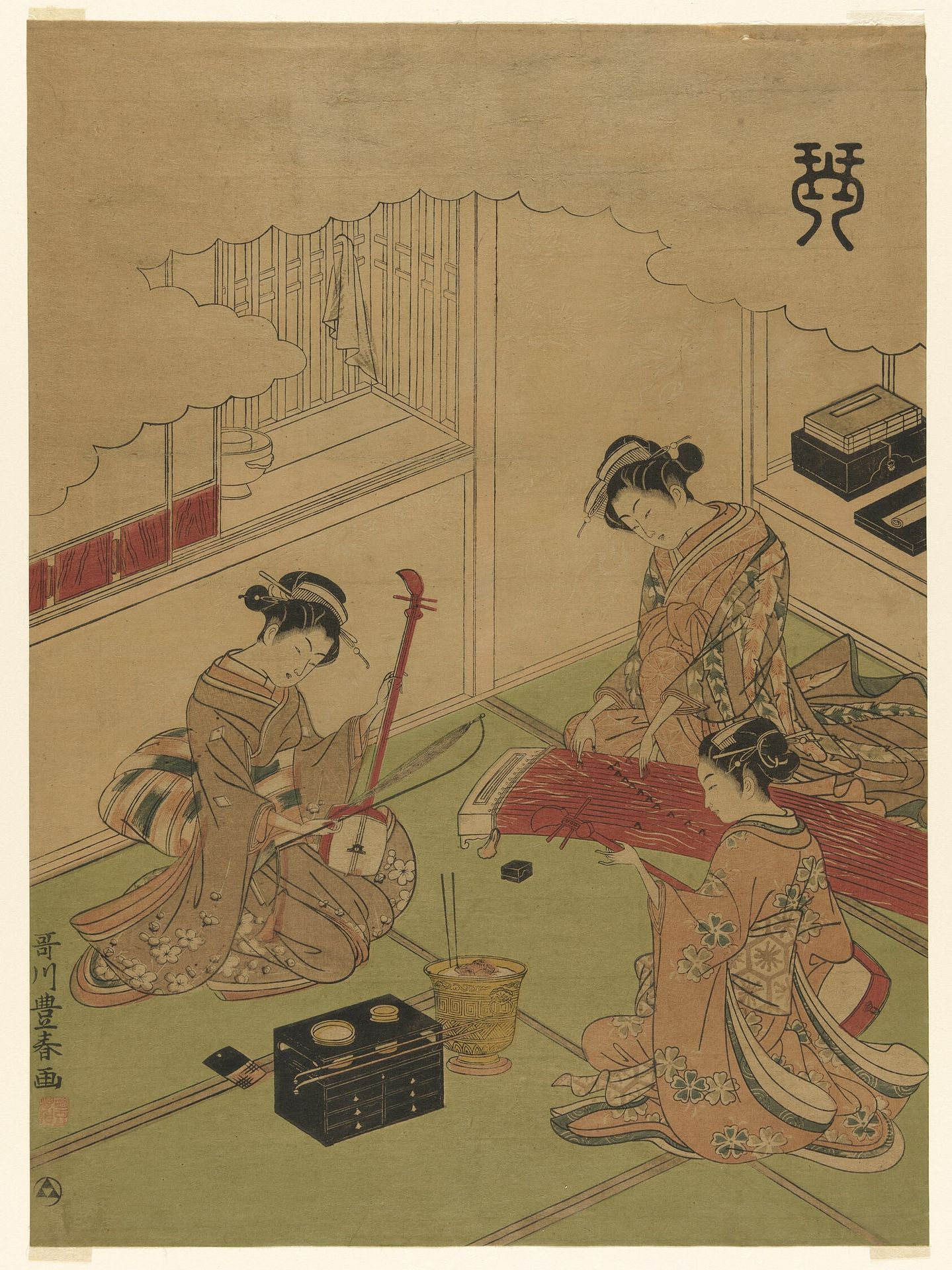
Utagawa Toyoharu created this woodblock print, Koto (Kin), as part of a series called "The Four Accomplishments". This print offers us a glimpse into the world of women in 18th-century Japan, a time marked by rigid social structures and expectations. We see three women indoors, each engaged in musical performance. In this period, artistic accomplishments like playing musical instruments were not just hobbies. They were markers of status, education, and refinement, particularly for women of the upper classes. This artwork subtly comments on the complex role of women. It reflects both the constraints and opportunities afforded to them in their cultural context. "Koto (Kin)" invites us to consider the intersections of gender, class, and artistic expression in the Edo period. These women, through their music, were participating in a cultural dialogue. They were subtly pushing against the boundaries of their prescribed roles.
Koto (Kin), from an untitled series of the four accomplishments c. 1772 - 1775


Artwork details
- Medium
- print, woodblock-print
- Dimensions
- 17 1/2 × 14 in.
- Location
- The Art Institute of Chicago
- Copyright
- Public Domain
Tags
asian-art
ukiyo-e
figuration
woodblock-print
genre-painting
Comments
No comments
About this artwork
Utagawa Toyoharu created this woodblock print, Koto (Kin), as part of a series called "The Four Accomplishments". This print offers us a glimpse into the world of women in 18th-century Japan, a time marked by rigid social structures and expectations. We see three women indoors, each engaged in musical performance. In this period, artistic accomplishments like playing musical instruments were not just hobbies. They were markers of status, education, and refinement, particularly for women of the upper classes. This artwork subtly comments on the complex role of women. It reflects both the constraints and opportunities afforded to them in their cultural context. "Koto (Kin)" invites us to consider the intersections of gender, class, and artistic expression in the Edo period. These women, through their music, were participating in a cultural dialogue. They were subtly pushing against the boundaries of their prescribed roles.
Comments
No comments