About this artwork
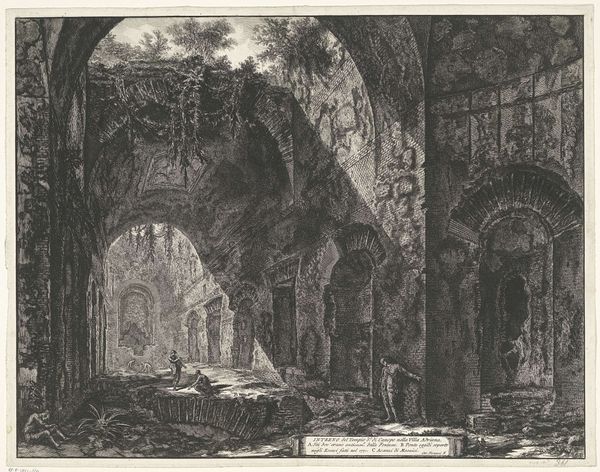
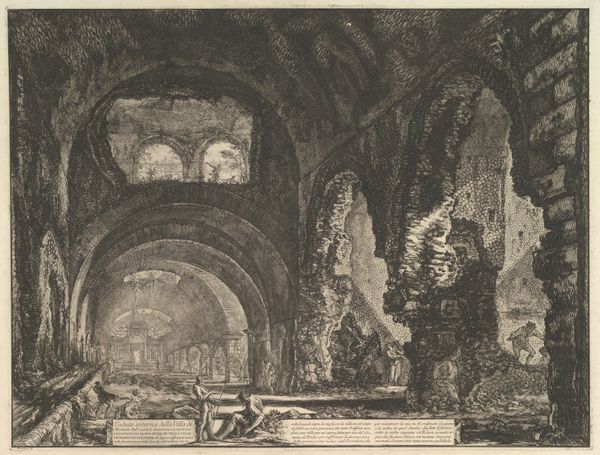
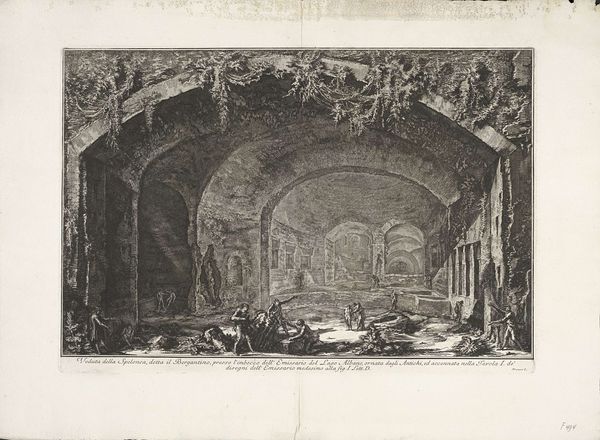
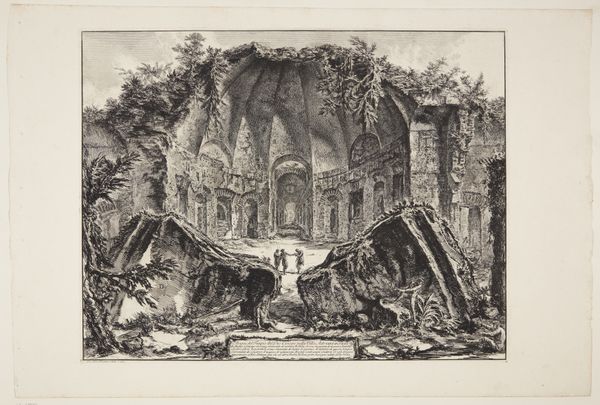
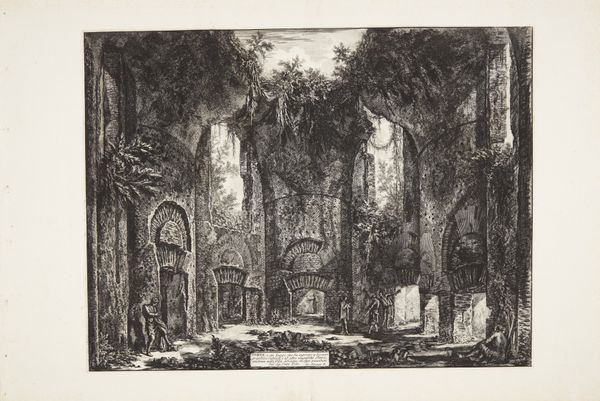
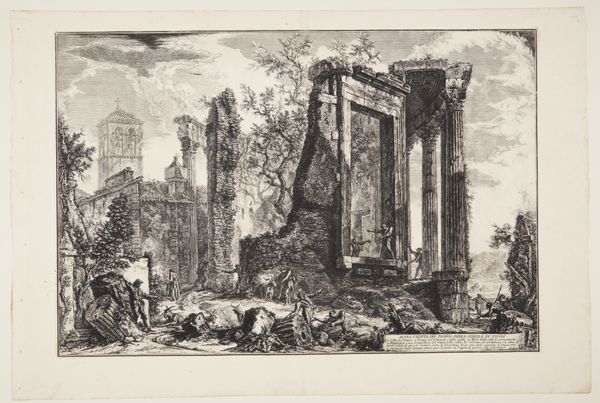
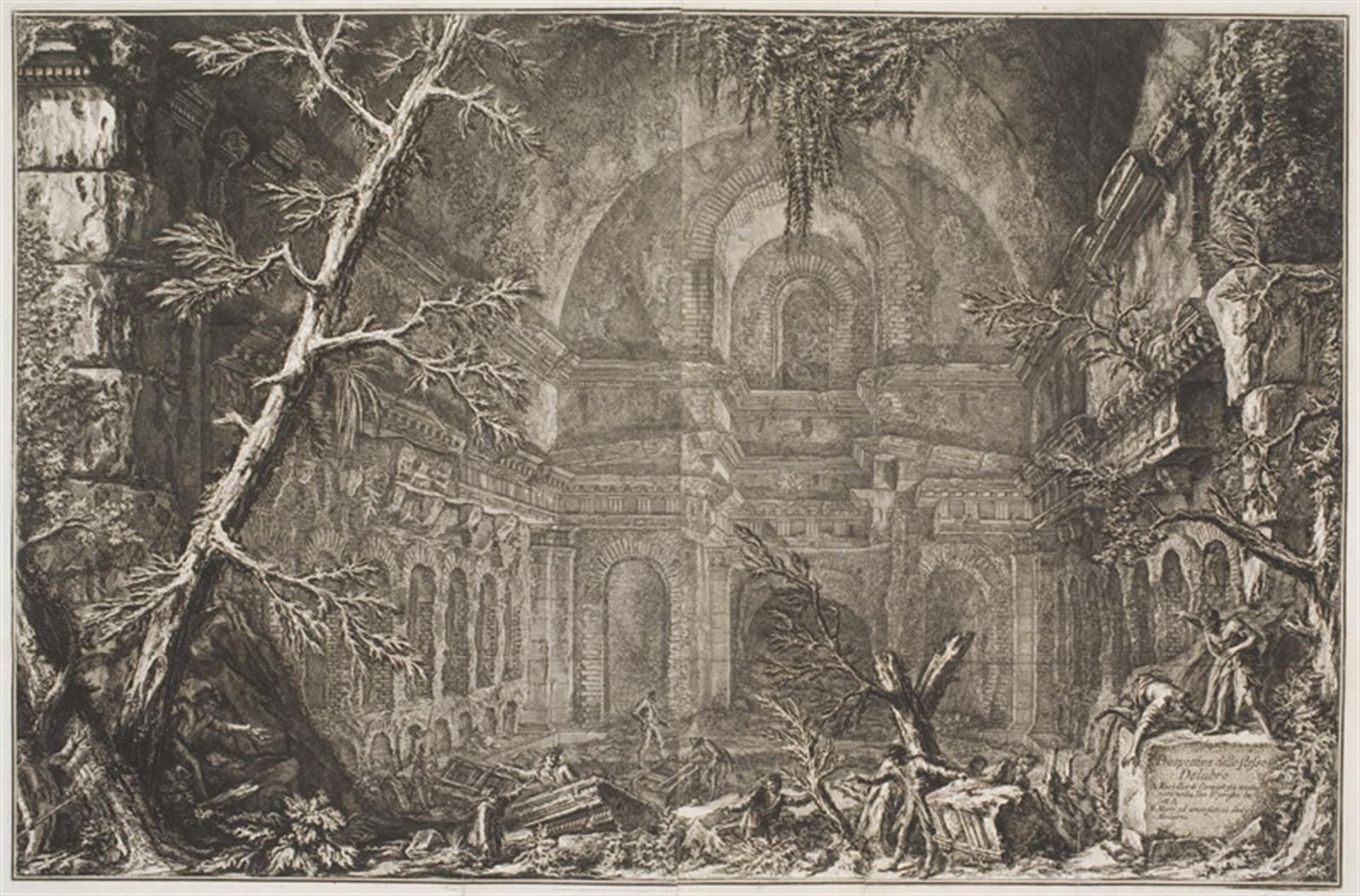
Giovanni Battista Piranesi created this etching, 'Prospettiva dello stesso delubro...', using a copper plate. The image is made by incising lines into the metal, which then holds ink for printing. Piranesi was a master of this demanding technique, using it to conjure up grand, theatrical spaces. Here, the cavernous interior is rendered with incredible detail. Notice the textures: the rough, fractured stone, the delicate foliage, and the figures dwarfed by the architecture. These textural effects were achieved by varying the depth and density of the etched lines, a process requiring great skill and patience. Piranesi's etchings were highly sought after by wealthy tourists. They captured the romantic allure of ancient ruins, feeding into a growing interest in classical antiquity. But beyond their aesthetic appeal, these prints also speak to the labor involved in their making. Each line is a testament to the artist's craft, transforming a humble metal plate into a work of enduring power. The making and materials are, therefore, central to the artwork's meaning and its impact on the world.
Prospettiva dello stesso delubro...
1762


Artwork details
- Dimensions
- 727 mm (height) x 1005 mm (width) (bladmaal), 620 mm (height) x 920 mm (width) (plademaal)
- Location
- SMK - Statens Museum for Kunst
Comments
Share your thoughts
About this artwork
Giovanni Battista Piranesi created this etching, 'Prospettiva dello stesso delubro...', using a copper plate. The image is made by incising lines into the metal, which then holds ink for printing. Piranesi was a master of this demanding technique, using it to conjure up grand, theatrical spaces. Here, the cavernous interior is rendered with incredible detail. Notice the textures: the rough, fractured stone, the delicate foliage, and the figures dwarfed by the architecture. These textural effects were achieved by varying the depth and density of the etched lines, a process requiring great skill and patience. Piranesi's etchings were highly sought after by wealthy tourists. They captured the romantic allure of ancient ruins, feeding into a growing interest in classical antiquity. But beyond their aesthetic appeal, these prints also speak to the labor involved in their making. Each line is a testament to the artist's craft, transforming a humble metal plate into a work of enduring power. The making and materials are, therefore, central to the artwork's meaning and its impact on the world.
Comments
Share your thoughts