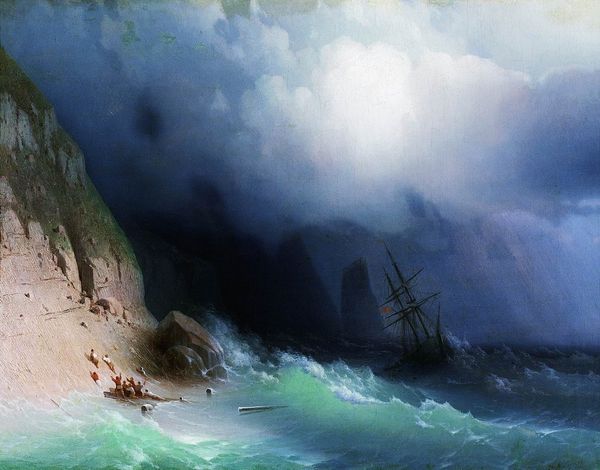
Dimensions: 69.2 x 99.1 cm
Copyright: Public domain
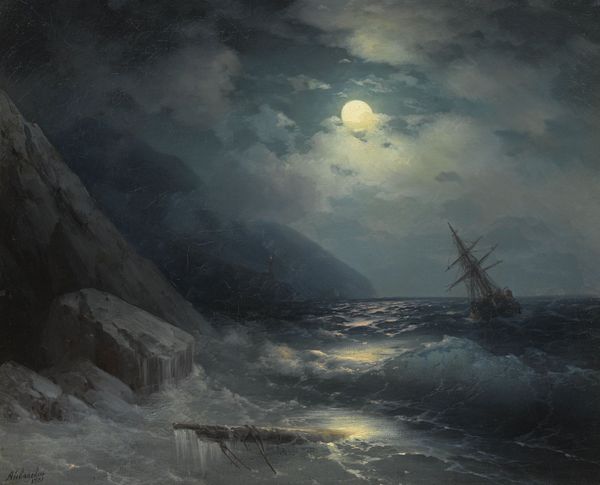
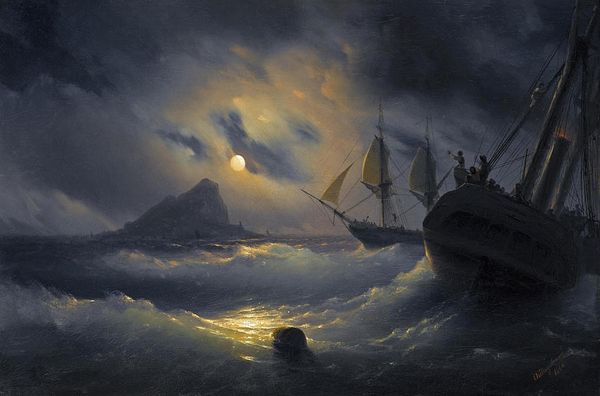
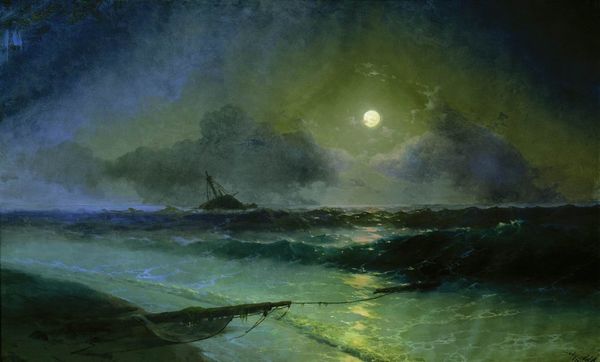
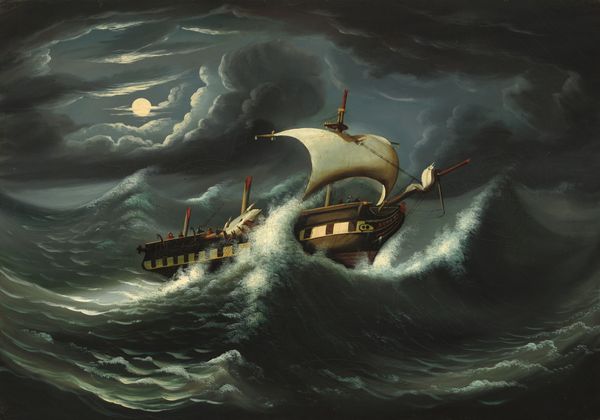
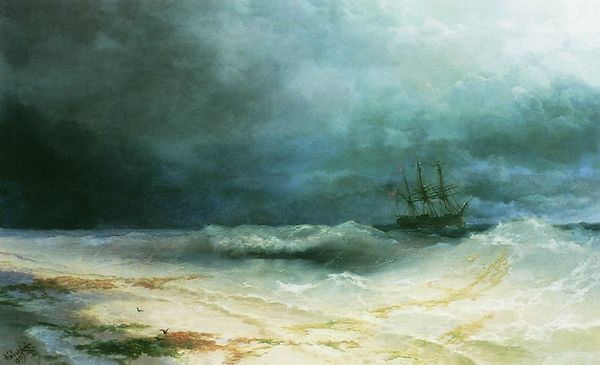
Editor: Here we have Aivazovsky’s "Tempest," painted in 1855 using oil paints. Wow, the chaos feels so palpable! What is your read on this dramatic scene? Curator: Aivazovsky really throws you into the thick of it, doesn't he? For me, it's more than just a storm; it’s about the awesome power of nature against the frailty of human endeavor. The way the moonlight breaks through those churning clouds...it's like a glimpse of hope amid despair, but maybe that’s just me. Do you see anything like that? Editor: I think that’s a great point. The moonlight adds a lot, I’d agree with that interpretation. Maybe it provides some solace or comfort to the figures in the artwork. Curator: Solace is a powerful word here. And think about it historically. Aivazovsky was painting this during a period of massive social upheaval and technological advancement. Maybe, just maybe, this tempest is a metaphor for those turbulent times? The burning ship, a symbol of old empires collapsing… Anyway, do you find yourself drawn to any particular element of the painting? Editor: I really love the impasto and brushwork on the waves themselves; there is a kind of beauty to their movement and texture that doesn't really communicate the struggle and desperation of the people caught in the storm. I feel kind of detached from them and more captured by the aesthetic rendering of the water. Curator: Absolutely! The artist's dance with light is just as captivating as the storm's raw power. Sometimes I feel I can hear the waves crashing, and I even get a whiff of the salty air when looking at Aivazovsky's seascapes. A testament to the genius. What a moving experience. Editor: Thank you, I've really come to appreciate how much symbolism and artistic technique can contribute to such an intense feeling!
Comments
No comments
Be the first to comment and join the conversation on the ultimate creative platform.
 Collect
 React
React Comment
More like this