1641
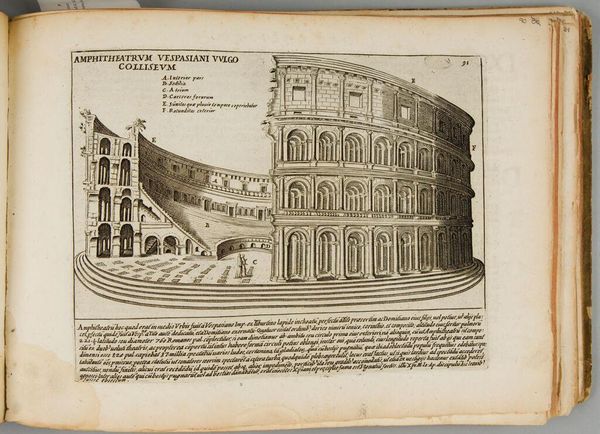
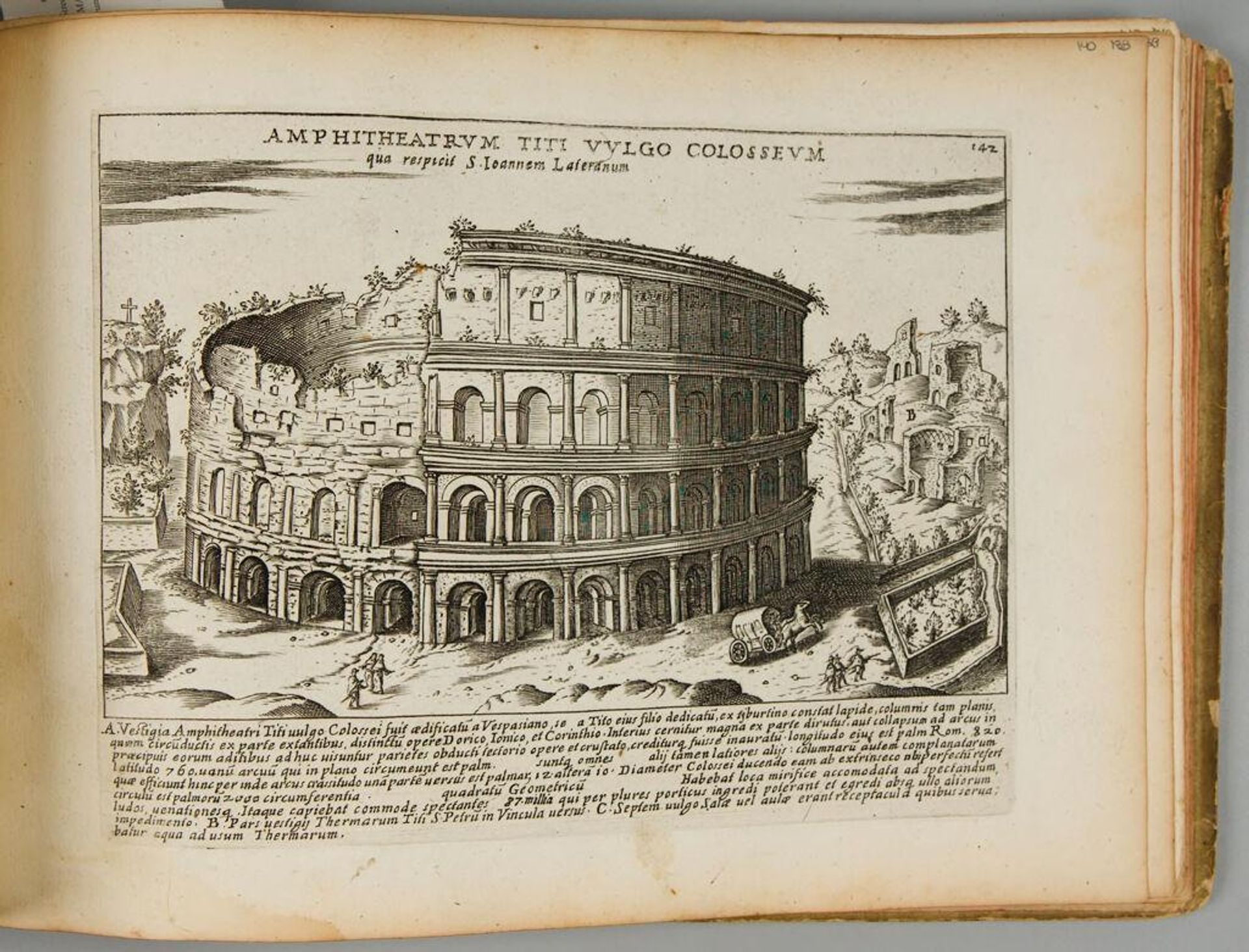
The Amphitheater of Vespasian, known as the Colosseum

Listen to curator's interpretation
Curatorial notes
Editor: Here we see Giacomo Lauro’s engraving, "The Amphitheater of Vespasian, known as the Colosseum." It's really fascinating to see this image and its depiction of ruins. What symbols or meanings do you see present in this artwork? Curator: The Colosseum is more than just a ruin; it's a vessel of cultural memory. Its presence in this print is meant to evoke a powerful legacy of imperial Rome. What emotions does the Colosseum evoke for you? Editor: A sense of history, definitely, but also a kind of melancholy. Curator: Precisely! The melancholy stems from the awareness of time's passage, the decay of even the grandest structures. The image prompts us to consider the cyclical nature of civilizations, the rise and fall of power. Editor: It’s interesting to consider ruins not just as debris but as symbolic reminders of the past. Curator: Exactly. They are potent symbols of time, memory, and the human condition.