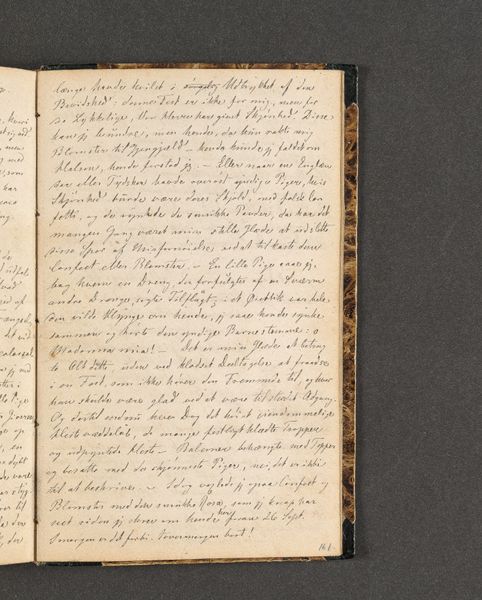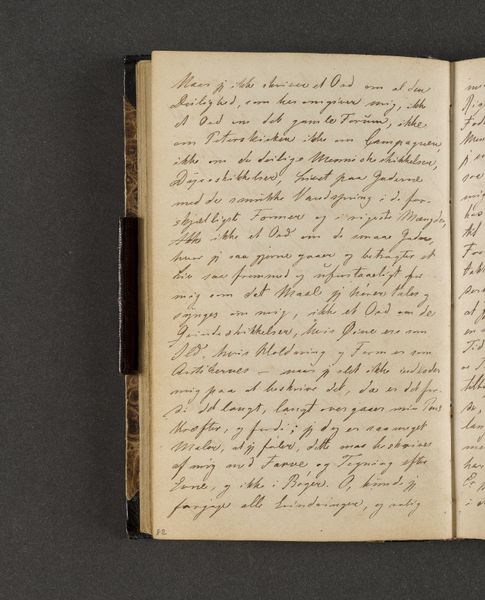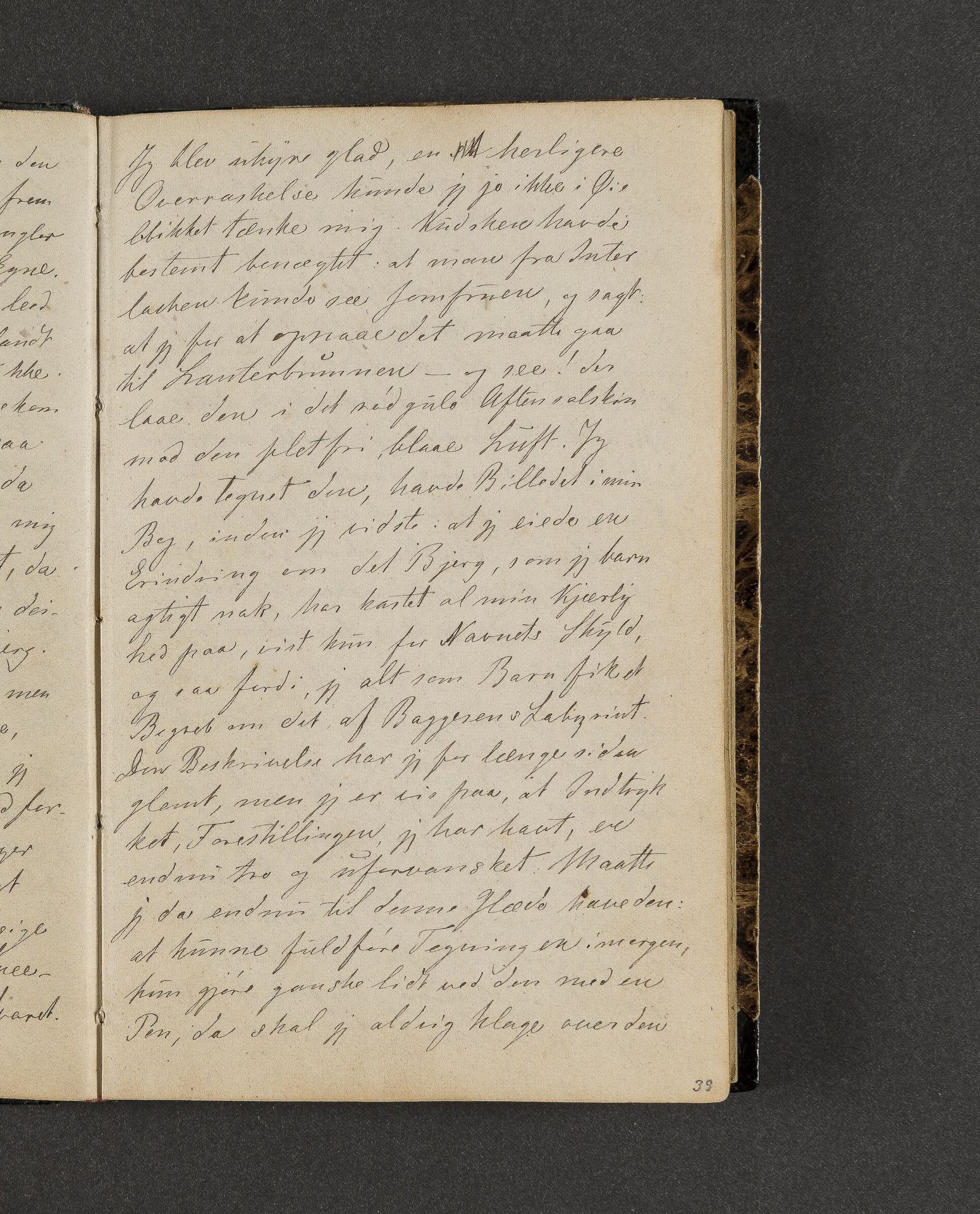
1845
Rejsedagbog


Listen to curator's interpretation
Curatorial notes
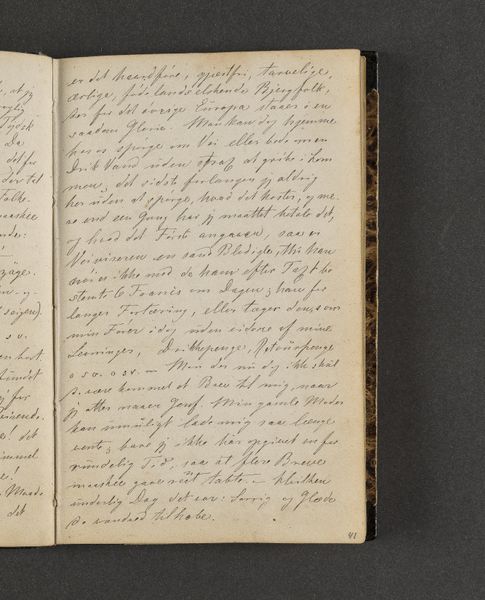
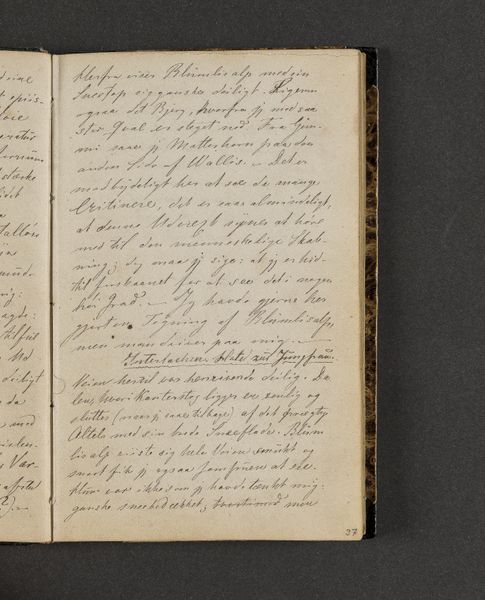
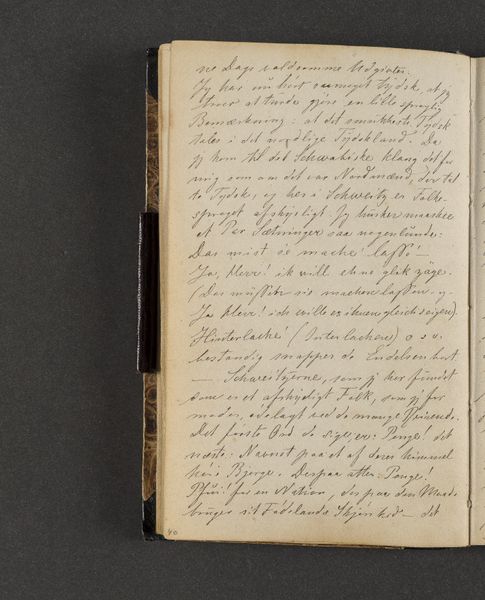
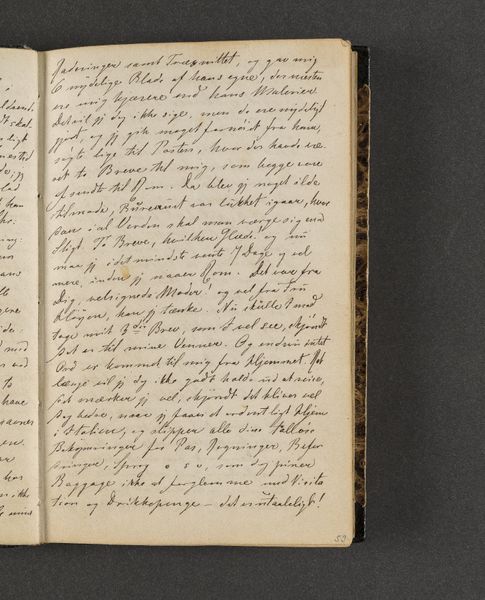
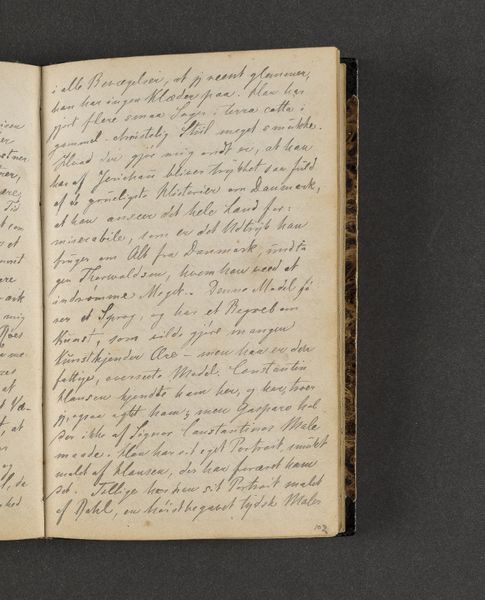
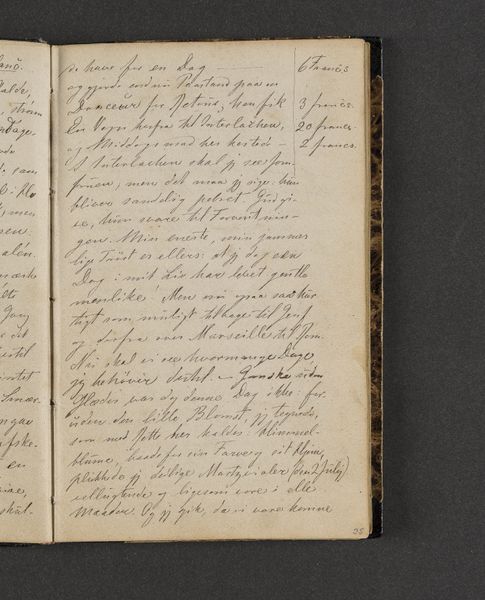
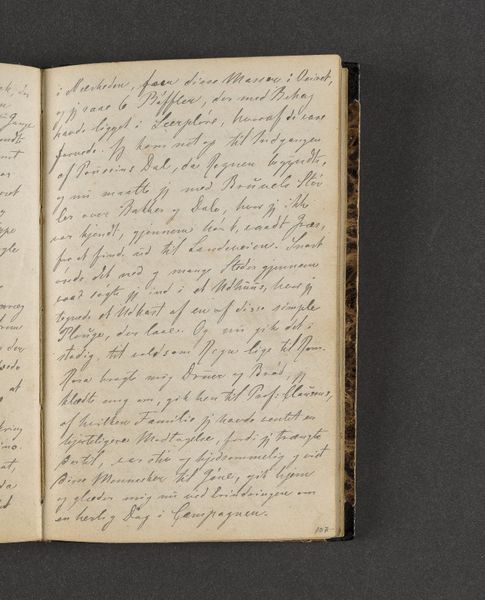
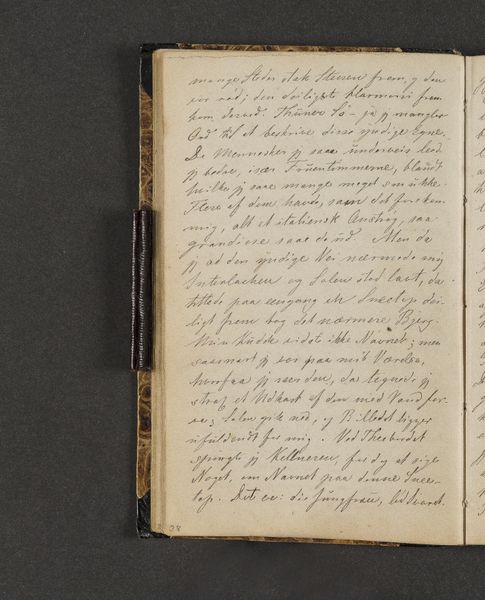
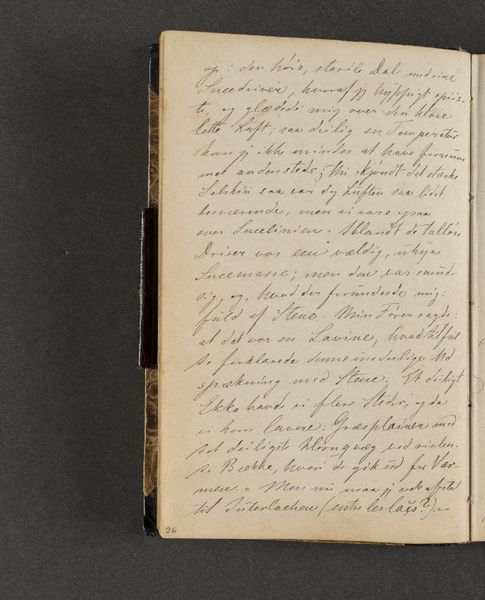
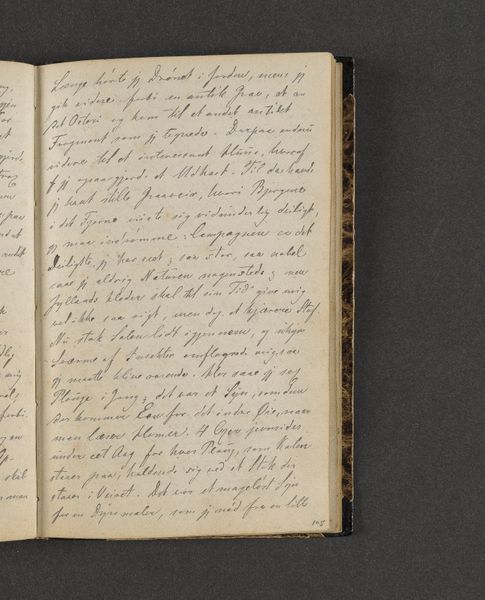
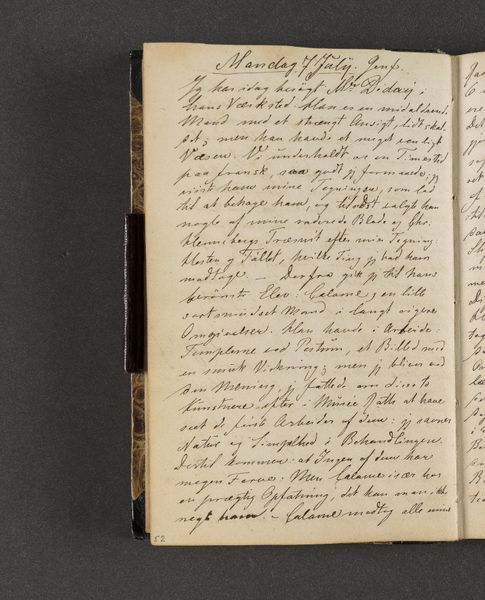
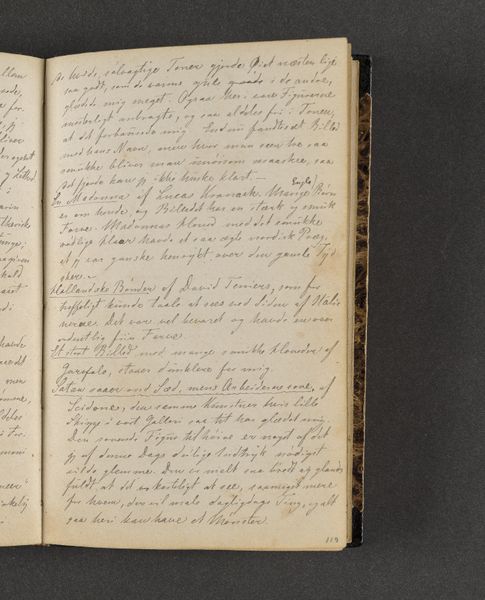
Curator: Editor: Here we have "Rejsedagbog," or "Travel Journal," created in 1845 by Johan Thomas Lundbye, using ink on paper. At first glance, the faded ink and tight script give the piece a feeling of intimacy and perhaps… melancholy? It feels like peeking into a private world. What stands out to you? Curator: It does evoke that sense of intimacy, doesn't it? Looking at it, I imagine Lundbye on his travels, jotting down impressions as they come to him. I picture him sketching in the sunlight, then returning inside to write these dense passages. Can't you almost feel the weight of his thoughts pressing down on the page? Editor: Definitely. But the writing is so dense. I can't read Danish, but do you get a sense of what he might be writing about? Is it factual, like observations of the landscape, or more personal reflections? Curator: Probably a bit of both, actually. I think landscape was often a conduit for personal reflection for artists in this period. These travel journals became ways of not only recording physical spaces, but internal ones. A way to map the landscape of the self, through close looking at nature. I almost feel as though these entries, by the way that they cascade into each other, are landscapes in themselves. Editor: That’s a really interesting way to think about it. I’d never considered calligraphy as a reflection of landscape, almost as an abstraction in a sense. Curator: Right? It's about mark-making as meditation, I suppose. We look at art and expect a certain level of direct representation, when in truth, art has always invited the spectator into something else – another world. Editor: This makes me appreciate how art goes beyond mere documentation, showing us new ways of seeing the external world while reflecting on internal experience. Thanks.