About this artwork
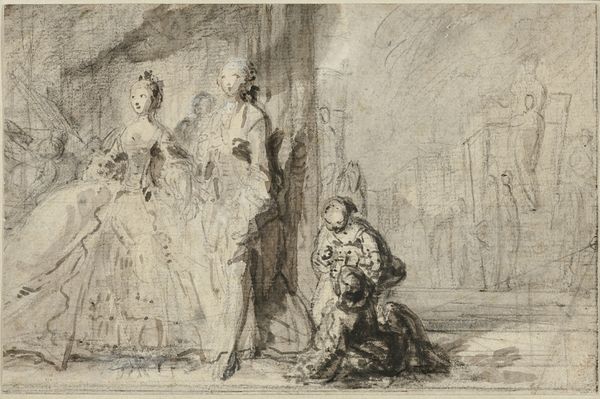
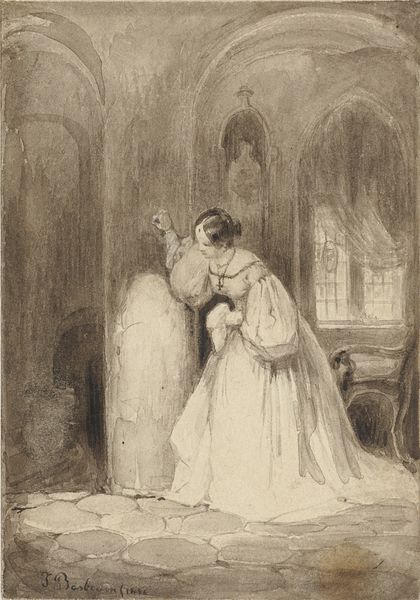
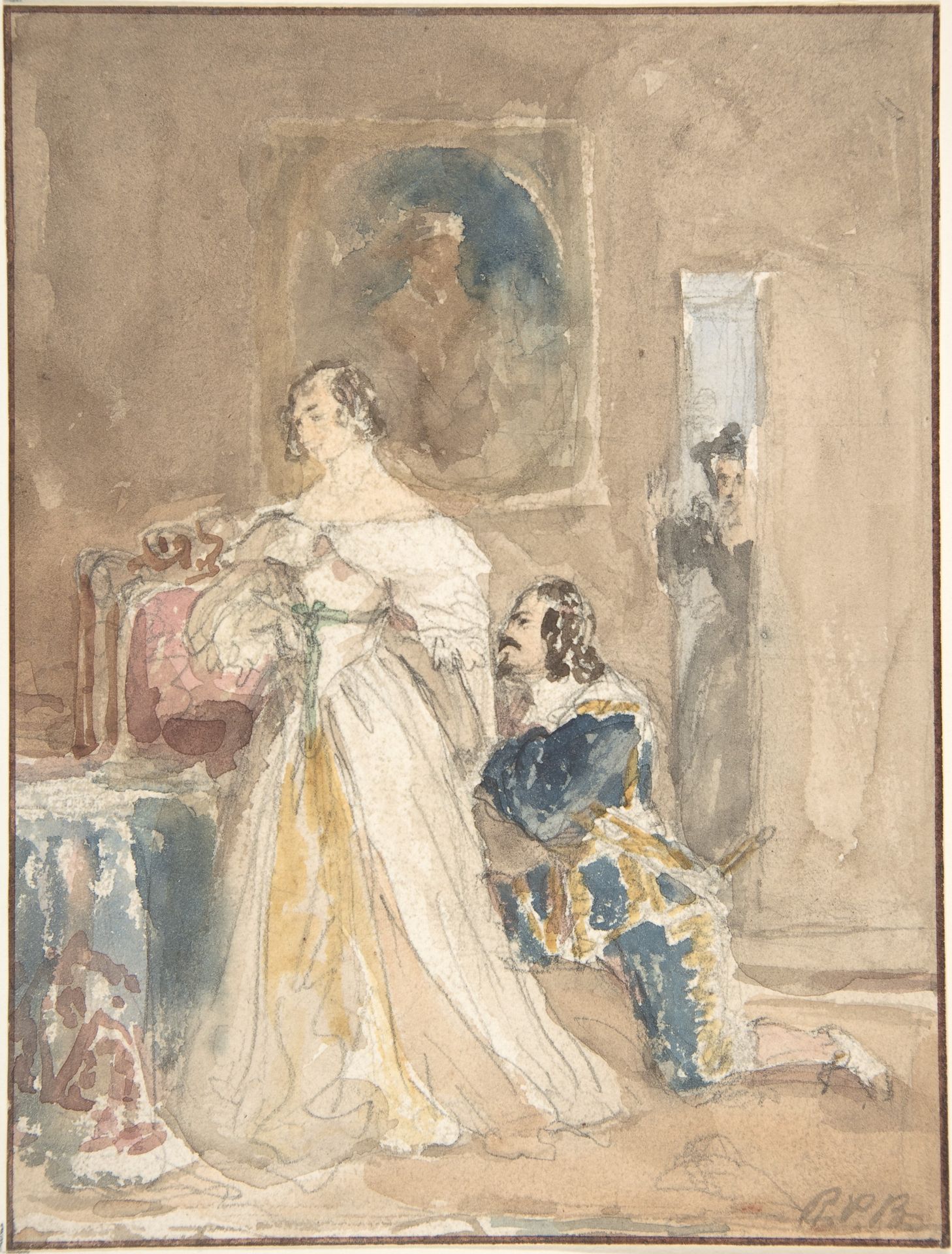
Richard Parkes Bonington made this watercolor titled "The Proposal" sometime in the 1820s, a period when artists in Britain and France were looking to the past for inspiration. Here, we see a scene of courtship, rendered with a light touch. The gentleman kneels, offering his hand in marriage, while a woman, perhaps a maid or chaperone, peeks from behind a doorway. Bonington, though British, spent much of his career in France, and this work reflects the French interest in historical genre scenes, evoking a sense of romantic nostalgia for a bygone era. The loose brushwork and delicate washes of color align with a broader shift in artistic taste, away from Neoclassical precision and towards a more expressive, painterly style. To truly understand this piece, we might consult literature from the period, examining social customs around marriage and courtship, as well as the exhibition records from the Paris Salon, where Bonington frequently showed his work. The meaning of art always depends on its historical context.
The Proposal (recto); Unfinished drawing of a horse and rider (verso)
1820 - 1850

Richard Parkes Bonington
1802 - 1828
The Metropolitan Museum of Art
Metropolitan Museum of Art, New York, NYArtwork details
- Medium
- drawing, print, watercolor
- Dimensions
- sheet: 6 7/8 x 5 3/16 in. (17.5 x 13.2 cm)
- Location
- Metropolitan Museum of Art, New York, NY
- Copyright
- Public Domain
Tags
Comments
Share your thoughts
About this artwork
Richard Parkes Bonington made this watercolor titled "The Proposal" sometime in the 1820s, a period when artists in Britain and France were looking to the past for inspiration. Here, we see a scene of courtship, rendered with a light touch. The gentleman kneels, offering his hand in marriage, while a woman, perhaps a maid or chaperone, peeks from behind a doorway. Bonington, though British, spent much of his career in France, and this work reflects the French interest in historical genre scenes, evoking a sense of romantic nostalgia for a bygone era. The loose brushwork and delicate washes of color align with a broader shift in artistic taste, away from Neoclassical precision and towards a more expressive, painterly style. To truly understand this piece, we might consult literature from the period, examining social customs around marriage and courtship, as well as the exhibition records from the Paris Salon, where Bonington frequently showed his work. The meaning of art always depends on its historical context.
Comments
Share your thoughts