About this artwork
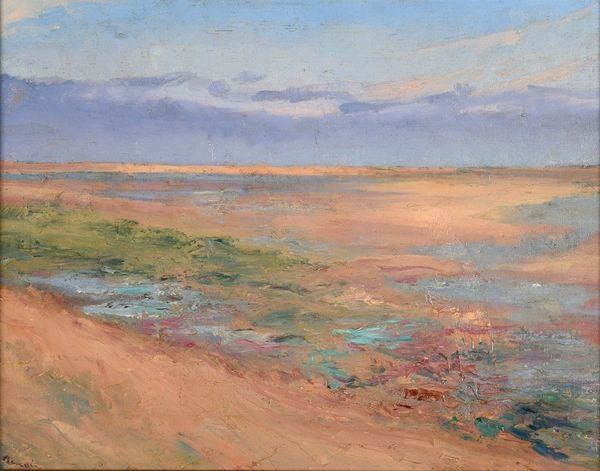
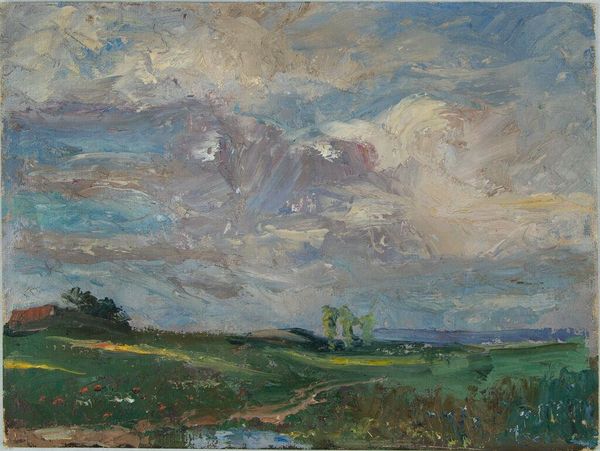
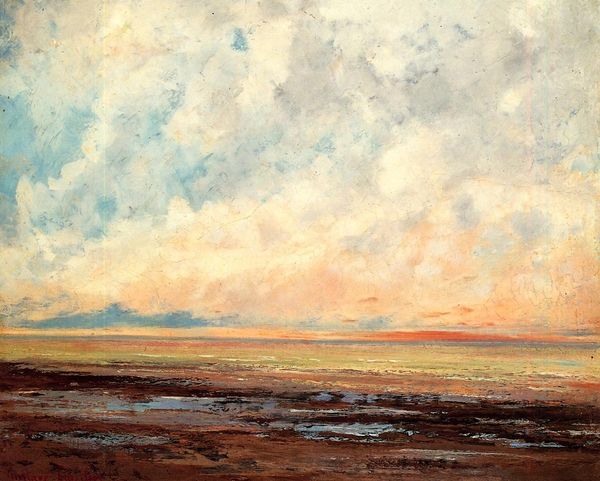
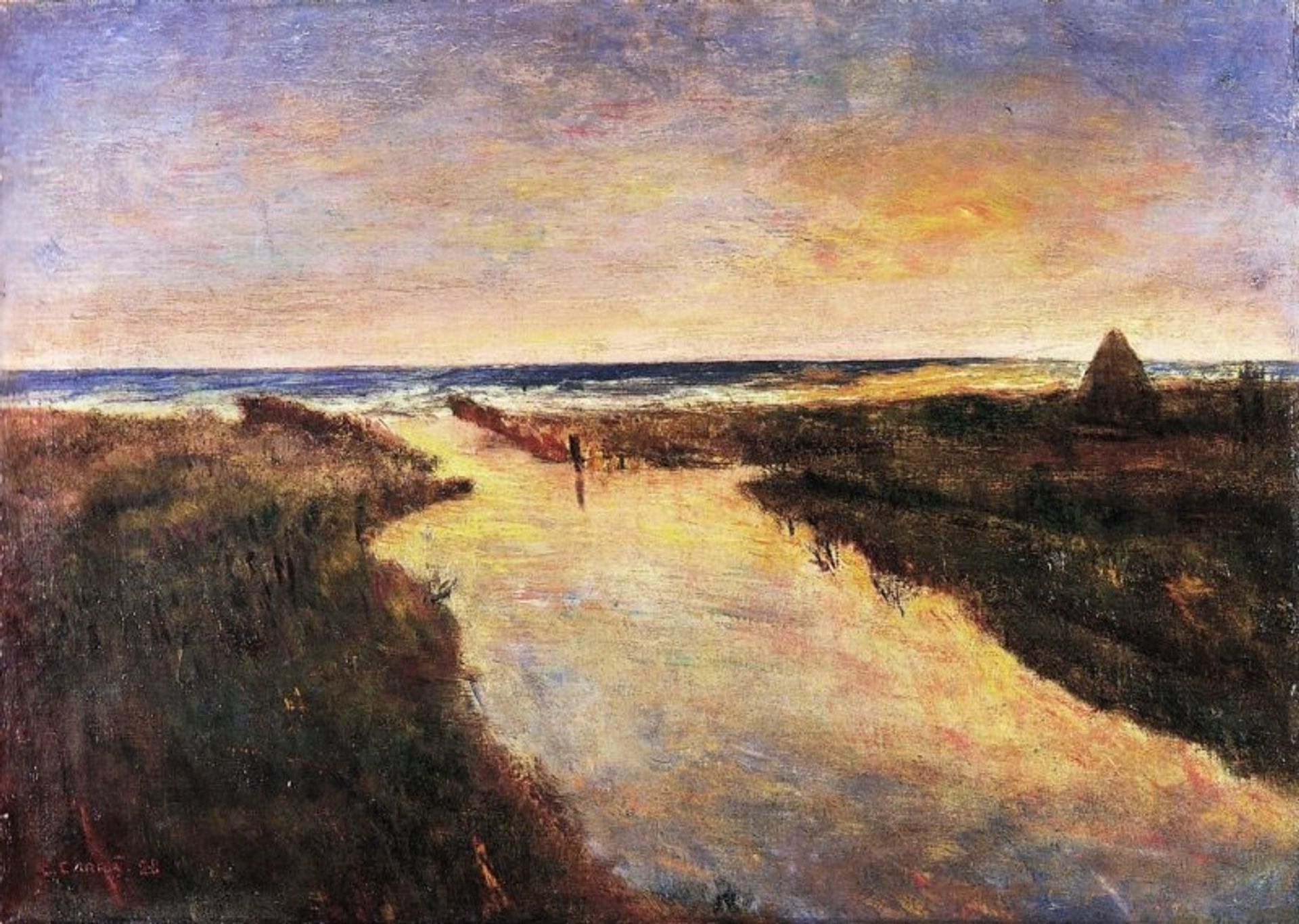
Editor: This is Carlo Carra’s “Foce del Cinquale,” created in 1928 using oil paint. I’m really drawn to the hazy atmosphere; the way the light filters through, almost like a memory. What do you see in this piece? Curator: What immediately strikes me is the layering of symbolic imagery – water, sky, earth. These aren't merely landscape elements, but primal symbols embedded in our collective unconscious. The setting sun is of course a recurring signifier in Western art and the landscape format itself echoes conventions found since Romanticism. Tell me, does that resonate with you? Editor: I do see it now; it feels almost like a nostalgic representation of a past era, the impasto technique feels old, but there's a modern sensibility in the abstraction of the forms. Curator: Precisely. Note how Carra uses impasto, yes, the textured paint application – it’s not just a stylistic choice, but carries emotional weight. This textural element becomes another language; think about how different cultures throughout time used ornamentation and objects for tactile interaction and conveying a narrative of symbolic association. Editor: That's a cool idea. How does that relate to our cultural memory then? Curator: Cultural memory persists because symbols are vessels, aren’t they? Carra’s symbolic image invites us to delve into these layered connotations: he uses conventional symbolism that may change over time and in some instances fade from awareness. I do think we've moved some distance away from this now as we respond to abstraction and minimalism. Editor: I learned so much. Thank you. I’m walking away looking at it through a totally different lens, ready to see how symbols shift. Curator: And I was reminded how essential it is to occasionally decode conventional visual representations that may not connect immediately with current viewers. Thanks to our combined interpretation.

Artwork details
- Copyright
- Carlo Carra,Fair Use
Comments
Share your thoughts
About this artwork
Editor: This is Carlo Carra’s “Foce del Cinquale,” created in 1928 using oil paint. I’m really drawn to the hazy atmosphere; the way the light filters through, almost like a memory. What do you see in this piece? Curator: What immediately strikes me is the layering of symbolic imagery – water, sky, earth. These aren't merely landscape elements, but primal symbols embedded in our collective unconscious. The setting sun is of course a recurring signifier in Western art and the landscape format itself echoes conventions found since Romanticism. Tell me, does that resonate with you? Editor: I do see it now; it feels almost like a nostalgic representation of a past era, the impasto technique feels old, but there's a modern sensibility in the abstraction of the forms. Curator: Precisely. Note how Carra uses impasto, yes, the textured paint application – it’s not just a stylistic choice, but carries emotional weight. This textural element becomes another language; think about how different cultures throughout time used ornamentation and objects for tactile interaction and conveying a narrative of symbolic association. Editor: That's a cool idea. How does that relate to our cultural memory then? Curator: Cultural memory persists because symbols are vessels, aren’t they? Carra’s symbolic image invites us to delve into these layered connotations: he uses conventional symbolism that may change over time and in some instances fade from awareness. I do think we've moved some distance away from this now as we respond to abstraction and minimalism. Editor: I learned so much. Thank you. I’m walking away looking at it through a totally different lens, ready to see how symbols shift. Curator: And I was reminded how essential it is to occasionally decode conventional visual representations that may not connect immediately with current viewers. Thanks to our combined interpretation.
Comments
Share your thoughts