c. 1936
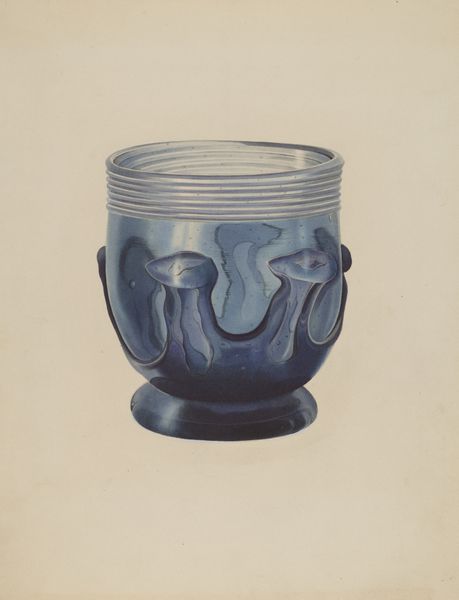
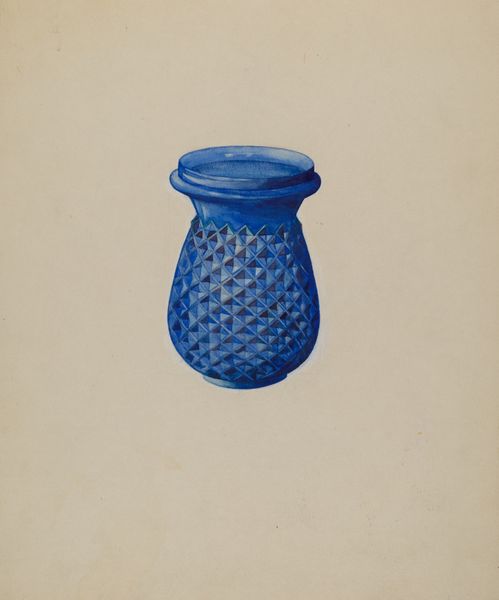
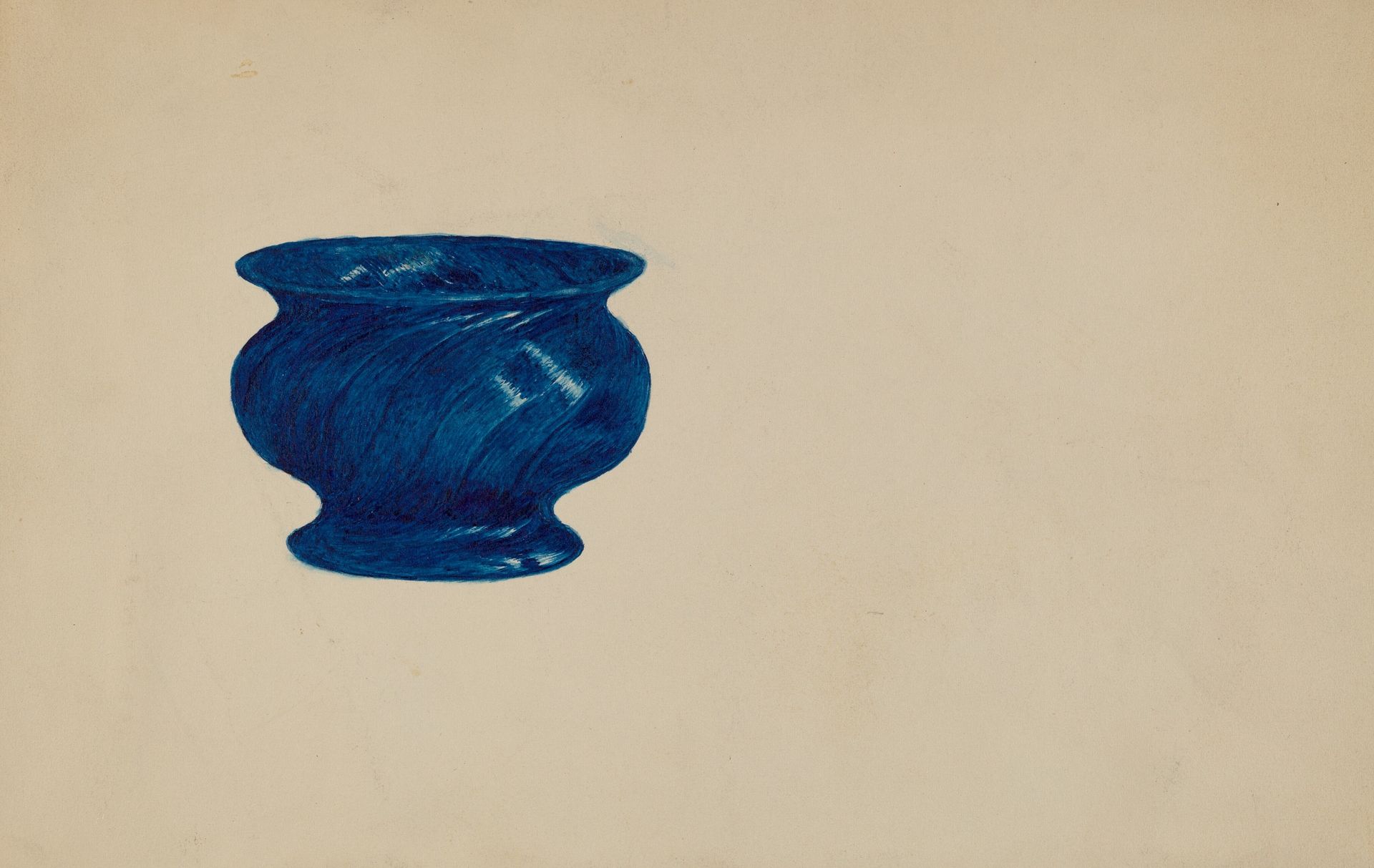
Salt Cellar


Listen to curator's interpretation
Curatorial notes
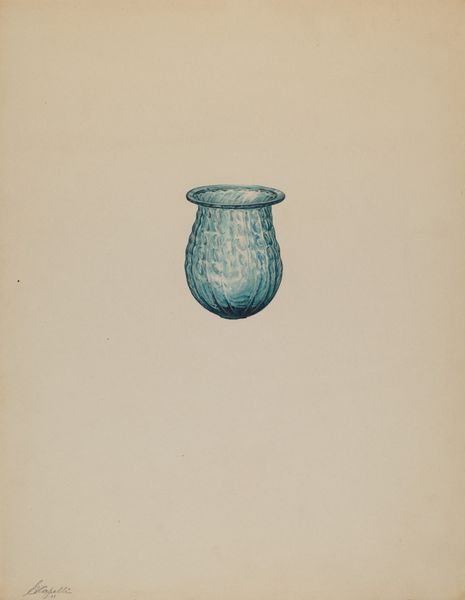
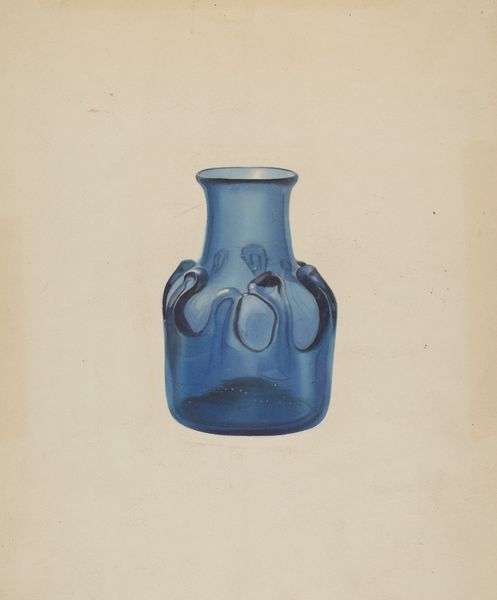
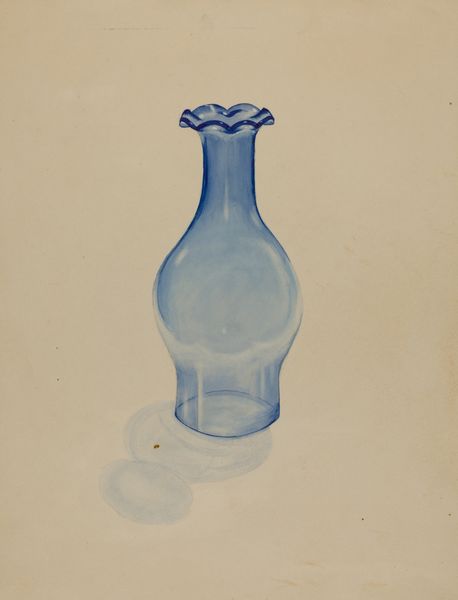
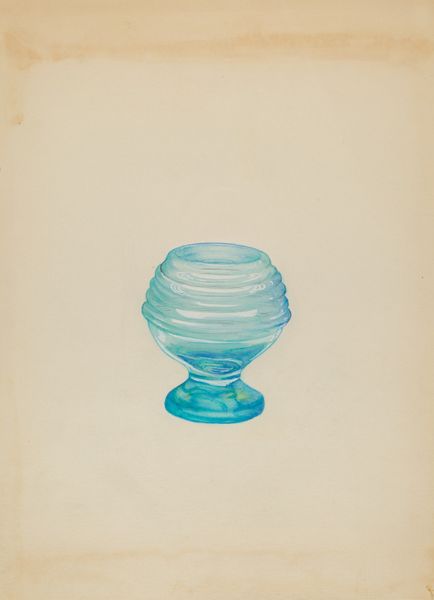
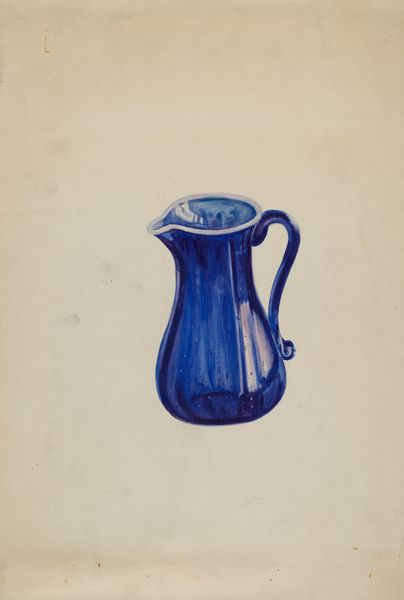
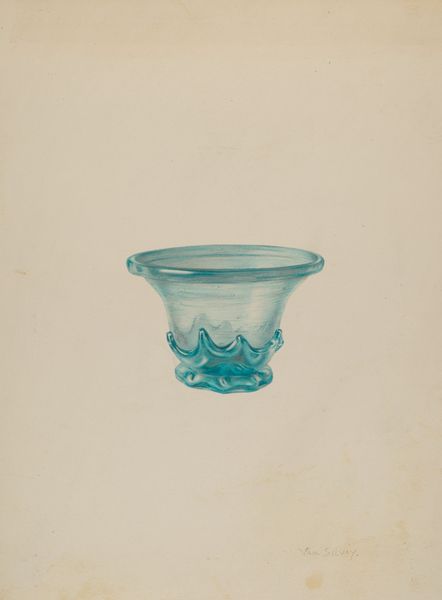
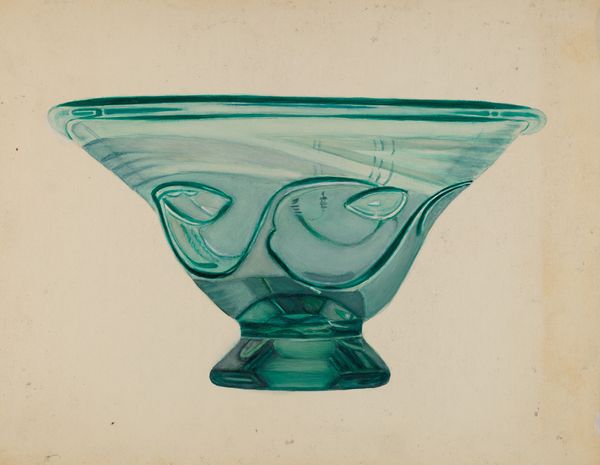
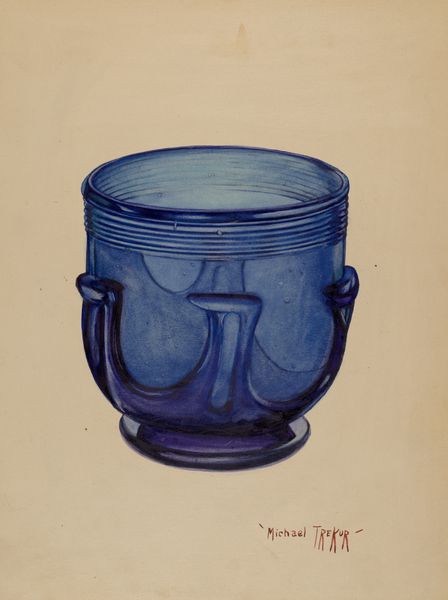
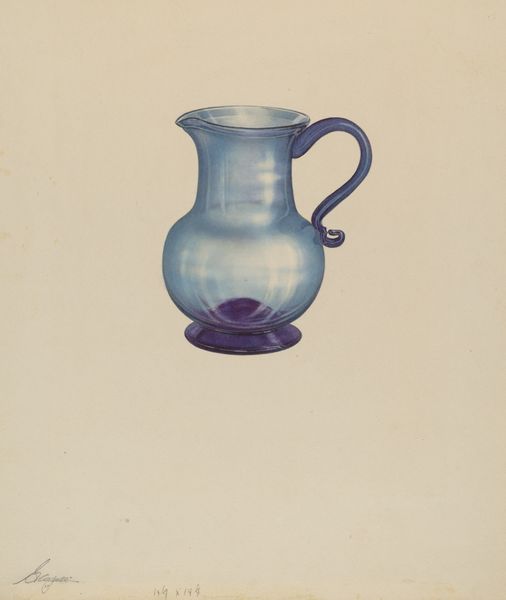
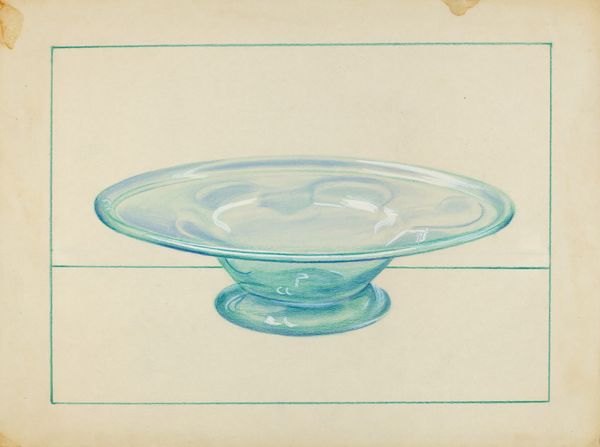
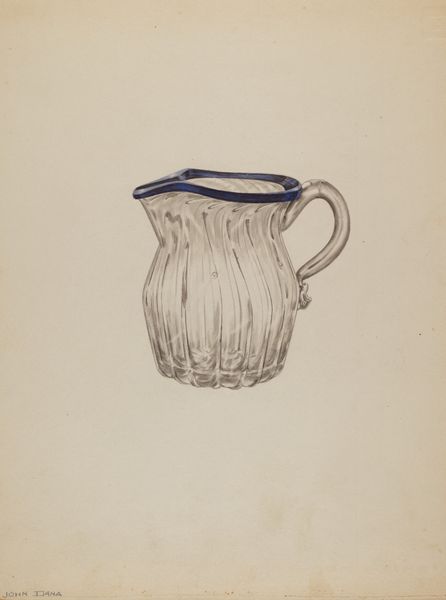
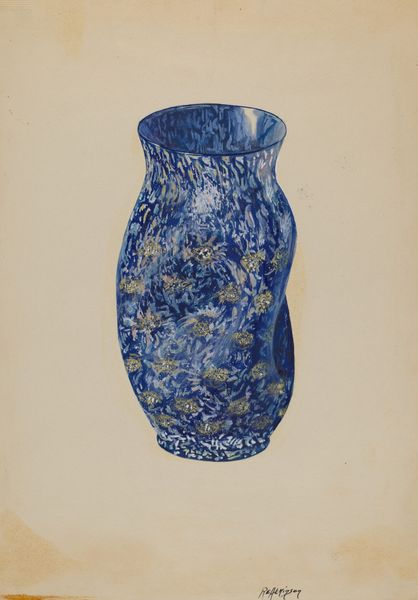
Editor: Here we have "Salt Cellar," a watercolor and drawing work created around 1936 by an anonymous artist. It features a singular, blue, geometrically rendered salt cellar. I find the limited color palette and focused composition rather striking. What strikes you most about this piece? Curator: The first thing that jumps out is the seemingly simple, almost utilitarian, subject matter rendered in what are traditionally considered 'fine art' mediums – watercolor and drawing. This tension challenges the conventional hierarchies separating high art from craft. What was the social function of salt at this time? Salt, beyond its practical purpose, was a commodity, an object of trade. The artist’s focus on this everyday object encourages us to think about material value, production and consumption, right? Editor: Absolutely! So, you're saying that the act of depicting something so quotidian elevates it, forcing us to consider its material and economic relevance? Curator: Exactly. We have to consider that, perhaps, this object in its banality represented a certain luxury. Watercolor allows a transparency that the object itself does not possess. Also, who owned this salt cellar? What kind of labour went into extracting and distributing the salt? These are pertinent questions. Editor: So, viewing it through a materialist lens opens up these avenues for exploring labor and the economics embedded within an everyday item like a salt cellar. I never thought of it that way! Curator: Precisely. We begin to consider how simple tools or art methods hold great potential, when considered regarding material processes. Editor: This conversation has highlighted how even the simplest artwork can reveal complex socioeconomic contexts when we analyze its materials and production!