c. 19th century
Roman Ruin


Listen to curator's interpretation
Curatorial notes
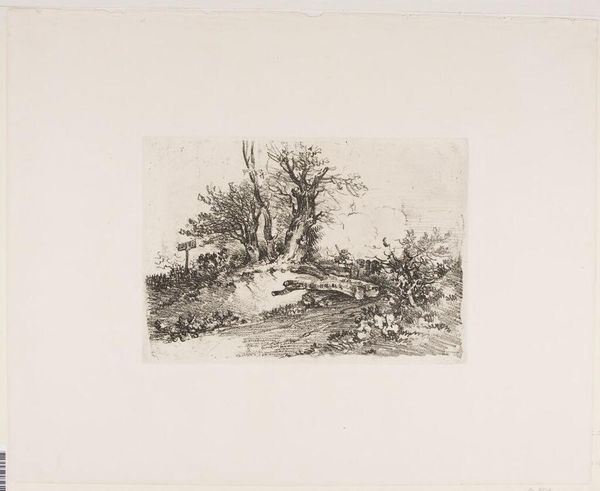
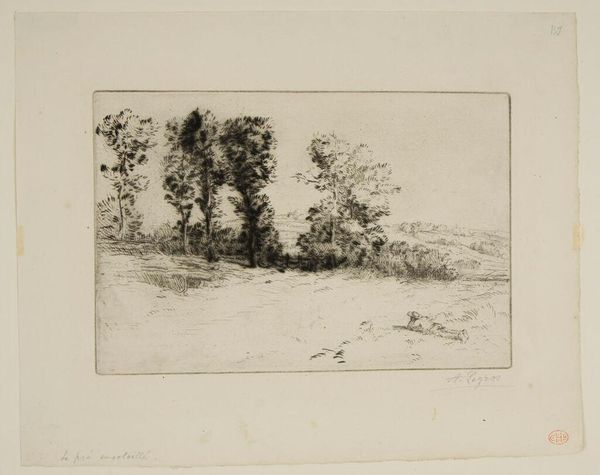
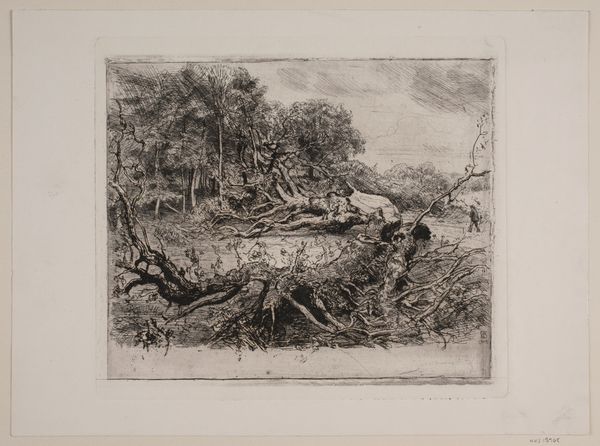
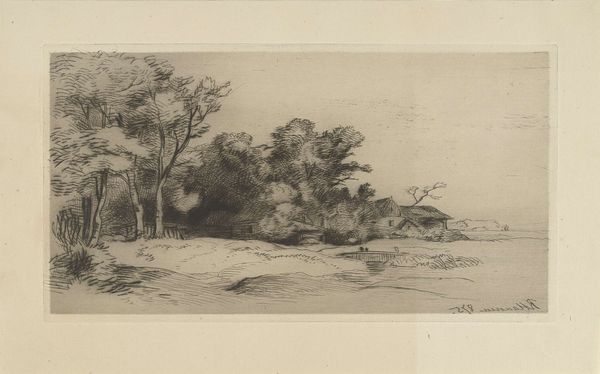
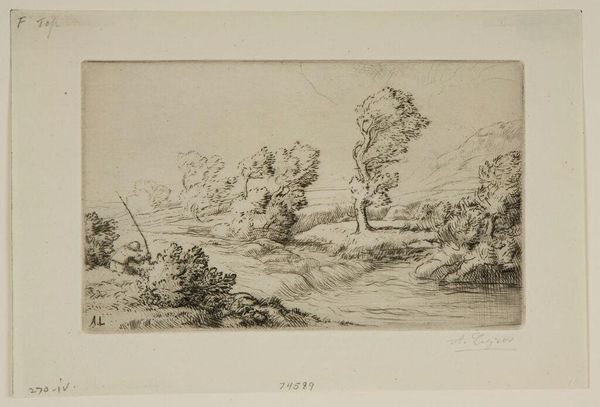
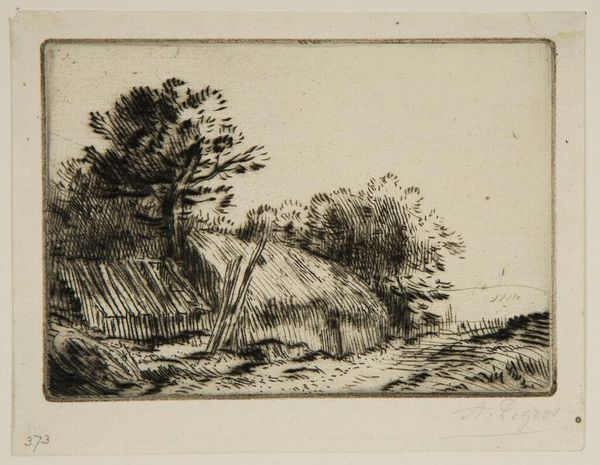
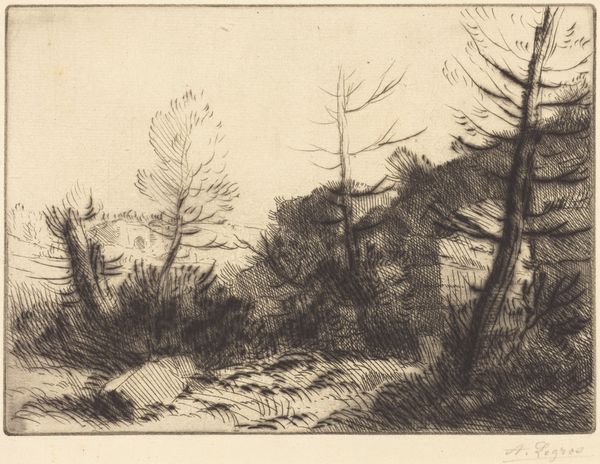
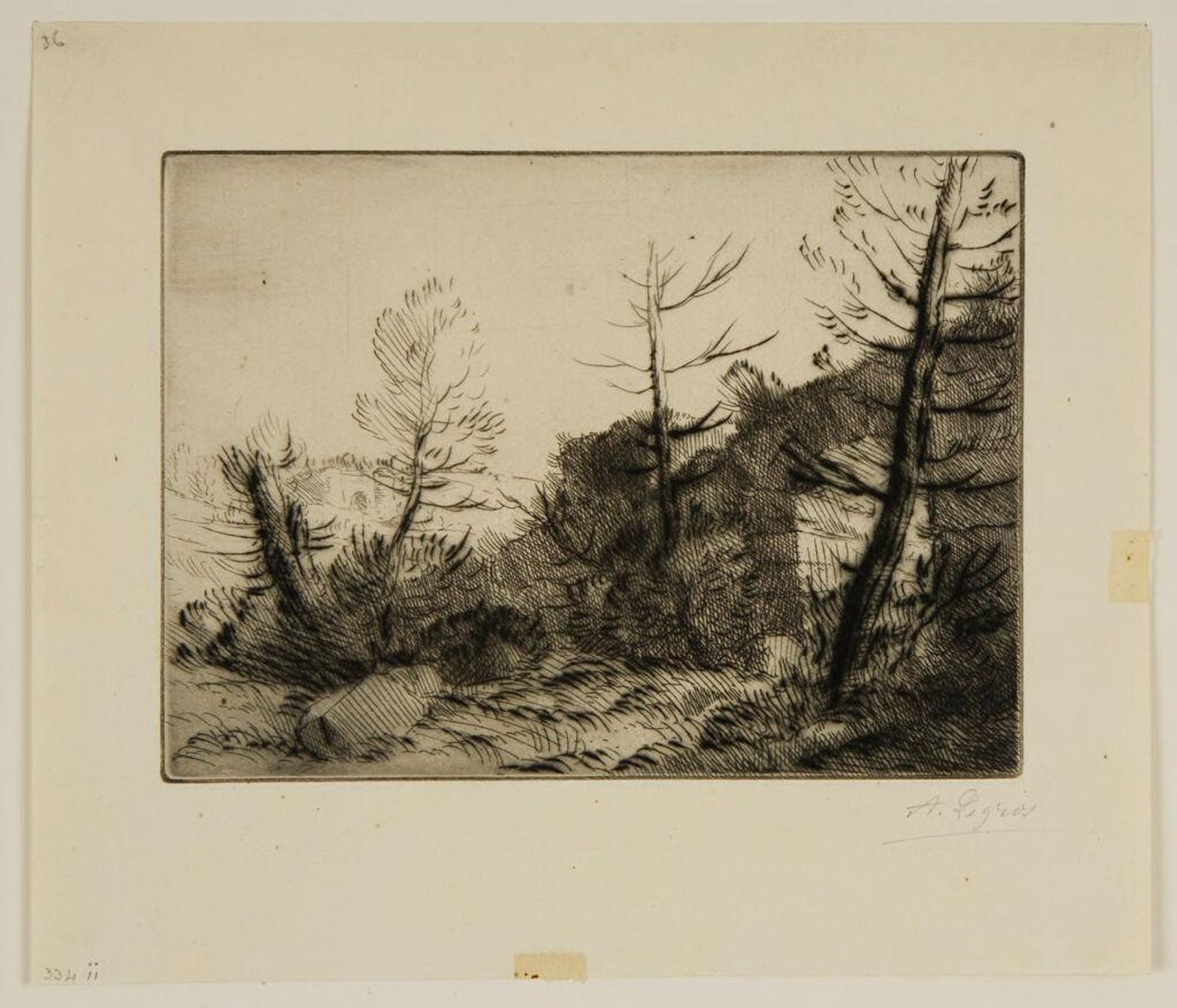
Curator: Here we have Alphonse Legros's "Roman Ruin", currently residing in the Harvard Art Museums. Editor: It's incredibly delicate. You can almost feel the grit of the etching process, and how the pressure of the plate created that stark contrast. Curator: Absolutely. Legros's work often engaged with ideas of the picturesque and the sublime, placing historical ruins within a framework of Romantic melancholy. The imagery ties to the shift towards historicism in visualizing landscapes. Editor: I'm drawn to how the stark, almost skeletal trees frame the ruin. There's a real emphasis on line and texture, really showcasing the etcher's craft. The material is almost foregrounding the decline in a way the artist isn't. Curator: It’s fascinating how Legros uses this medium to evoke a sense of fading grandeur. He was certainly part of a larger movement of artists depicting ruins, reflecting changing perceptions and uses of historical sites. Editor: Seeing the way Legros manipulated the metal plate gives a much deeper understanding of his artistic vision, and how he intertwined materiality with the social context of ruins. Curator: Indeed, by examining the artwork through historical lenses and the technical processes involved, we gain a richer comprehension of Legros's intentions. Editor: Yes, it is by understanding both the artist’s hand and the historical moment, that we truly begin to uncover the depth of the work.