c. 1553
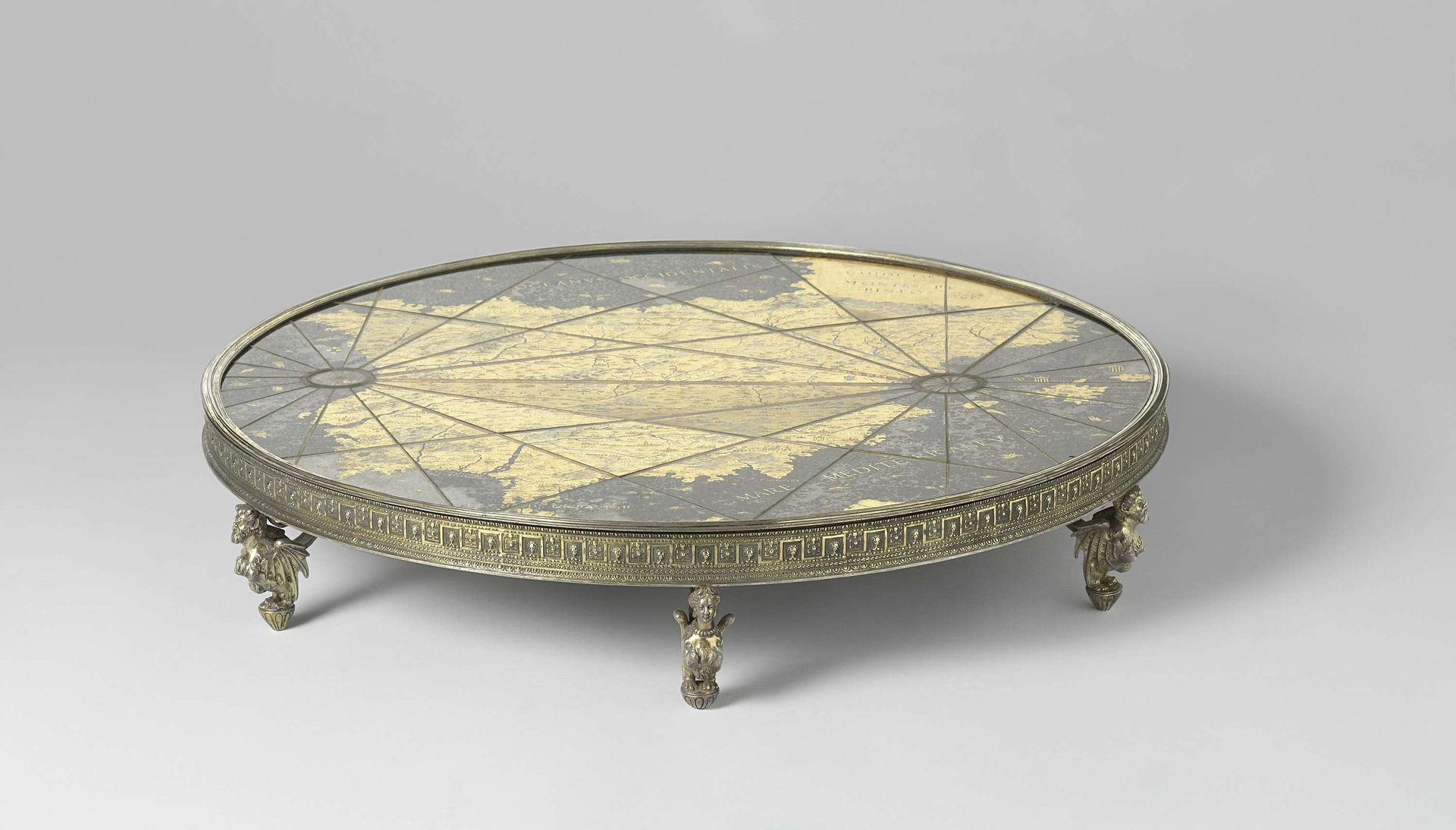
Map of the Iberian Peninsula

Listen to curator's interpretation
Curatorial notes
Here we see Augustin Hirschvogel’s 'Map of the Iberian Peninsula’. The prominent geometric grid, reminiscent of both Ptolemaic cosmology and contemporary navigational charts, lays bare a drive to bring order to the world. Consider the circular form itself, echoed in the radiating lines. It evokes the ancient concept of the 'mappamundi', a wheel-shaped depiction of the world, central to medieval European cartography. This harks back to a time when maps were not just geographical tools but cosmological statements, illustrating humanity’s place within the divine order. Think of similar geometric forms, like the rose windows of Gothic cathedrals, which also served as symbolic microcosms, reflecting the harmony of the universe. The cartographic image, once purely utilitarian, gains symbolic weight. It reflects our subconscious desire to chart the unknown and impose structure on our existence. In Hirschvogel’s map, this interplay of geometric precision and geographical representation captures a fleeting moment in our ongoing quest for meaning.