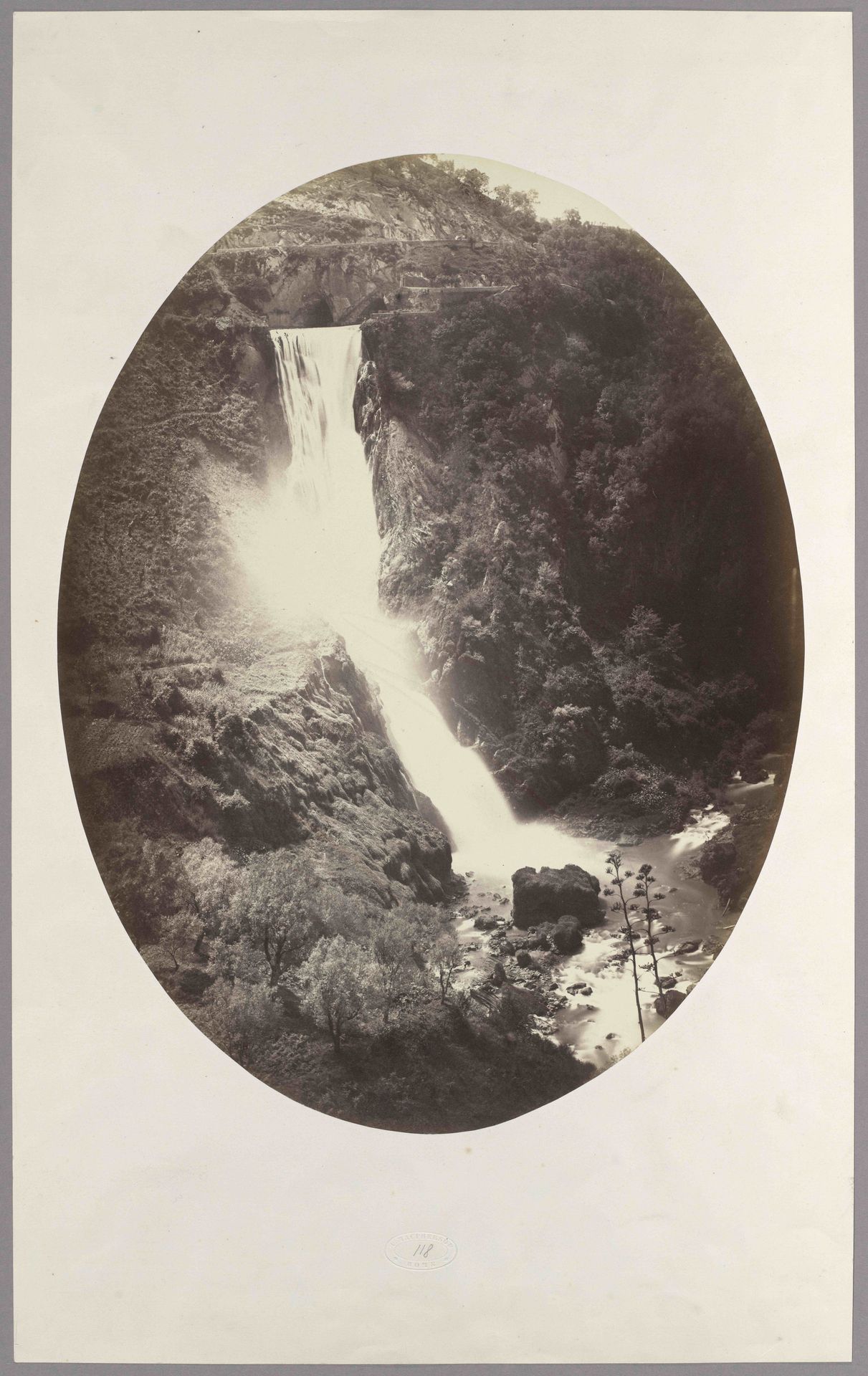
c. 1860 - 1865
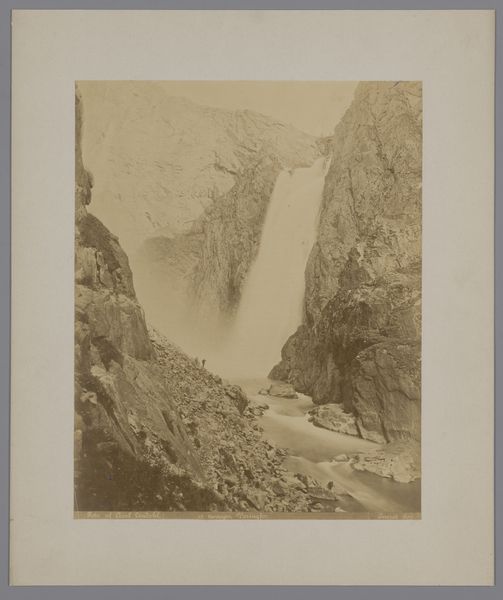
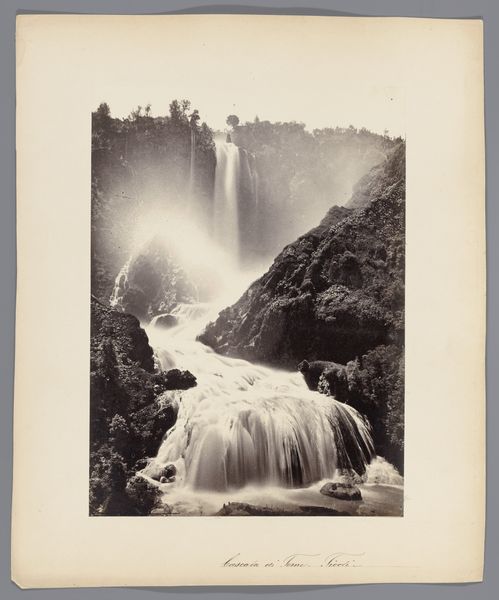
Tivoli_ Waterfall


Listen to curator's interpretation
Curatorial notes
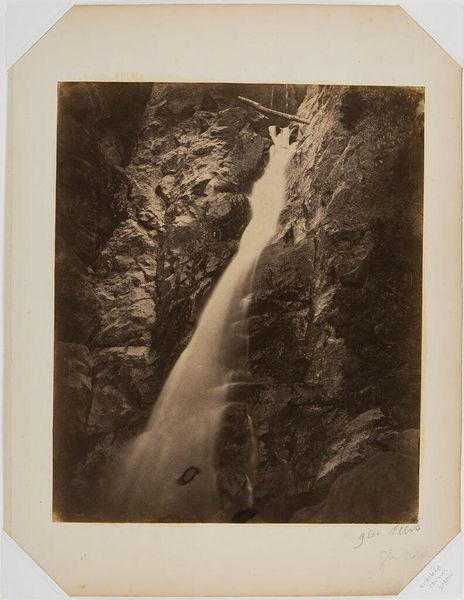
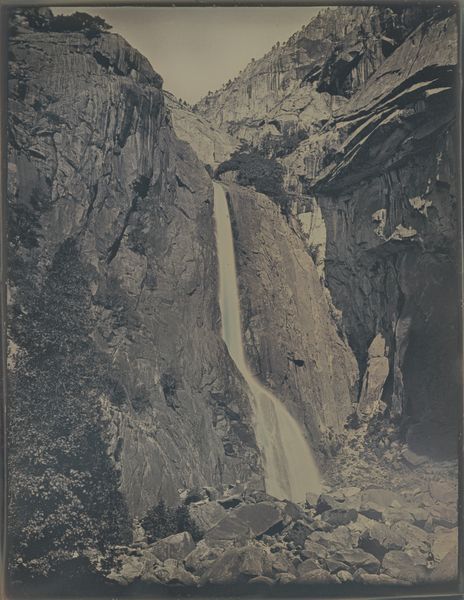
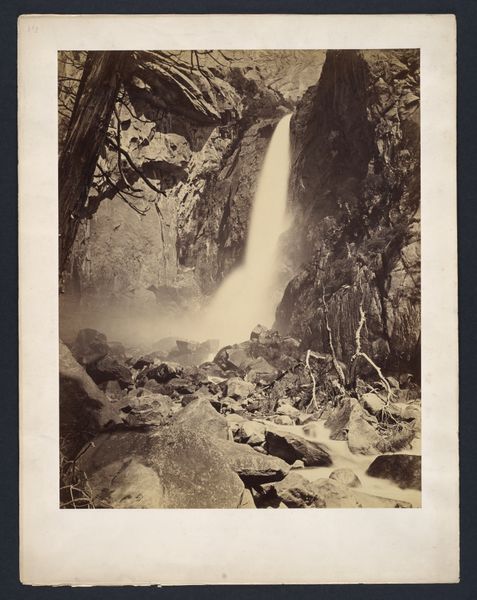
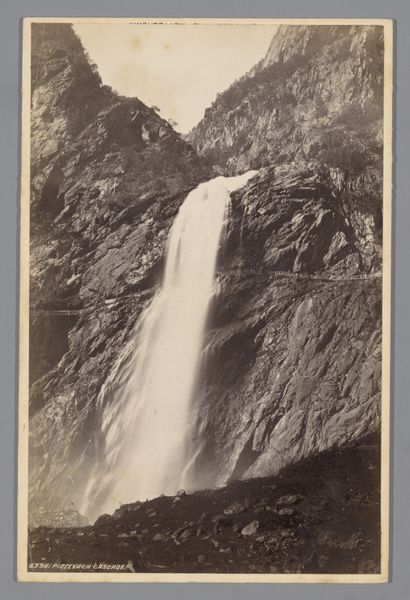
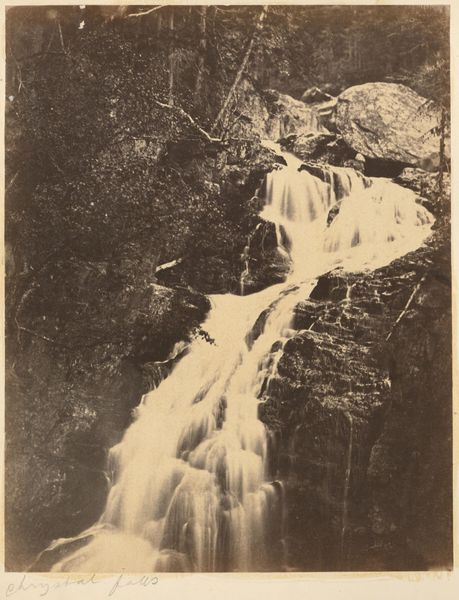
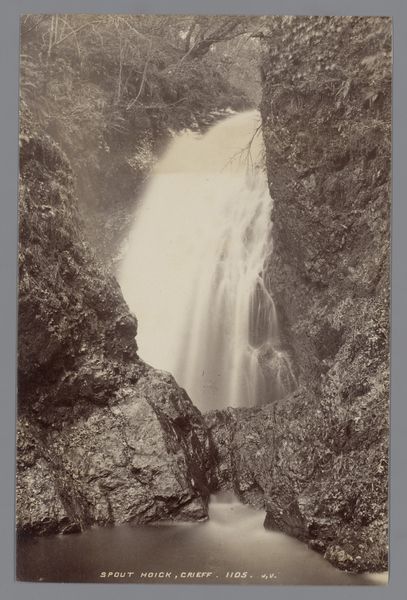
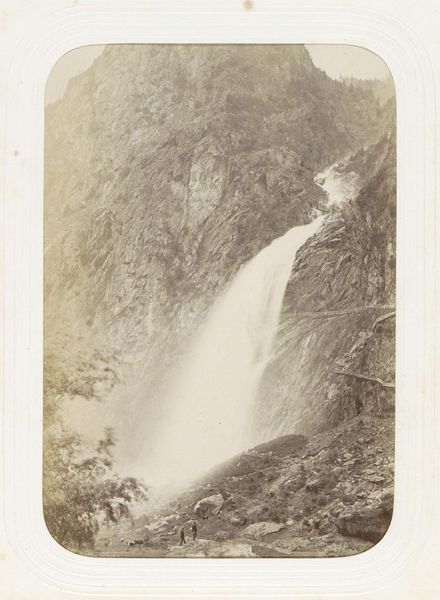
Curator: Welcome. Before us is Robert Macpherson's "Tivoli Waterfall," an albumen print dating from around 1860 to 1865, currently held at the Städel Museum. Artist: Wow, what a dramatic pour! The way the waterfall slices through the landscape feels almost violent, yet there’s something incredibly peaceful about the muted tones and the almost meditative stillness it captures. Curator: It is striking, isn't it? Macpherson was working during a time of burgeoning colonial expansion, and these images of seemingly untouched landscapes, like the Tivoli, need to be considered within that context. The aesthetic choices he made contribute to constructing certain ideas about the land, ideas that certainly had ideological consequences. Artist: You're so right, the untouched Eden trope. Yet I wonder if he felt as conflicted as I do, capturing such splendor. He seems torn— wanting to convey the pure force of nature but framing it in such a conventionally romantic way, the oval format almost taming the wildness. Did folks really perceive nature this way? Pristine, yet observed through a very deliberate lens? Curator: Absolutely. That’s part of the beauty, and tension, of the Romantic period, to highlight a simultaneous idealization of the pastoral versus the harsh realities faced by those existing within that world, and the historical circumstances, in terms of gender, race, class, informing those artistic perspectives and visual languages. This image can invite a critical lens onto our present understandings of place, access, and ecological awareness. Artist: It hits you right in the gut, thinking about those layers. What starts as pretty scenery becomes heavy with historical baggage and political weight. For me, as a creative, it is an ongoing challenge how to acknowledge history honestly while letting art breathe on its own. I mean, to give an image room to still say something without us narrating every little corner of it. Curator: And perhaps, allowing art to breathe involves equipping ourselves with historical consciousness, recognizing that artistic creation is never separate from broader socio-political forces. Thank you for offering your perceptions. Artist: My pleasure. And maybe our chat nudged someone to ponder nature and its depiction with just a bit more thoughtfulness.