![Francesco I d'Este Receiving the Affection of the People, from L'Idea di un Principe ed Eroe Cristiano in Francesco I d'Este, di Modena e Reggio Duca VIII [...] by Bartolomeo Fenice (Fénis)](https://d2w8kbdekdi1gv.cloudfront.net/eyJidWNrZXQiOiAiYXJ0ZXJhLWltYWdlcy1idWNrZXQiLCAia2V5IjogImFydHdvcmtzL2NjNGU2ZmQ2LWExOGEtNGE2MC05YWIyLTgzNDY4ZDQyN2VkOC9jYzRlNmZkNi1hMThhLTRhNjAtOWFiMi04MzQ2OGQ0MjdlZDhfZnVsbC5qcGciLCAiZWRpdHMiOiB7InJlc2l6ZSI6IHsid2lkdGgiOiAxOTIwLCAiaGVpZ2h0IjogMTkyMCwgImZpdCI6ICJpbnNpZGUifX19)
About this artwork
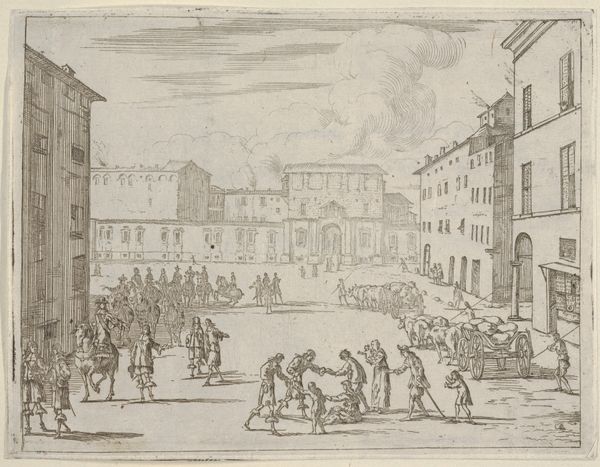
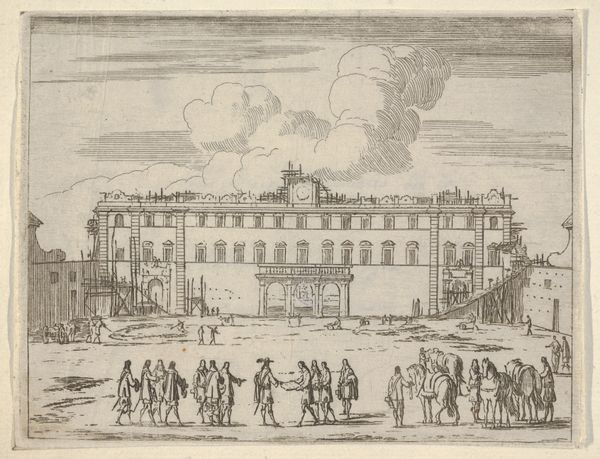
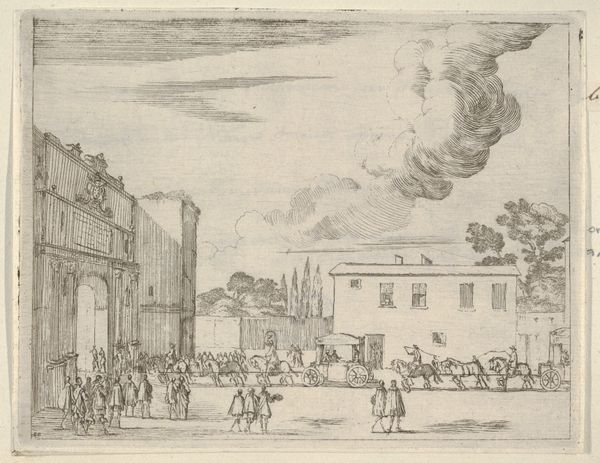
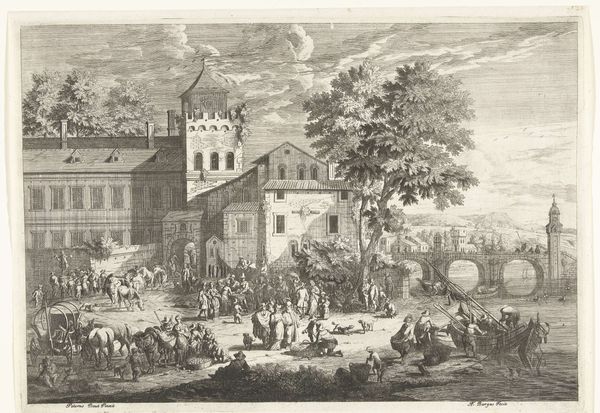
This print by Bartolomeo Fenice depicts Francesco I d'Este receiving the affection of the people. It was produced as part of a larger illustrated book intended to present the Duke as both a model prince and a Christian hero. Made in Modena, Italy, this image reinforces the Duke's power through visual cues of social hierarchy. Courtiers bow before him, signaling his elevated status and the expectation of deference. Architectural elements serve as backdrops to the scene. We can read this as evidence of a concerted effort by the Este court to manage its public image. To more fully understand this image, we might consult primary source documents from the Este archive. The history of the ducal print collection and its display is another avenue of inquiry. By doing so, we acknowledge that artworks like this one are embedded in complex social and institutional networks.
Francesco I d'Este Receiving the Affection of the People, from L'Idea di un Principe ed Eroe Cristiano in Francesco I d'Este, di Modena e Reggio Duca VIII [...]
1659

Bartolomeo Fenice (Fénis)
@bartolomeofenicefenis
The Metropolitan Museum of Art
Metropolitan Museum of Art, New York, NYArtwork details
- Medium
- drawing, print, engraving
- Dimensions
- Sheet: 4 13/16 × 6 3/8 in. (12.3 × 16.2 cm) Plate: 4 13/16 × 6 1/4 in. (12.3 × 15.8 cm)
- Location
- Metropolitan Museum of Art, New York, NY
- Copyright
- Public Domain
Tags
drawing
baroque
cityscape
genre-painting
history-painting
engraving
building
Comments
Be the first to share your thoughts about this work.
About this artwork
This print by Bartolomeo Fenice depicts Francesco I d'Este receiving the affection of the people. It was produced as part of a larger illustrated book intended to present the Duke as both a model prince and a Christian hero. Made in Modena, Italy, this image reinforces the Duke's power through visual cues of social hierarchy. Courtiers bow before him, signaling his elevated status and the expectation of deference. Architectural elements serve as backdrops to the scene. We can read this as evidence of a concerted effort by the Este court to manage its public image. To more fully understand this image, we might consult primary source documents from the Este archive. The history of the ducal print collection and its display is another avenue of inquiry. By doing so, we acknowledge that artworks like this one are embedded in complex social and institutional networks.
Comments
Be the first to share your thoughts about this work.