print, woodblock-print
#
portrait
#
narrative-art
# print
#
caricature
#
asian-art
#
caricature
#
ukiyo-e
#
figuration
#
woodblock-print
Copyright: Public domain
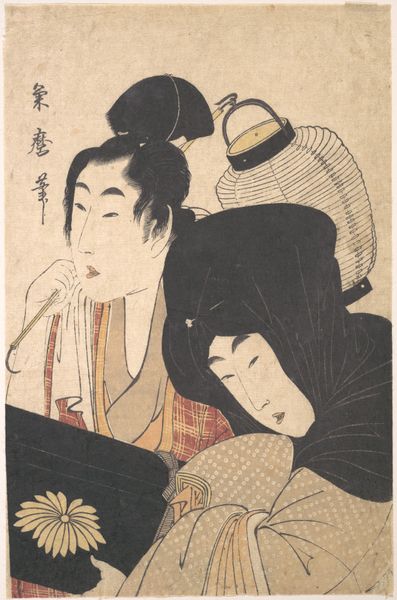
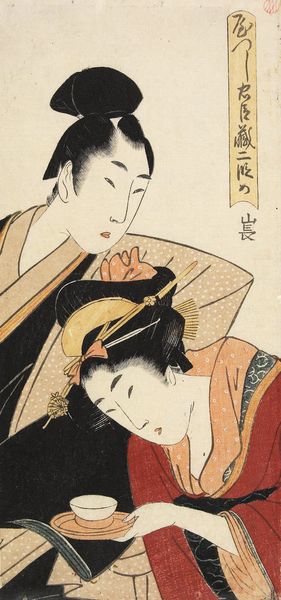
Editor: This is "Yamanba and Kintaro Sakazuki," a woodblock print by Kitagawa Utamaro. The figures feel almost…caricatured. It's striking, the way the artist renders the wildness of the figures with such precision, especially their hair! What do you make of it? Curator: Well, Ukiyo-e prints were, in a sense, the popular media of their time. So, the exaggerated features you notice play into the realm of public spectacle. The characters themselves – Yamanba, the mountain witch, and Kintaro, the superhuman child of folklore – held potent symbolic value. But notice how Utamaro places them within a context of domesticity here, having Sakazuki—sharing sake from a ceremonial cup? Editor: That is unexpected! They are legendary figures, yet portrayed in such an intimate, almost mundane setting. Does this subvert traditional interpretations of these characters in any way? Curator: Precisely! Ukiyo-e prints were keenly aware of their audience. By softening Yamanba’s fearsome image through a gentle motherly gaze and depicting Kintaro enjoying sake, Utamaro tapped into contemporary desires. This humanization invites viewers to consider their place within society. Editor: I hadn’t thought about how these prints were consumed by the public. Curator: This allows the artist to insert these established narratives into a contemporary social landscape. Think about how current media figures can be elevated or satirized in the context of how society and cultural values are rapidly shifting. Editor: It is amazing how relevant it still feels. Thanks for shedding light on this. Curator: My pleasure; there’s always more than meets the eye in art’s rich history!
Comments
No comments
Be the first to comment and join the conversation on the ultimate creative platform.
 Collect
 React
React Comment
More like this