About this artwork
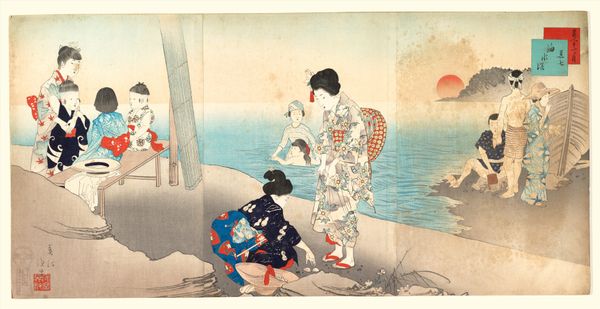
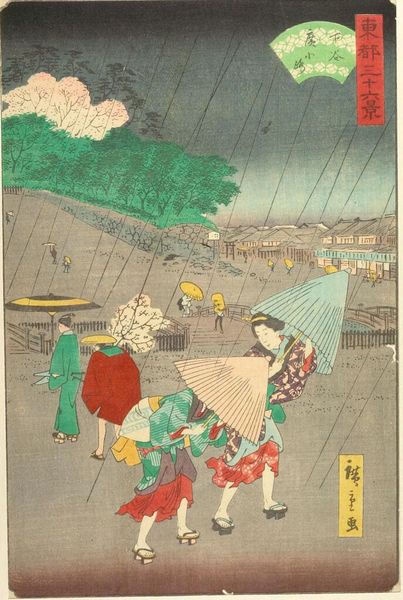
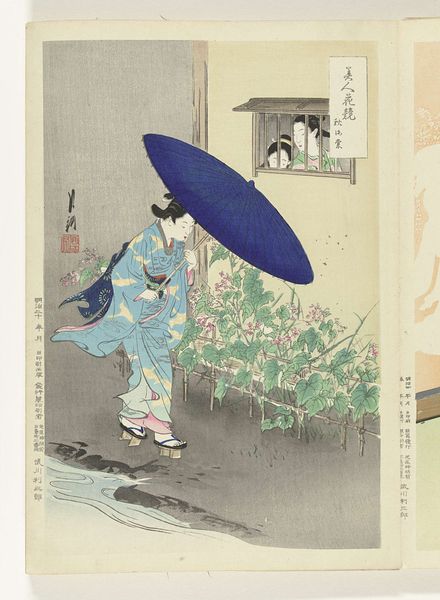
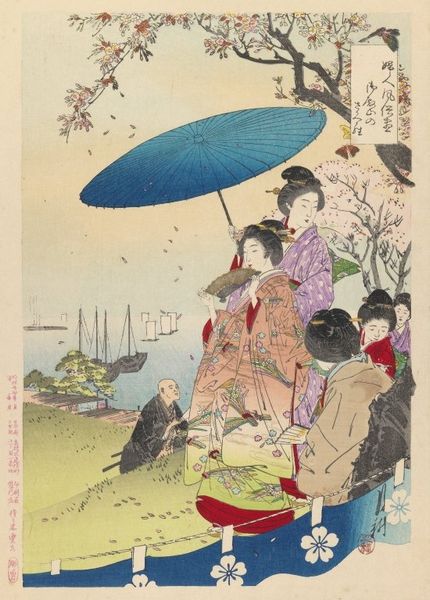
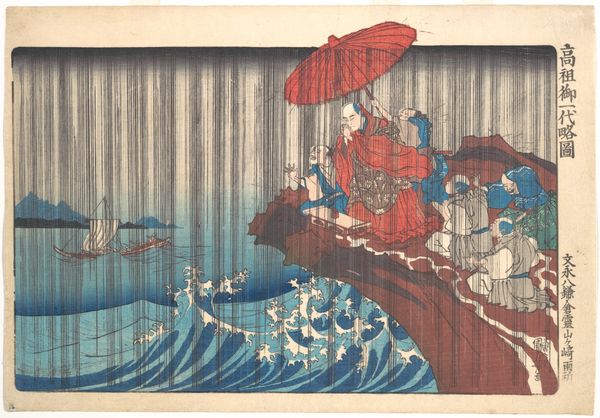
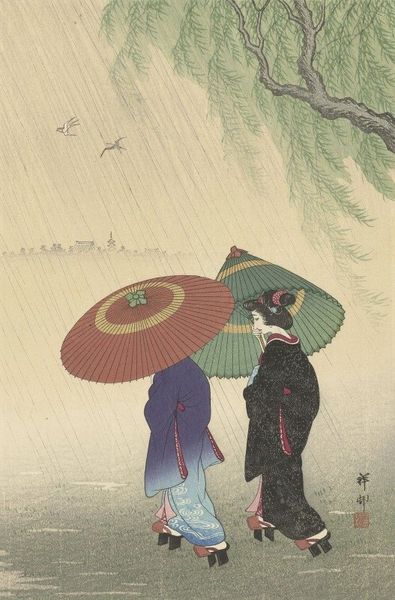
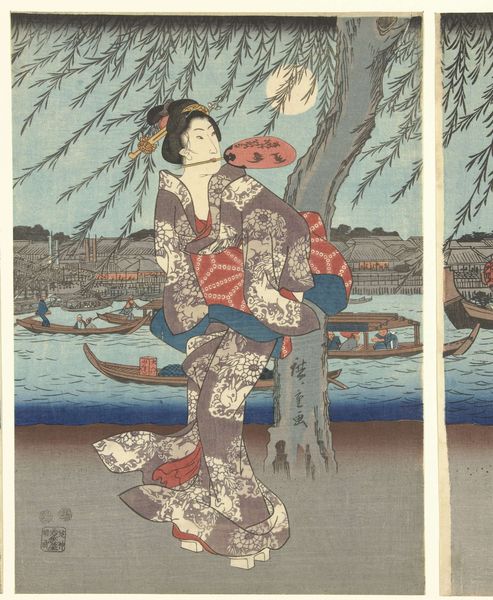
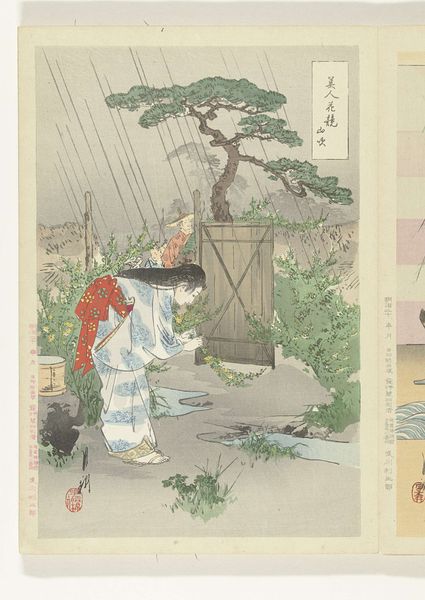
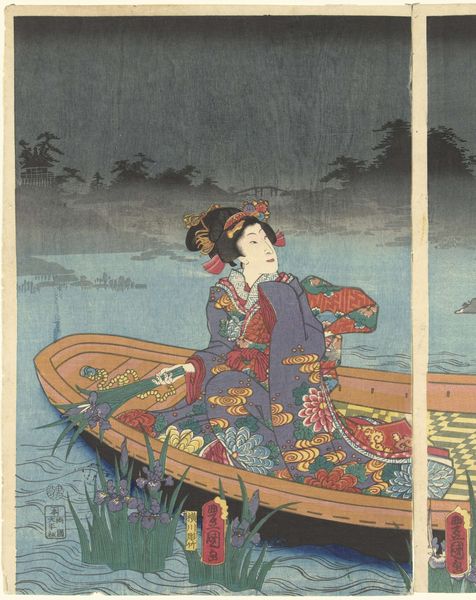
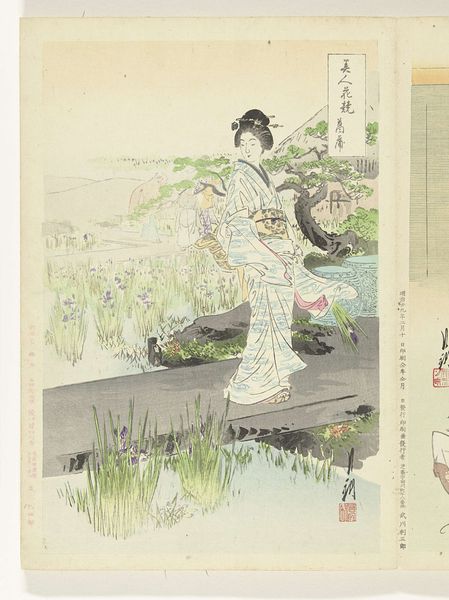
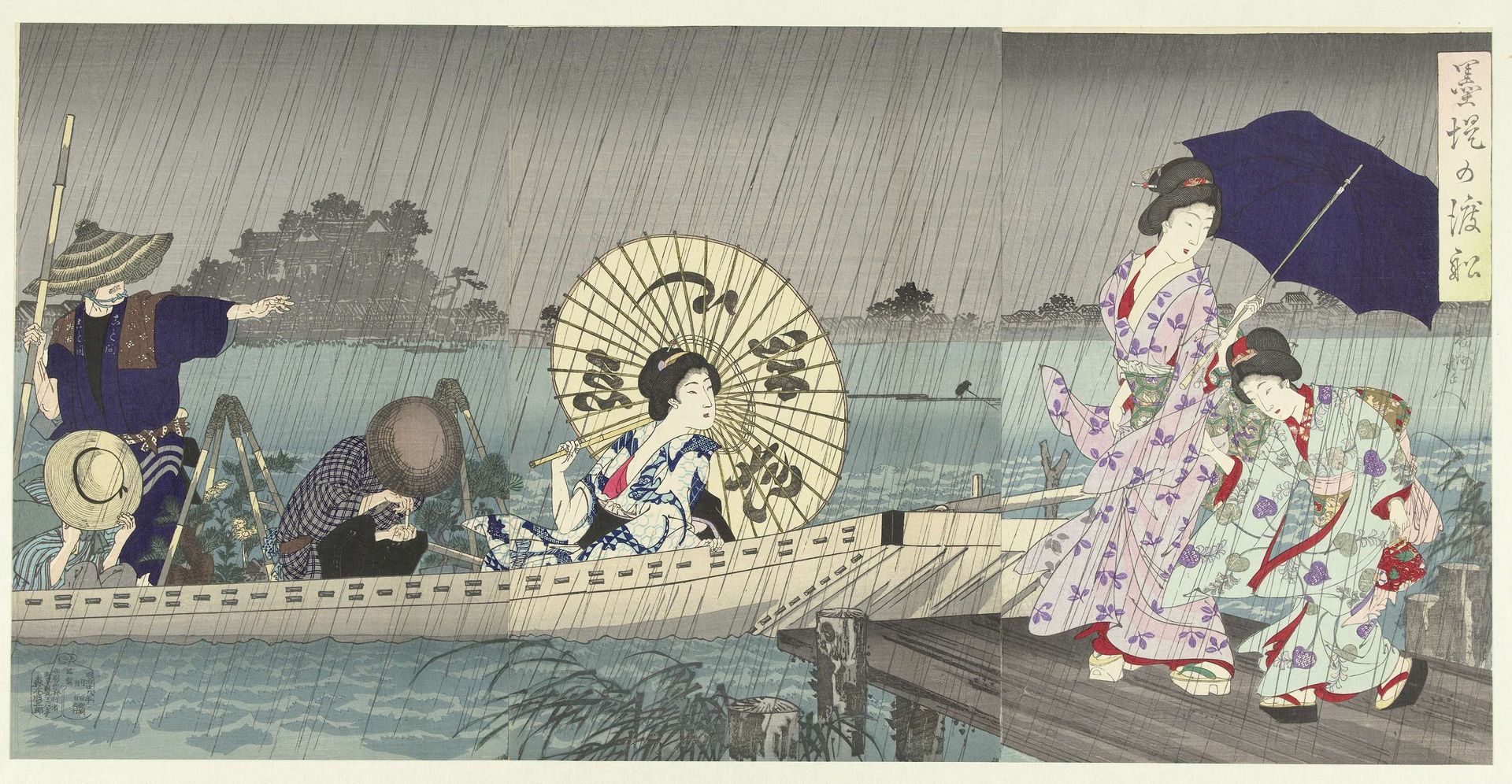
This woodblock print by Yōshū Chikanobu captures a scene on the Sumida River, with figures traversing the rain-swept waters. The parasol, a prominent motif, extends beyond its practical function, becoming a symbol of protection and feminine grace. Its presence echoes through art history, from ancient Egyptian depictions of deities shielded by canopies to Renaissance portraits where umbrellas signify status. Consider, too, the psychological weight of shelter. In dreams, the umbrella often represents a desire for emotional safety, a subconscious yearning for protection from life's storms. Here, in Chikanobu's print, the umbrella not only shields from the rain, but also evokes a sense of delicate composure amidst the unpredictable elements. The non-linear progression of symbols, like water in the river, always finds new paths.
Het veer tussen de oevers van de Sumida
1895

Yōshū (Hashimoto) Chikanobu
1838 - 1912Location
RijksmuseumArtwork details
- Dimensions
- height 359 mm, width 721 mm
- Location
- Rijksmuseum
- Copyright
- Rijks Museum: Open Domain
Comments
Share your thoughts
About this artwork
This woodblock print by Yōshū Chikanobu captures a scene on the Sumida River, with figures traversing the rain-swept waters. The parasol, a prominent motif, extends beyond its practical function, becoming a symbol of protection and feminine grace. Its presence echoes through art history, from ancient Egyptian depictions of deities shielded by canopies to Renaissance portraits where umbrellas signify status. Consider, too, the psychological weight of shelter. In dreams, the umbrella often represents a desire for emotional safety, a subconscious yearning for protection from life's storms. Here, in Chikanobu's print, the umbrella not only shields from the rain, but also evokes a sense of delicate composure amidst the unpredictable elements. The non-linear progression of symbols, like water in the river, always finds new paths.
Comments
Share your thoughts