About this artwork
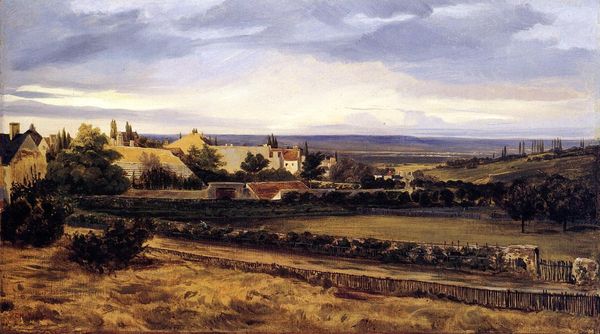
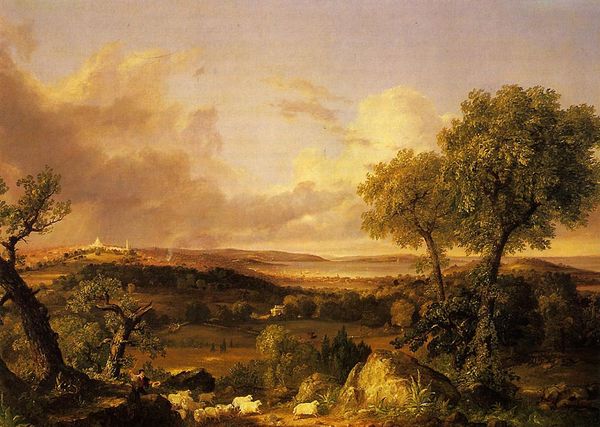
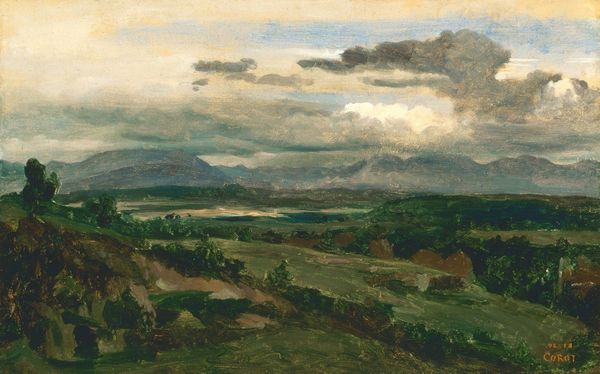
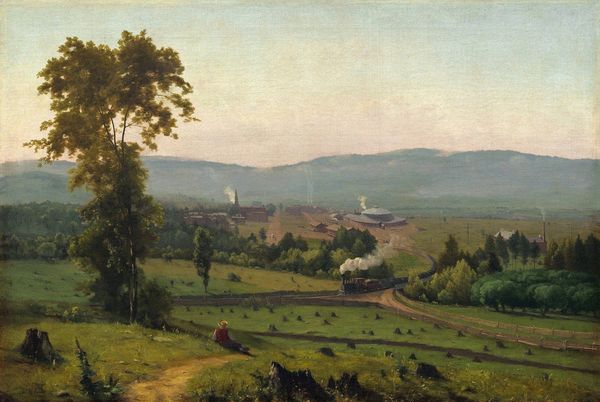
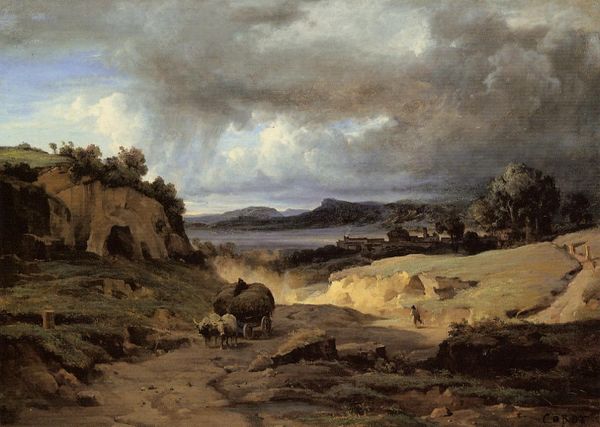
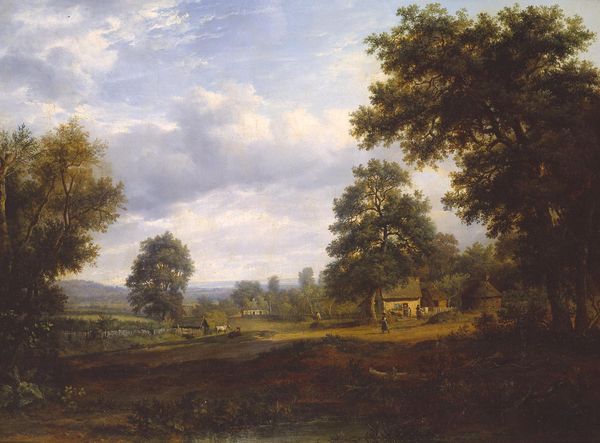
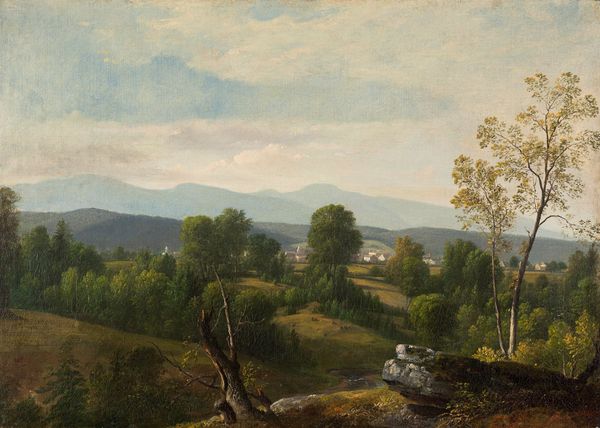
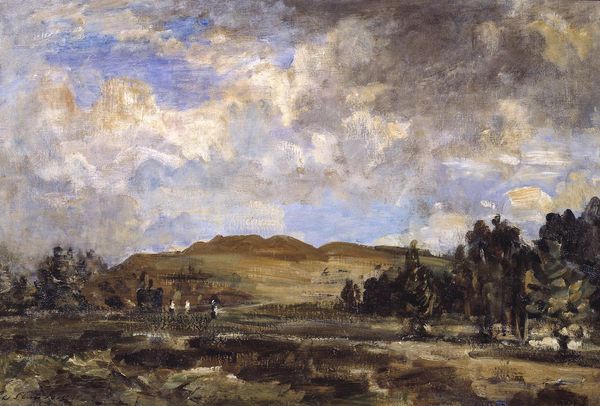
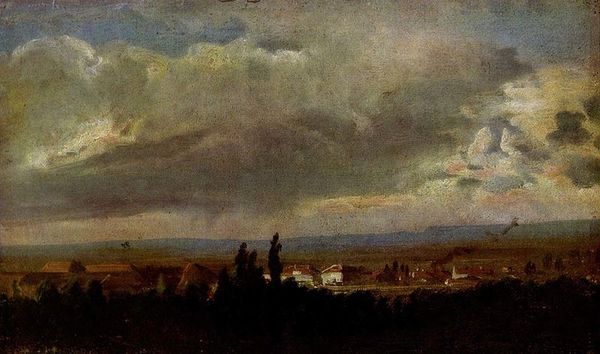
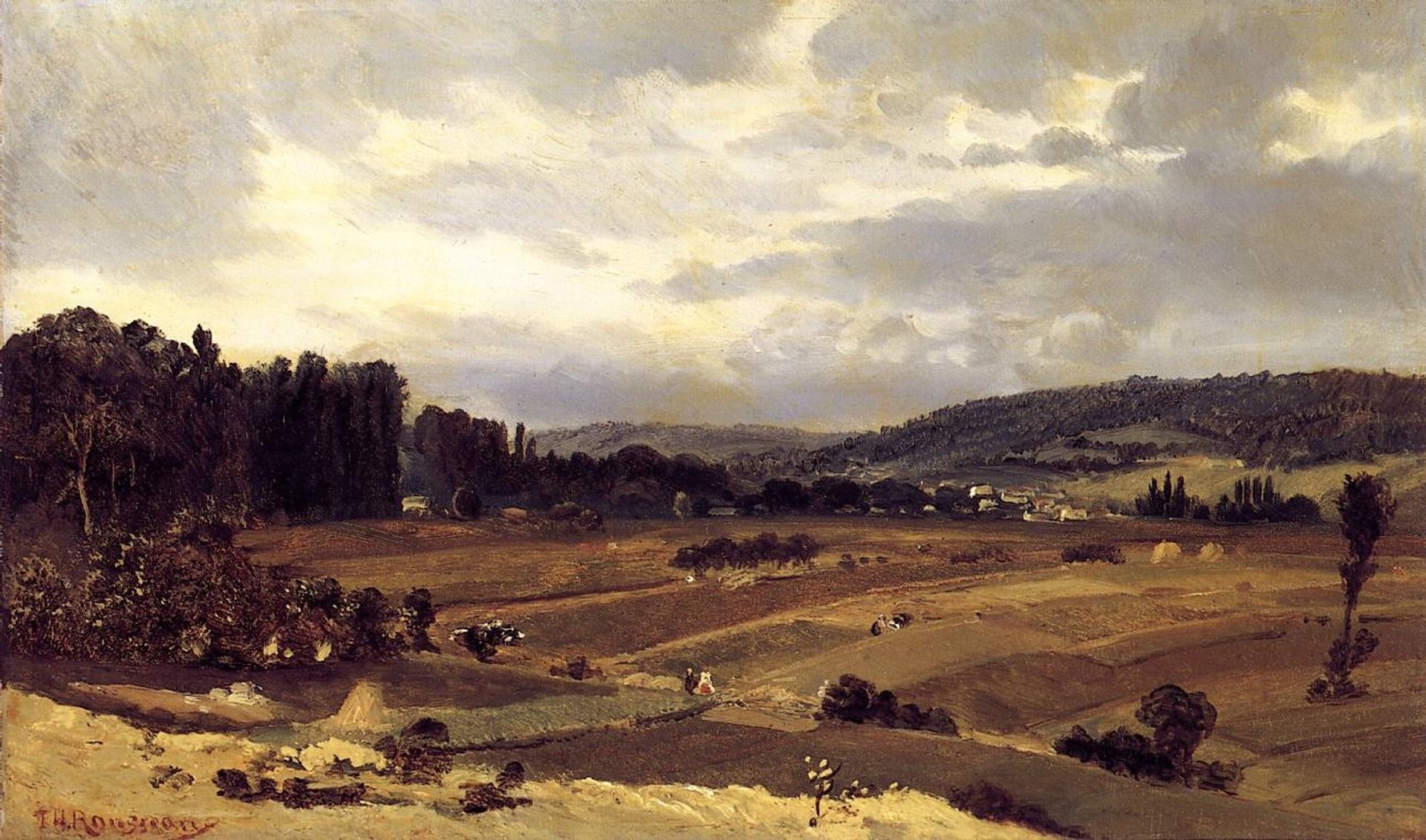
Editor: Here we have Theodore Rousseau's "Landscape with Farmland" from 1832, executed in oil. The muted palette and expansive composition create a rather contemplative mood for me. What do you see in this piece, especially given the time it was created? Curator: Well, looking at Rousseau's work through a historical lens, I find it fascinating to consider the rising interest in "plein-air" painting at this time. This coincided with emerging debates surrounding land use, particularly the tension between industrial progress and agrarian traditions. Do you see evidence of this tension reflected in the landscape? Editor: Perhaps. The farmland certainly seems orderly and cultivated, but the cloudy sky hints at something… untamed. It isn't perfectly idyllic, is it? Curator: Exactly. Think about the politics of imagery during this period. Landscape paintings weren't merely aesthetic exercises; they were often powerful statements about national identity and belonging. Who had the right to depict the land, and for what purpose? Were paintings used as a mode for challenging the status quo? Editor: So, the choice to paint en plein air, to engage directly with the landscape, could be interpreted as a kind of political act? A way of asserting the artist’s connection to the land and democratizing image production? Curator: Precisely! Moreover, the role of exhibitions and the Salon system influenced the kinds of landscapes that were validated and seen by a wider public. Editor: That’s really interesting, viewing what I had first taken as simply aesthetic through that cultural lens. Thanks! Curator: My pleasure. Considering the broader socio-political context of artistic creation helps illuminate its meaning and lasting value.

Artwork details
- Medium
- painting, plein-air, oil-paint
- Copyright
- Public domain
Tags
tree
sky
rural-area
painting
plein-air
oil-paint
landscape
charcoal drawing
oil painting
romanticism
mountain
cloud
natural-landscape
cityscape
history-painting
realism
Comments
No comments
About this artwork
Editor: Here we have Theodore Rousseau's "Landscape with Farmland" from 1832, executed in oil. The muted palette and expansive composition create a rather contemplative mood for me. What do you see in this piece, especially given the time it was created? Curator: Well, looking at Rousseau's work through a historical lens, I find it fascinating to consider the rising interest in "plein-air" painting at this time. This coincided with emerging debates surrounding land use, particularly the tension between industrial progress and agrarian traditions. Do you see evidence of this tension reflected in the landscape? Editor: Perhaps. The farmland certainly seems orderly and cultivated, but the cloudy sky hints at something… untamed. It isn't perfectly idyllic, is it? Curator: Exactly. Think about the politics of imagery during this period. Landscape paintings weren't merely aesthetic exercises; they were often powerful statements about national identity and belonging. Who had the right to depict the land, and for what purpose? Were paintings used as a mode for challenging the status quo? Editor: So, the choice to paint en plein air, to engage directly with the landscape, could be interpreted as a kind of political act? A way of asserting the artist’s connection to the land and democratizing image production? Curator: Precisely! Moreover, the role of exhibitions and the Salon system influenced the kinds of landscapes that were validated and seen by a wider public. Editor: That’s really interesting, viewing what I had first taken as simply aesthetic through that cultural lens. Thanks! Curator: My pleasure. Considering the broader socio-political context of artistic creation helps illuminate its meaning and lasting value.
Comments
No comments