About this artwork
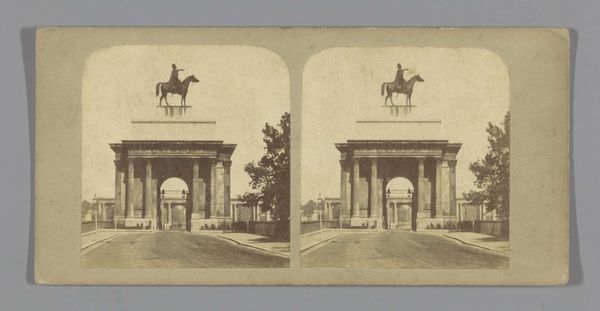
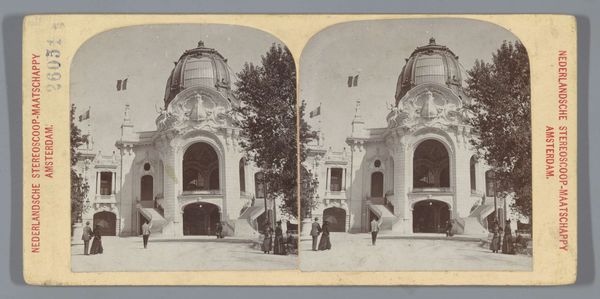
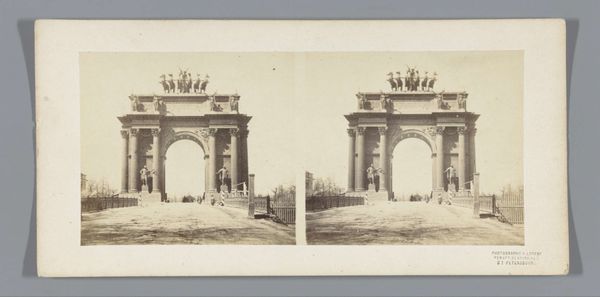
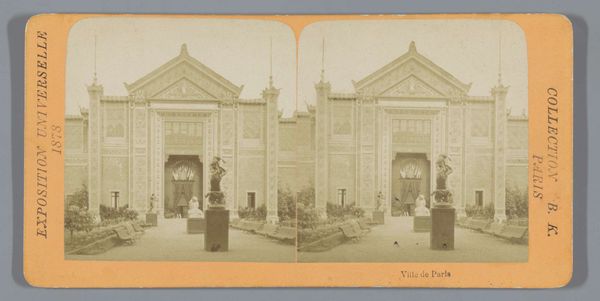
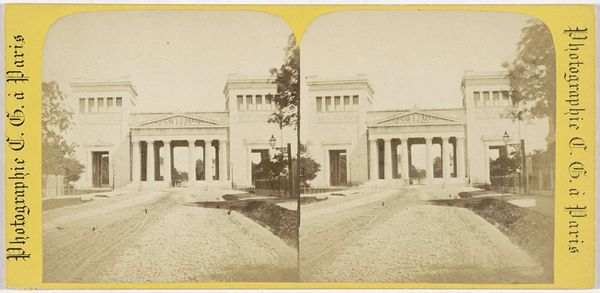
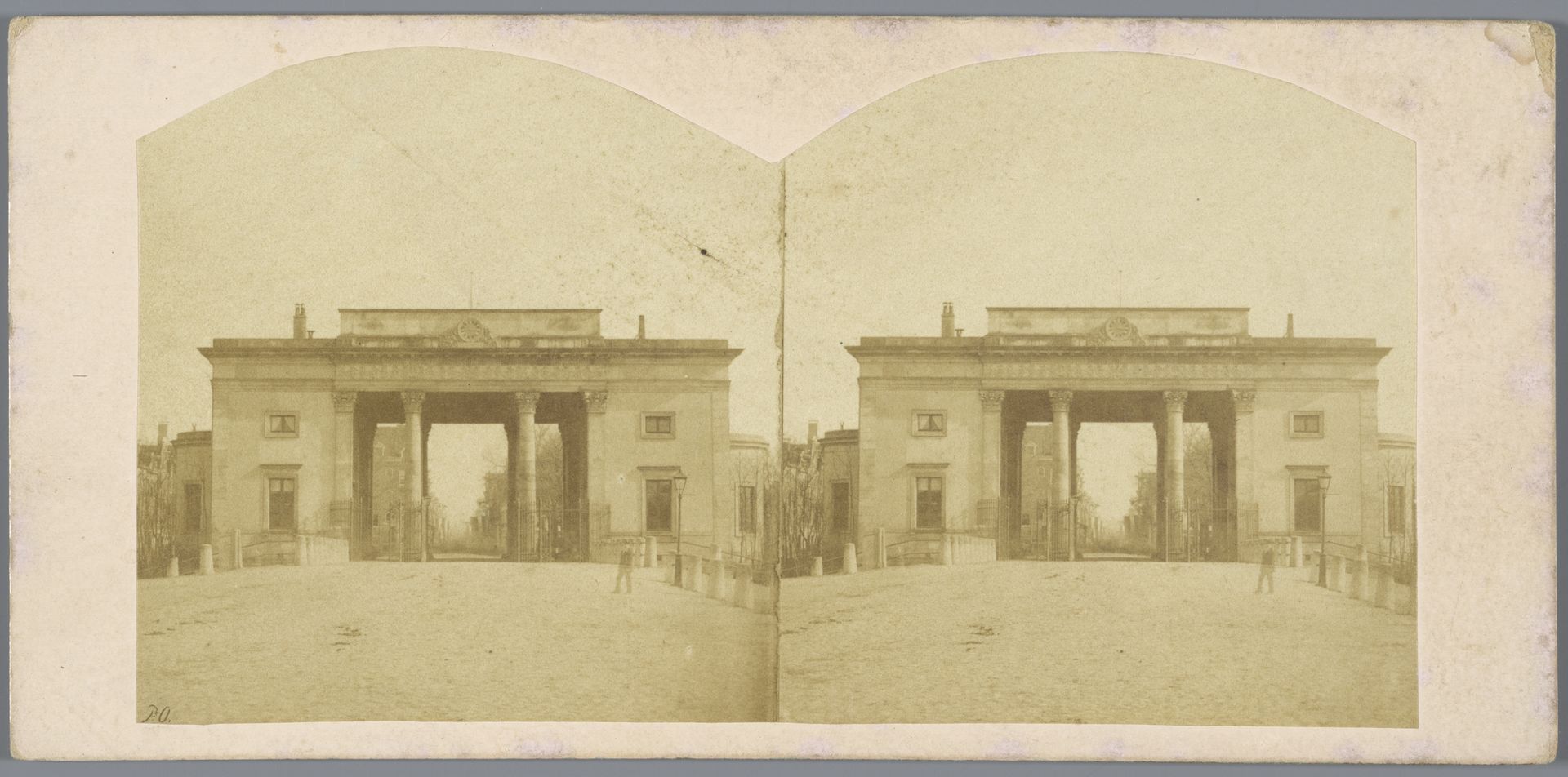
Editor: Here we have Pieter Oosterhuis’ "De Nieuwe Haarlemmer- of Willemspoort te Amsterdam," a gelatin silver print from around 1857. I’m immediately struck by how monumental the gate seems, almost Roman in its scale and design. What does this photograph evoke for you? Curator: It's interesting you say "Roman," because in its time, Neoclassical architecture like this, prominently displayed on a city gate, directly evoked those imperial comparisons. Consider how Amsterdam was rapidly changing in the mid-19th century; its very identity was being reshaped through architecture, photography and art. Do you think this image participates in that civic project? Editor: I suppose so. The photograph is crisp, very realistic, almost like it wants to document this grandeur for posterity. But, was there a debate surrounding this “reshaping?" Curator: Absolutely. This image comes during a time when photography itself was vying for legitimacy as a tool of documentation *and* art. This image showcases progress, yes, but who benefits? How does the portrayal of such a grand structure influence ideas of citizenship, belonging, and exclusion in Amsterdam at that time? Think of the socio-economic implications reflected here. Editor: That gives me a lot to consider – especially who *wasn't* represented in photos like these and what the selection and framing tells us. Curator: Exactly! These structures, these images, reinforce specific power structures. I would invite you to think about how later city planning, photographic or otherwise, have advanced or resisted these tendencies. Editor: It makes me think differently about the gate itself. Thanks for broadening my understanding of the art and its public role! Curator: My pleasure. Thinking about context illuminates art in the richest ways, and is particularly apt when discussing publicly funded infrastructure projects and photography.
De Nieuwe Haarlemmer- of Willemspoort te Amsterdam
c. 1857

Pieter Oosterhuis
1816 - 1885Location
RijksmuseumArtwork details
- Medium
- print, photography, gelatin-silver-print
- Dimensions
- height 84 mm, width 174 mm
- Location
- Rijksmuseum
- Copyright
- Rijks Museum: Open Domain
Tags
Comments
Share your thoughts
About this artwork
Editor: Here we have Pieter Oosterhuis’ "De Nieuwe Haarlemmer- of Willemspoort te Amsterdam," a gelatin silver print from around 1857. I’m immediately struck by how monumental the gate seems, almost Roman in its scale and design. What does this photograph evoke for you? Curator: It's interesting you say "Roman," because in its time, Neoclassical architecture like this, prominently displayed on a city gate, directly evoked those imperial comparisons. Consider how Amsterdam was rapidly changing in the mid-19th century; its very identity was being reshaped through architecture, photography and art. Do you think this image participates in that civic project? Editor: I suppose so. The photograph is crisp, very realistic, almost like it wants to document this grandeur for posterity. But, was there a debate surrounding this “reshaping?" Curator: Absolutely. This image comes during a time when photography itself was vying for legitimacy as a tool of documentation *and* art. This image showcases progress, yes, but who benefits? How does the portrayal of such a grand structure influence ideas of citizenship, belonging, and exclusion in Amsterdam at that time? Think of the socio-economic implications reflected here. Editor: That gives me a lot to consider – especially who *wasn't* represented in photos like these and what the selection and framing tells us. Curator: Exactly! These structures, these images, reinforce specific power structures. I would invite you to think about how later city planning, photographic or otherwise, have advanced or resisted these tendencies. Editor: It makes me think differently about the gate itself. Thanks for broadening my understanding of the art and its public role! Curator: My pleasure. Thinking about context illuminates art in the richest ways, and is particularly apt when discussing publicly funded infrastructure projects and photography.
Comments
Share your thoughts