About this artwork
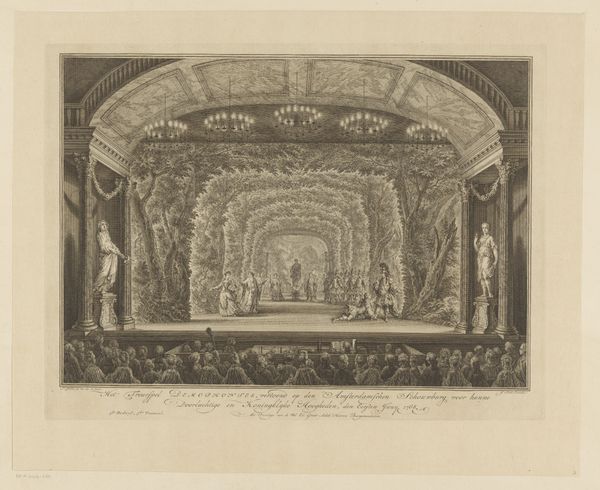
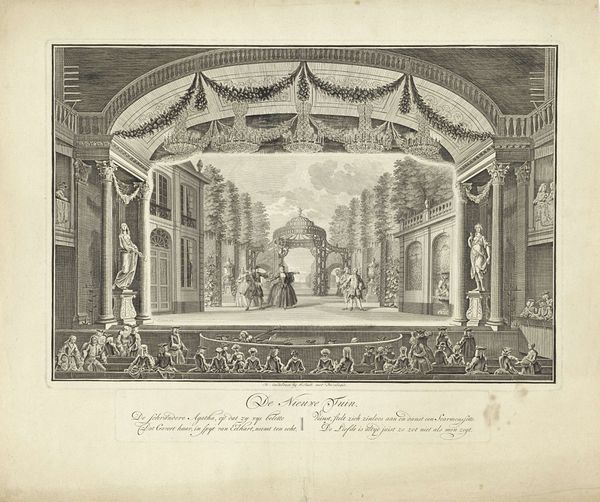
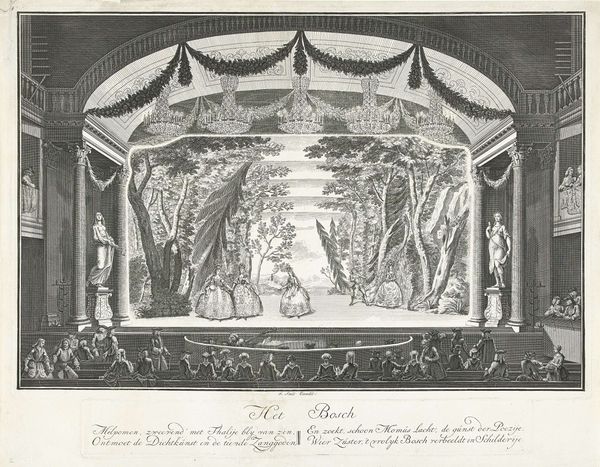
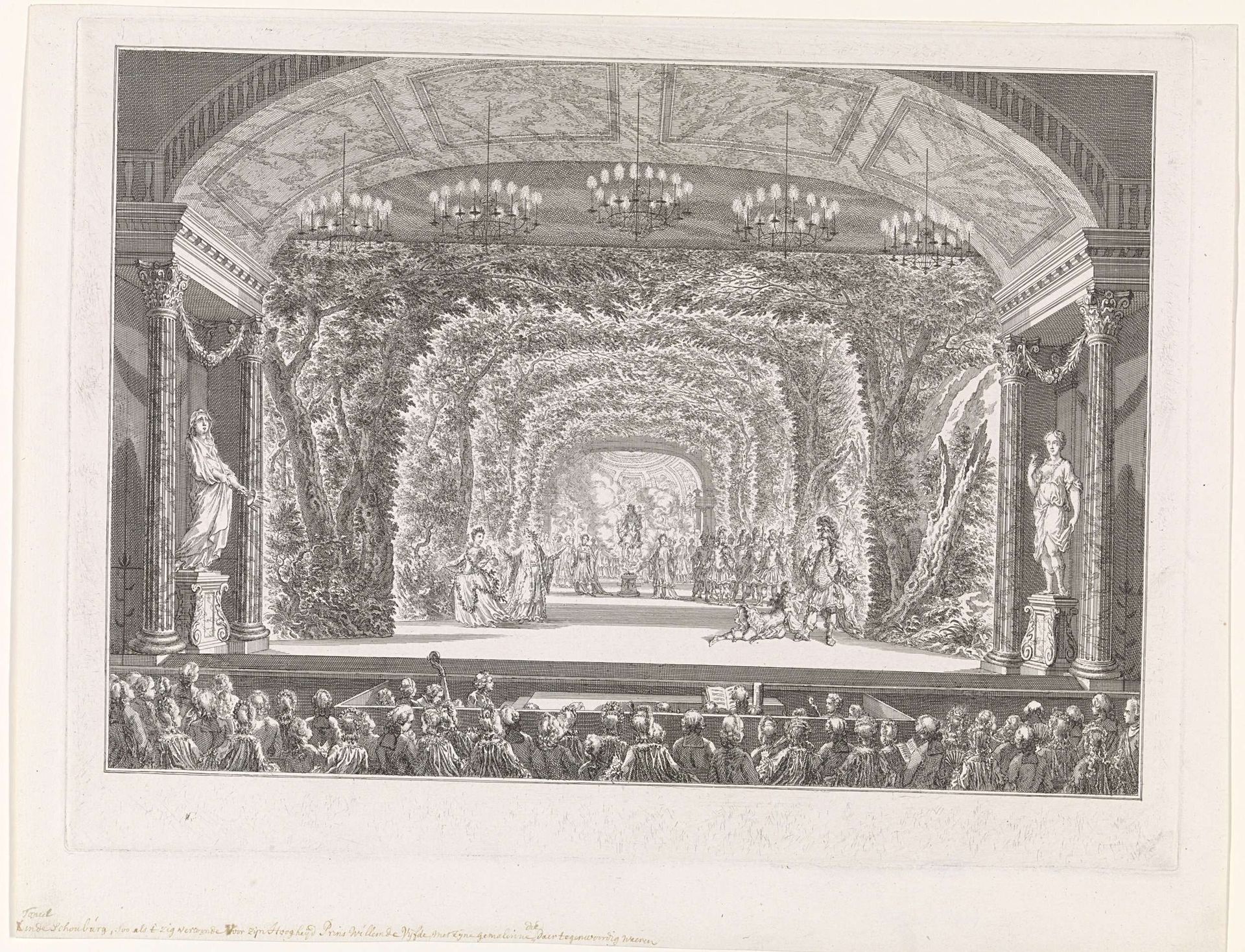
Simon Fokke captured this theatre performance in Amsterdam in 1768, evidenced in fine lines etched on paper. Notice the dominant archway of foliage, framing the stage within a stage. This verdant motif taps into the ancient concept of the locus amoenus, the idyllic, sheltered garden representing paradise or a space of refuge. This symbol has roots stretching back to classical literature and art, where the garden was a site of love, peace, and contemplation. Consider how such a setting recalls Botticelli's "Primavera," where Venus resides in a similarly lush, fertile enclosure. Here, though, the garden is not a natural haven but a constructed artifice, a performance mirroring the performance within. The symbolism shifts: Paradise is now a stage, inviting us to reflect on the constructed nature of our own ideals and pleasures. The performance evokes a psychological resonance, engaging our subconscious desire for harmony even amidst the artifice of courtly life. As we see, the symbol resurfaces, evolves, and takes on new meanings in different historical contexts.
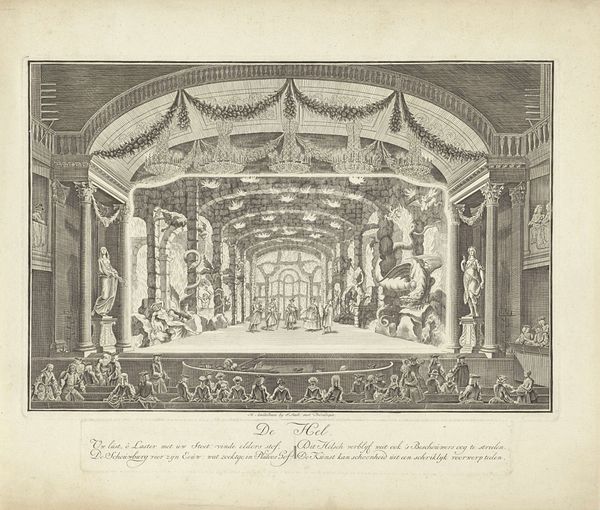
Toneelvoorstelling in de Amsterdamse Schouwburg voor het prinselijk paar, 1768
1769 - 1773

Simon Fokke
1712 - 1784Location
RijksmuseumArtwork details
- Dimensions
- height 300 mm, width 403 mm
- Location
- Rijksmuseum
- Copyright
- Rijks Museum: Open Domain
Comments
Share your thoughts
About this artwork
Simon Fokke captured this theatre performance in Amsterdam in 1768, evidenced in fine lines etched on paper. Notice the dominant archway of foliage, framing the stage within a stage. This verdant motif taps into the ancient concept of the locus amoenus, the idyllic, sheltered garden representing paradise or a space of refuge. This symbol has roots stretching back to classical literature and art, where the garden was a site of love, peace, and contemplation. Consider how such a setting recalls Botticelli's "Primavera," where Venus resides in a similarly lush, fertile enclosure. Here, though, the garden is not a natural haven but a constructed artifice, a performance mirroring the performance within. The symbolism shifts: Paradise is now a stage, inviting us to reflect on the constructed nature of our own ideals and pleasures. The performance evokes a psychological resonance, engaging our subconscious desire for harmony even amidst the artifice of courtly life. As we see, the symbol resurfaces, evolves, and takes on new meanings in different historical contexts.
Comments
Share your thoughts