About this artwork
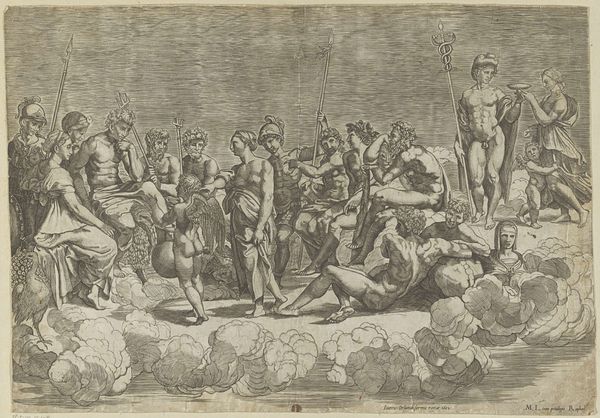
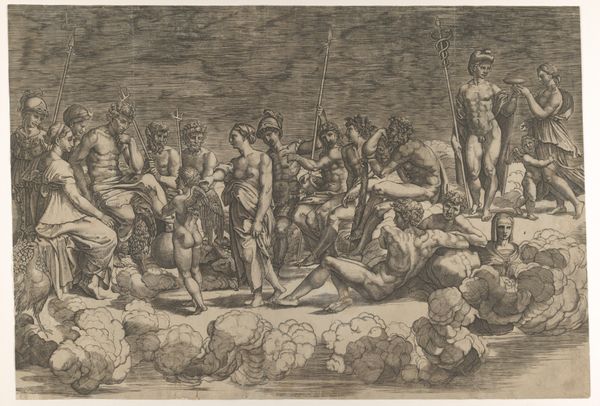
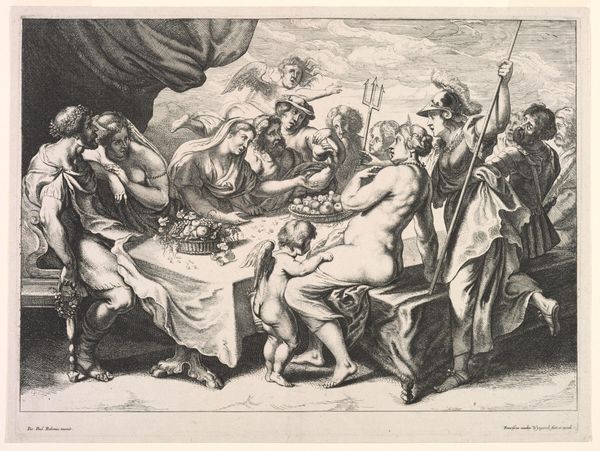
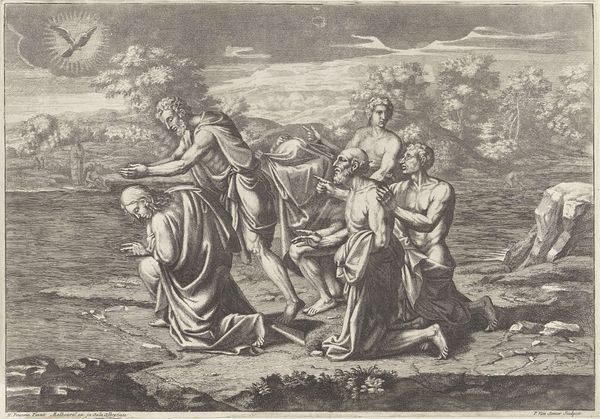
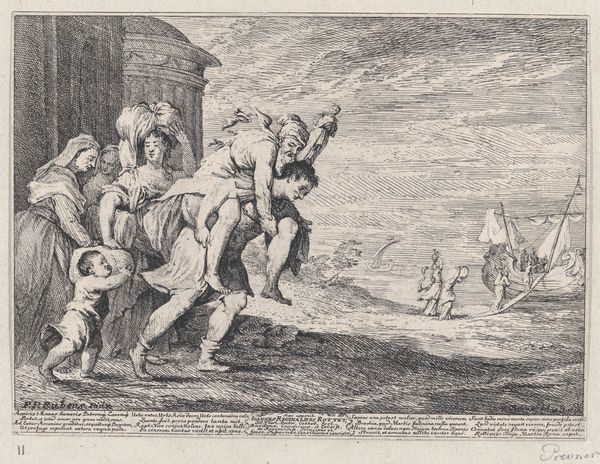
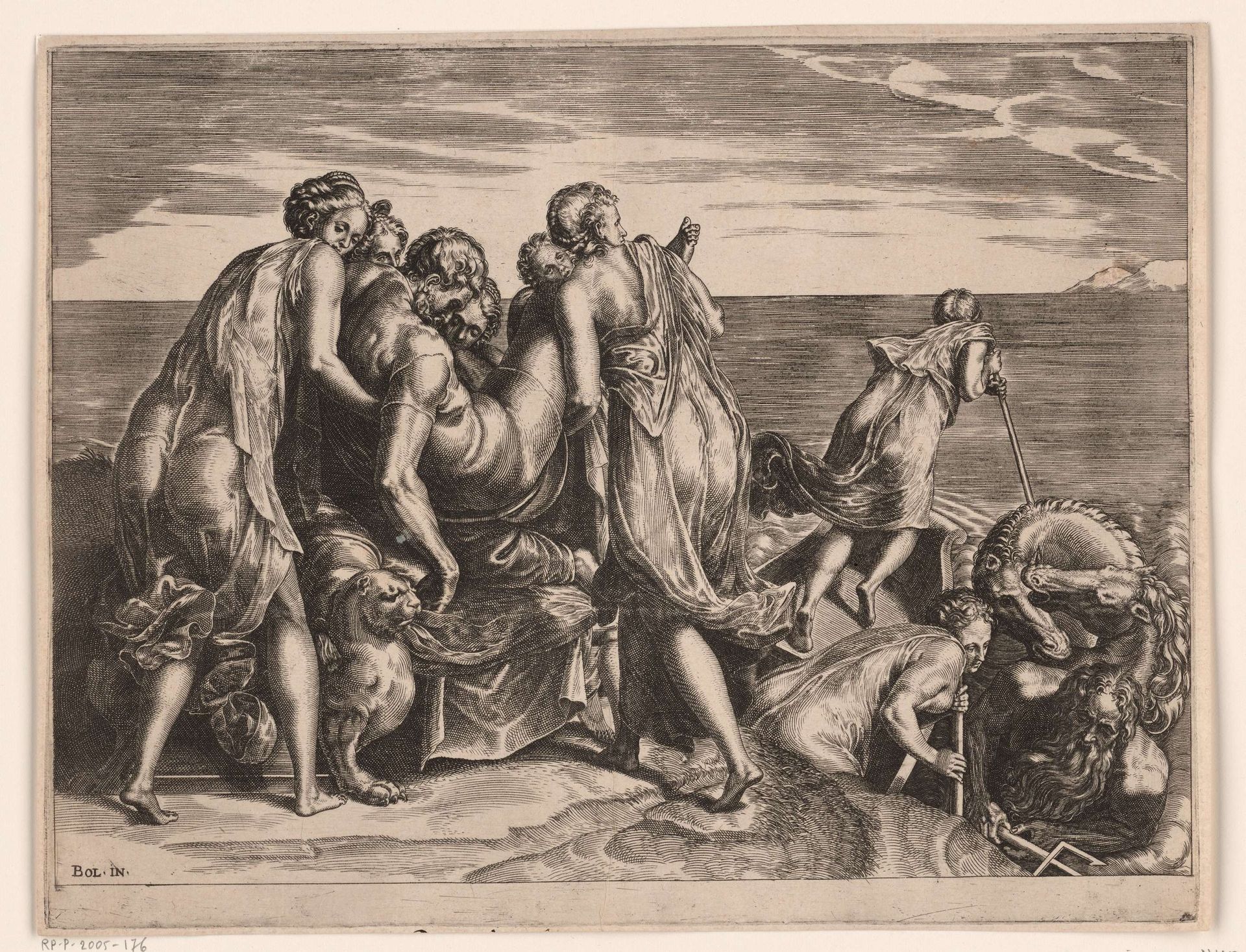
Philips Galle created this engraving, “De Phaiaken dragen de slapende Odysseus naar Ithaka,” sometime in the late 16th century. Galle was a printmaker in Antwerp, a city that served as a major hub for the production and distribution of images at this time. This print depicts a scene from Homer's Odyssey, where the Phaeacians carry the sleeping Odysseus back to his home island of Ithaka. Galle's work reflects a broader cultural interest in classical literature and mythology during the Renaissance. The image is made in the Netherlands, a place known for its strong trade routes and its printing industry. This helped the Dutch to spread information and art. As a historian, understanding this artwork requires us to consider the interplay between artistic production, classical learning, and the socio-economic context of 16th-century Europe. Researching Galle's career and the cultural milieu of Antwerp would further illuminate the meanings and functions of this print.
De Phaiaken dragen de slapende Odysseus naar Ithaka
1547 - 1570

Philips Galle
1537 - 1612Location
RijksmuseumArtwork details
- Medium
- print, etching, engraving
- Dimensions
- height 254 mm, width 329 mm
- Location
- Rijksmuseum
- Copyright
- Rijks Museum: Open Domain
Tags
Comments
Share your thoughts
About this artwork
Philips Galle created this engraving, “De Phaiaken dragen de slapende Odysseus naar Ithaka,” sometime in the late 16th century. Galle was a printmaker in Antwerp, a city that served as a major hub for the production and distribution of images at this time. This print depicts a scene from Homer's Odyssey, where the Phaeacians carry the sleeping Odysseus back to his home island of Ithaka. Galle's work reflects a broader cultural interest in classical literature and mythology during the Renaissance. The image is made in the Netherlands, a place known for its strong trade routes and its printing industry. This helped the Dutch to spread information and art. As a historian, understanding this artwork requires us to consider the interplay between artistic production, classical learning, and the socio-economic context of 16th-century Europe. Researching Galle's career and the cultural milieu of Antwerp would further illuminate the meanings and functions of this print.
Comments
Share your thoughts