About this artwork
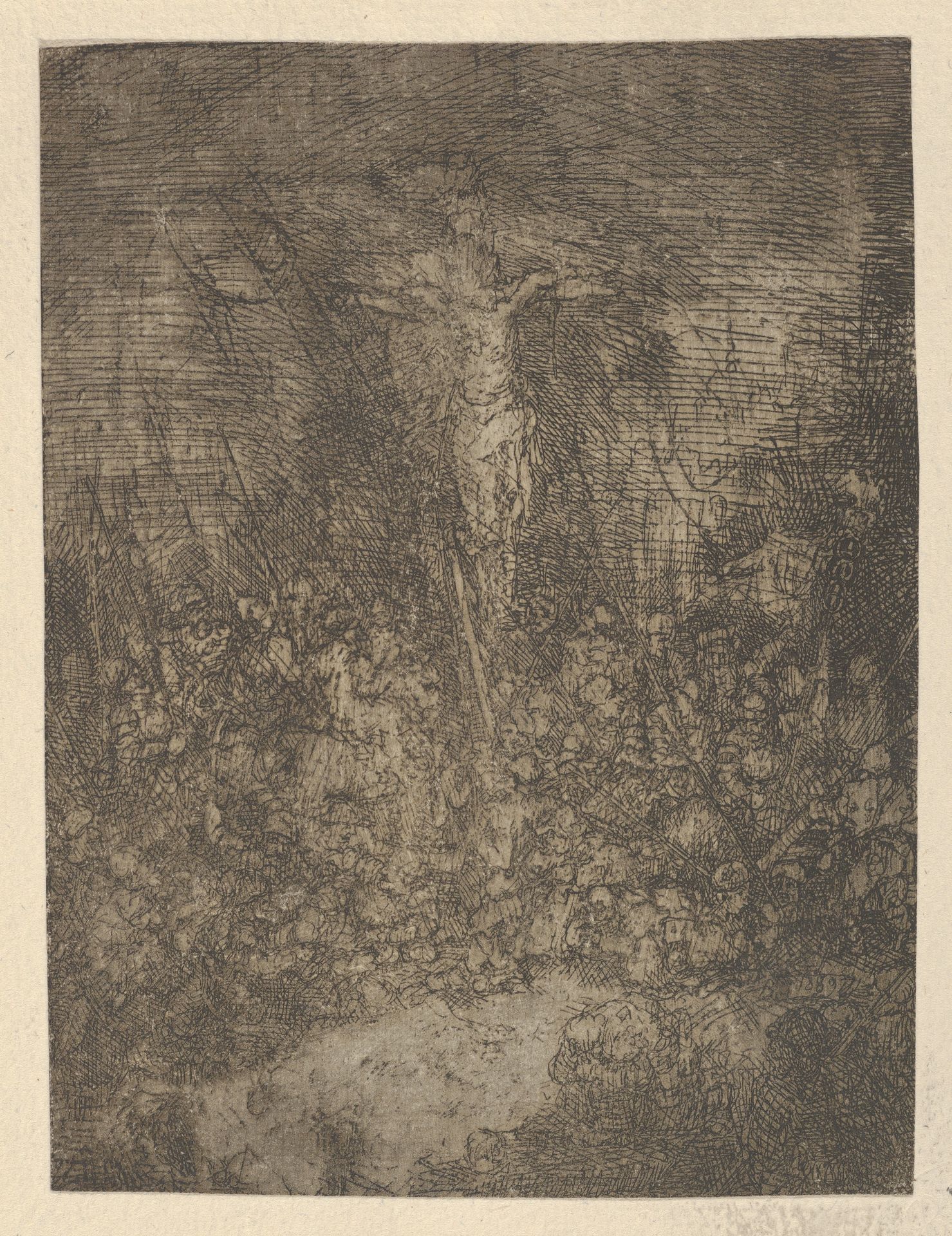
Rodolphe Bresdin etched "La Crucifixion" to paper, a stark portrayal of Christ's final moments. The dominant symbol, of course, is Christ on the cross, an emblem deeply rooted in Christian iconography representing sacrifice, redemption, and suffering. Consider how the cruciform has echoed through time, even before Christianity, as a symbol of cosmic balance. The outstretched arms of Christ, here, are reminiscent of the orans gesture found in ancient Roman art, where figures raise their hands in prayer. This gesture transcends cultures, appearing in various forms to signify supplication or divine connection. The emotional weight carried by the image is immense; it taps into collective memories of loss, pain, and spiritual yearning. It's a potent symbol that has continued to resurface and evolve, reflecting our enduring quest for meaning and connection across the ages.
La Crucifixion (The Crucifixion) 1839 - 1885


Artwork details
- Dimensions
- Mount: 14 1/16 × 10 9/16 in. (35.7 × 26.8 cm) Sheet: 5 3/16 × 3 7/8 in. (13.2 × 9.9 cm)
- Location
- Metropolitan Museum of Art, New York, NY
- Copyright
- Public Domain
Comments
No comments
About this artwork
Rodolphe Bresdin etched "La Crucifixion" to paper, a stark portrayal of Christ's final moments. The dominant symbol, of course, is Christ on the cross, an emblem deeply rooted in Christian iconography representing sacrifice, redemption, and suffering. Consider how the cruciform has echoed through time, even before Christianity, as a symbol of cosmic balance. The outstretched arms of Christ, here, are reminiscent of the orans gesture found in ancient Roman art, where figures raise their hands in prayer. This gesture transcends cultures, appearing in various forms to signify supplication or divine connection. The emotional weight carried by the image is immense; it taps into collective memories of loss, pain, and spiritual yearning. It's a potent symbol that has continued to resurface and evolve, reflecting our enduring quest for meaning and connection across the ages.
Comments
No comments